Operation Kayakalp: What has changed inside UP's government schools
What's the story
Since the launch of Operation Kayakalp in 2018, schools across Uttar Pradesh have seen major improvements. The operation is one of India's largest school infrastructure rejuvenation programs. The initiative aims to transform government primary and upper-primary schools into safe, child-friendly, inclusive, and attractive learning spaces. It works on a convergence model by pooling resources from various sources such as Gram Panchayat funds, MNREGA, Jal Jeevan Mission, Urban Local Bodies, and Corporate Social Responsibility initiatives.
Infrastructure standards
Minimum standards for school infrastructure
Under this scheme, schools are being transformed on the basis of 19 key infrastructure facilities that every government school should have.
These include functional classrooms, separate toilets for boys and girls, Divyang-friendly toilets, safe drinking water, and running water supply.
Other facilities include handwashing stations, electrification, classroom furniture, blackboards and boundary walls.
By standardizing these benchmarks, the program ensures uniform development across urban and rural schools.
Infrastructure improvement
Progress so far
Around 1.30 lakh government schools have also been rejuvenated with investments of over ₹11,000 crore under this operation.
Infrastructure compliance has improved from around 36-38% in 2017 to over 96% in recent years.
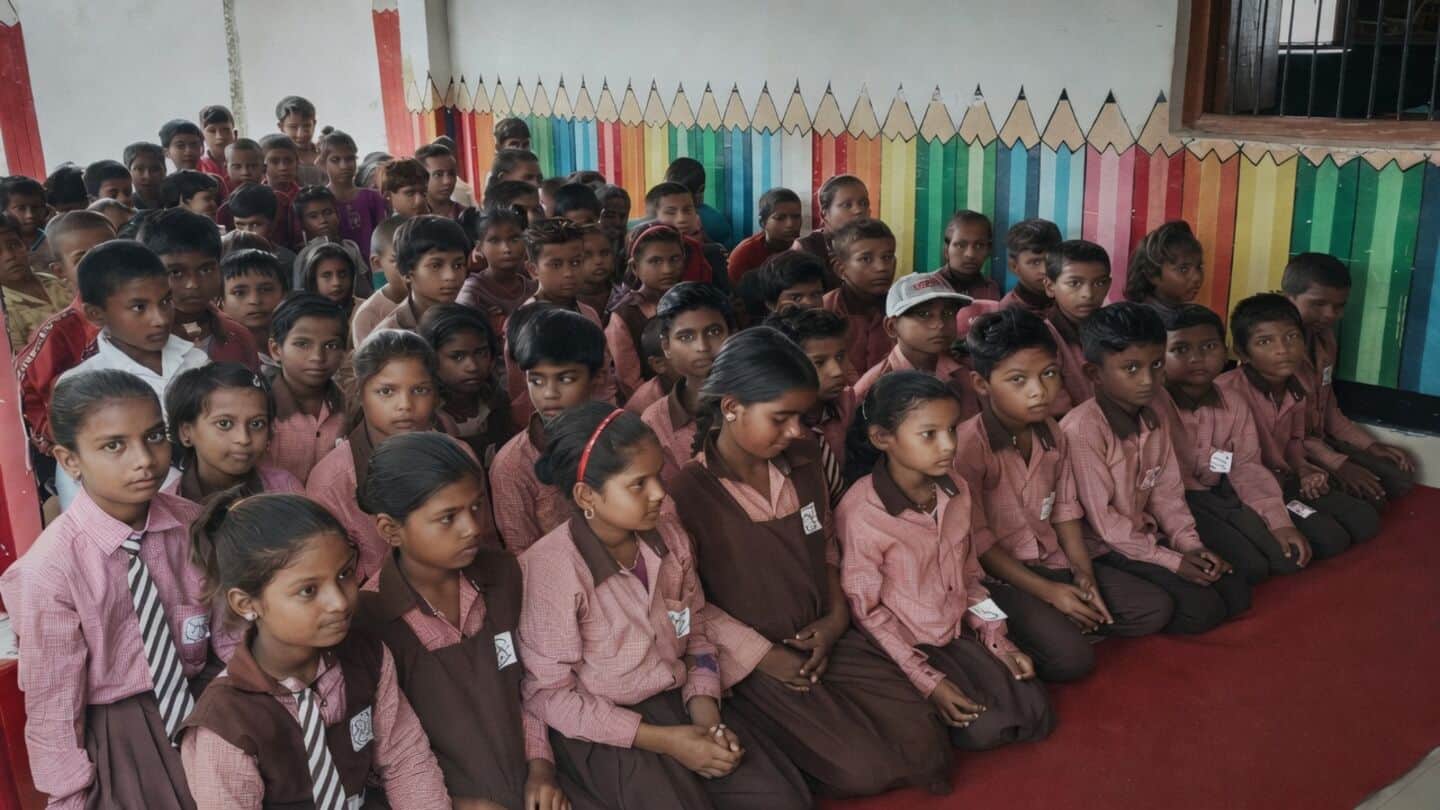
Thousands of schools now feature bright classrooms, colorful wall paintings, functional toilets, and drinking water facilities.
Many have also earned four-star and five-star ratings under the state's quality assessment framework.
Monitoring and participation
Technology and community involvement
Furthermore, Operation Kayakalp has introduced technology-based monitoring systems like geo-tagging of school infrastructure, photo-based verification, and real-time monitoring through the Prerna portal.
These systems enable officials to verify construction quality without relying solely on paper reports.
Community involvement is another key aspect of the initiative.
Village heads, School Management Committees, teachers, district officials, and local residents have all contributed to school development efforts under Operation Kayakalp.
Inclusivity focus
Accessibility and hygiene improvements
A significant achievement of Operation Kayakalp is its focus on making schools more accessible.
Schools now increasingly include ramps, accessible toilets, and barrier-free pathways to ensure children with disabilities can participate effectively in school life.
The initiative also promotes hygiene and health by creating multiple handwashing stations, running water connections, and improved sanitation facilities.
These efforts continue to promote healthier learning environments even beyond the COVID-19 pandemic.
Environmental impact
Environmental initiatives and public perception
Several schools have adopted environmentally friendly practices such as plantation drives, rainwater harvesting, and waste management initiatives.
These additions provide practical environmental education while improving campus aesthetics.
Infrastructure improvements have also influenced public perception of government schools. Parents who once preferred low-cost private schools due to better facilities have increasingly shown confidence in nearby government schools.
Budget
Budget increase
Before Operation Kayakalp, many Uttar Pradesh government schools had poor and unsafe infrastructure.
Toilets, drinking water, boundary walls, suitable seating, lighting, and ventilation were frequently unavailable, and schools lacked libraries, labs, and playgrounds. These issues lowered attendance and, in turn, their learning outcomes.
The Uttar Pradesh government has proposed a massive ₹77,622 crore budget for basic education in the 2026-27 financial year.