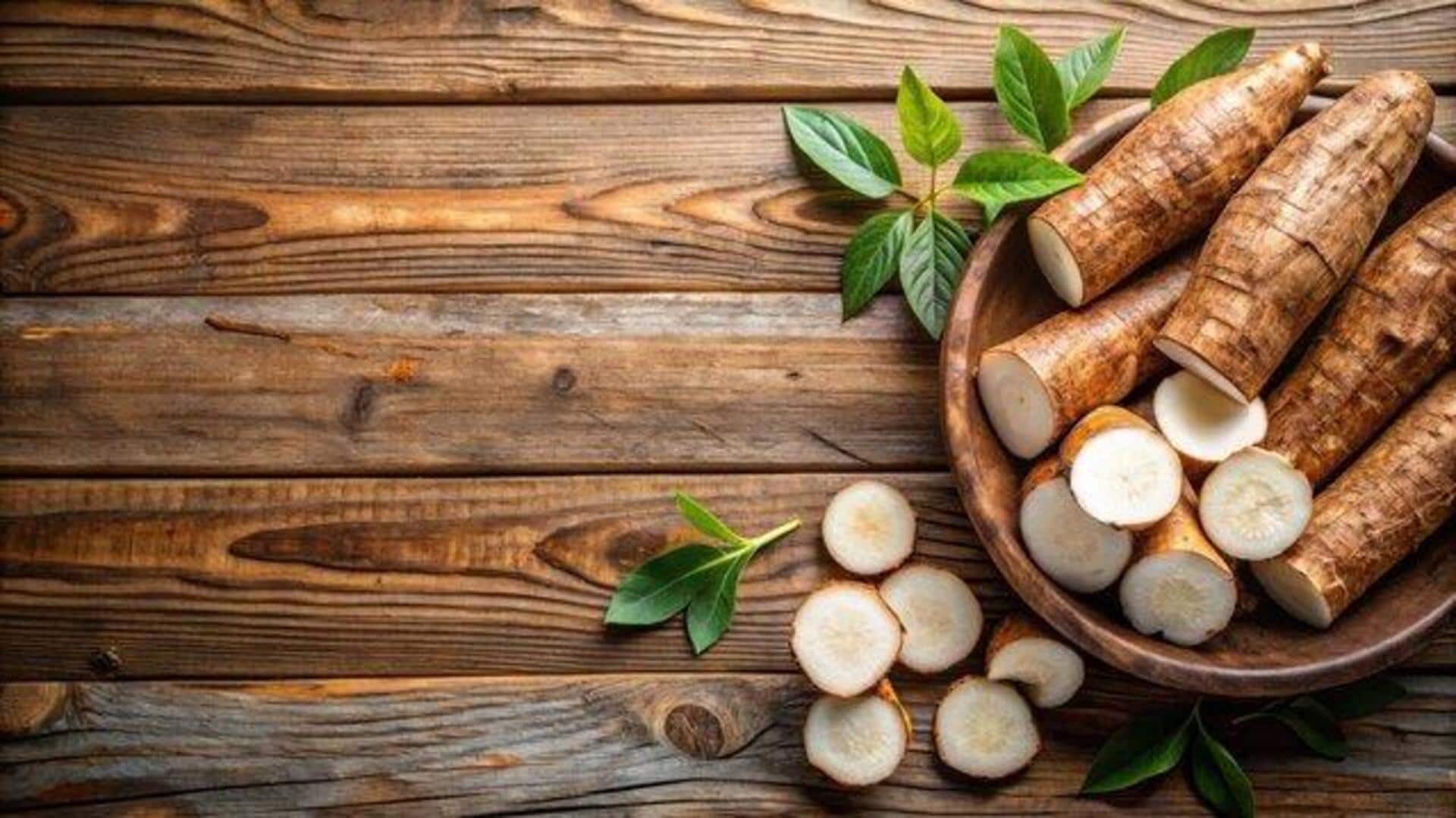
5 ways cassava is enjoyed across Africa
What's the story
Cassava, a staple root vegetable in Africa, is known for its versatility and resilience. It grows well in poor soils and is a major source of carbohydrates for millions. Across the continent, different regions have developed unique ways of preparing and enjoying cassava. From savory dishes to sweet treats, these methods showcase the diverse culinary traditions of Africa. Here are five fascinating ways cassava is enjoyed across the continent.
Dish 1
Cassava leaves stew
In West Africa, cassava leaves are commonly used to prepare a hearty stew, which is often paired with rice or fufu.
The leaves are cooked with spices, palm oil, and sometimes groundnuts or beans to make a nutritious dish.
This stew is not only delicious but also rich in vitamins and minerals, making it a staple in many households.
Dish 2
Garri: A versatile staple
Garri is a popular West African food made by fermenting and drying grated cassava. It can be eaten dry or soaked in water or milk as a porridge.
Garri is often sweetened with sugar or honey and eaten as a snack or breakfast food. Its versatility makes it an essential part of many diets across the region.
Dish 3
Cassava cake delights
In some parts of Africa, grated cassava is used to prepare cakes that are sweetened with coconut milk or sugarcane juice.
These cakes can be baked or steamed, depending on the region's tradition.
They make for a delightful dessert option that highlights the natural sweetness of cassava while offering a unique texture.
Dish 4
Fufu: A traditional accompaniment
Fufu is a staple food across much of Africa, where boiled starchy foods like cassava are pounded into a smooth paste.
Fufu serves as an accompaniment to soups and stews, adding texture without overpowering flavors.
Its neutral taste makes it an ideal partner for spicy dishes common in many African cuisines.
Dish 5
Cassava chips snack time
Cassava chips have become an increasingly popular snack option across Africa due to their crunchy texture and mild flavor profile.
They is similar to potato chips but with lower fat content when prepared using healthier methods like baking instead of frying techniques often used elsewhere around the world today.