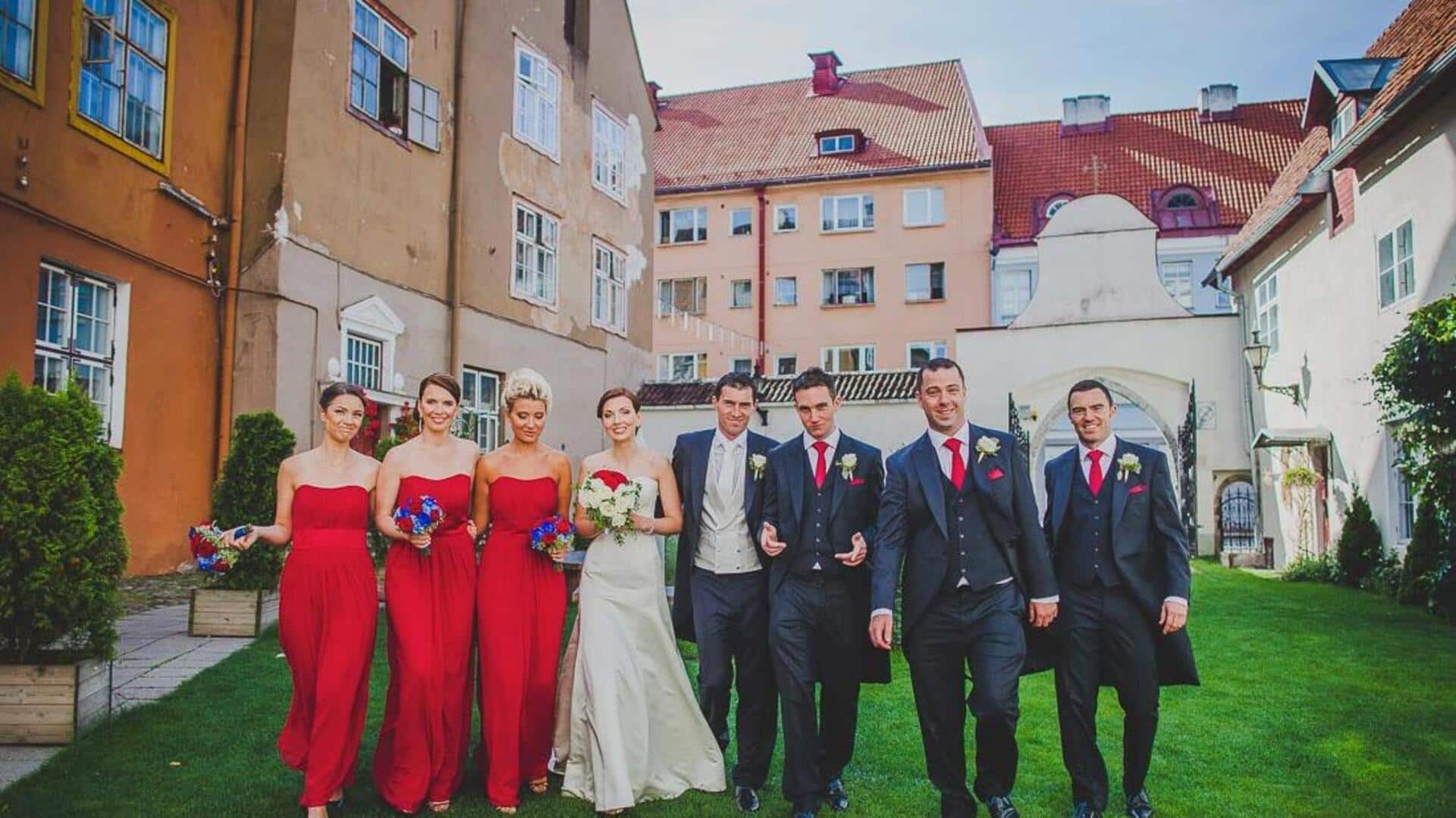
Estonian weddings have some unforgettable customs!
What's the story
Estonian weddings are a beautiful blend of ancient traditions and modern celebrations. These customs, which have been passed down through generations, give a glimpse of the country's rich cultural heritage. From unique attire to symbolic rituals, each element of an Estonian wedding is steeped in meaning and history. Here are five unforgettable wedding customs that make Estonian nuptials so special.
#1
The bride's crown of flowers
In Estonia, it is customary for brides to wear a crown of flowers on their wedding day. The floral crown symbolizes purity and new beginnings. Traditionally, the flowers used are locally sourced and chosen for their beauty and significance. This custom adds a natural elegance to the bride's attire while honoring Estonian flora.
#2
Gifting bread and salt
One of the oldest wedding customs in Estonia is gifting bread and salt to the couple. This act symbolizes prosperity and health in their new life together. The bride and groom often exchange these gifts during the ceremony or reception, making it a meaningful part of their celebration.
#3
Traditional folk dances
Folk dances are an integral part of Estonian weddings, bringing everyone together to celebrate. These dances are usually performed in traditional attire, with lively music that gets everyone on their feet. The dances are a way to honor cultural heritage, while creating lasting memories for the couple and guests alike.
#4
The groom's horse ride
Traditionally, grooms would ride horses to their wedding venue as a symbol of strength and bravery. Although this custom has evolved over time, some couples still incorporate horse rides into their celebrations as a nod to history. This adds an adventurous element to the day while paying homage to Estonian folklore.
#5
Breaking plates for good luck
Breaking plates at weddings is believed to bring good luck to the couple in their married life. Guests take turns throwing plates at designated areas, creating a playful atmosphere filled with laughter and joy. This custom reinforces community bonds as everyone participates in wishing well for the newlyweds' future together.