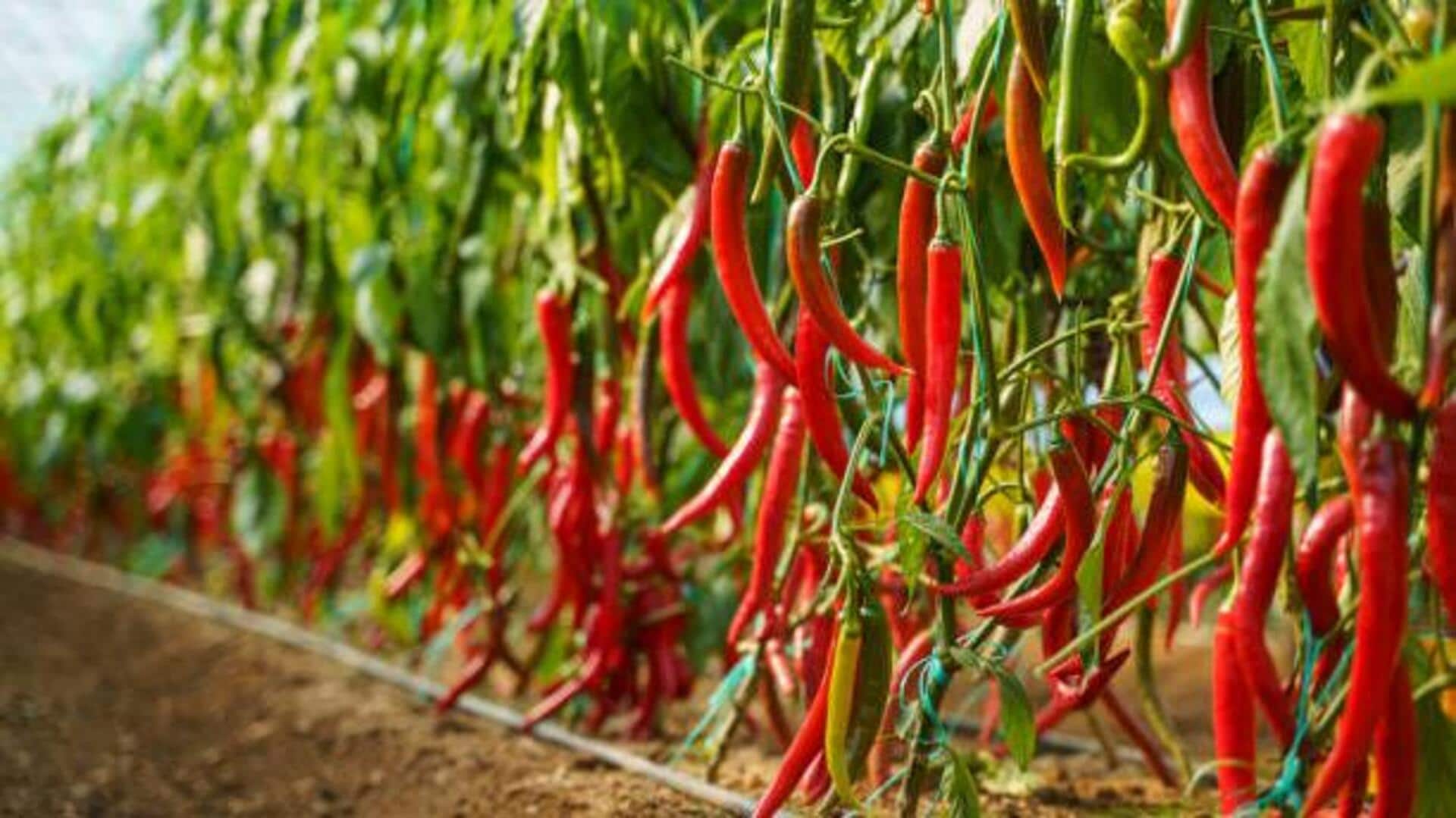
How to grow chillies in hanging baskets
What's the story
Growing bird's eye chilies in hanging baskets is a great way to add some spice to your garden. These small, fiery chilies are not only easy to grow but also add a vibrant touch to any space. Hanging baskets provide the perfect conditions for these plants, allowing them to thrive while saving space. Here are some practical tips on how to successfully grow these chilies in hanging baskets.
Tip 1
Choosing the right basket
Selecting the right hanging basket is crucial for growing African bird's eye chillies. Opt for a basket that is at least 30 centimeters in diameter with good drainage holes at the bottom. This will ensure excess water drains out, preventing root rot. You can also line the basket with coir liners or moss to retain moisture while allowing air circulation.
Tip 2
Soil and planting essentials
Use a well-draining potting mix enriched with organic matter like compost or peat moss. This will provide essential nutrients and maintain soil structure. Plant two to three seeds per basket, covering them lightly with soil. Water gently after planting and keep the soil consistently moist but not waterlogged.
Tip 3
Optimal sunlight and temperature
African bird's eye chilies love sunlight, so place your hanging baskets in a spot where they can get at least six hours of direct sunlight every day. The ideal temperature for these plants is between 20 degrees Celsius and 30 degrees Celsius. If you live in a cooler climate, you may have to bring the baskets indoors at night or during colder days.
Tip 4
Regular watering and fertilization
Water your chillies regularly but avoid overwatering, as this can lead to root problems. It's best to check the top inch of soil before watering; if it's dry, give them a drink. Fertilize every two weeks using a balanced liquid fertilizer diluted to half strength to promote healthy growth without overwhelming the plants with too many nutrients.