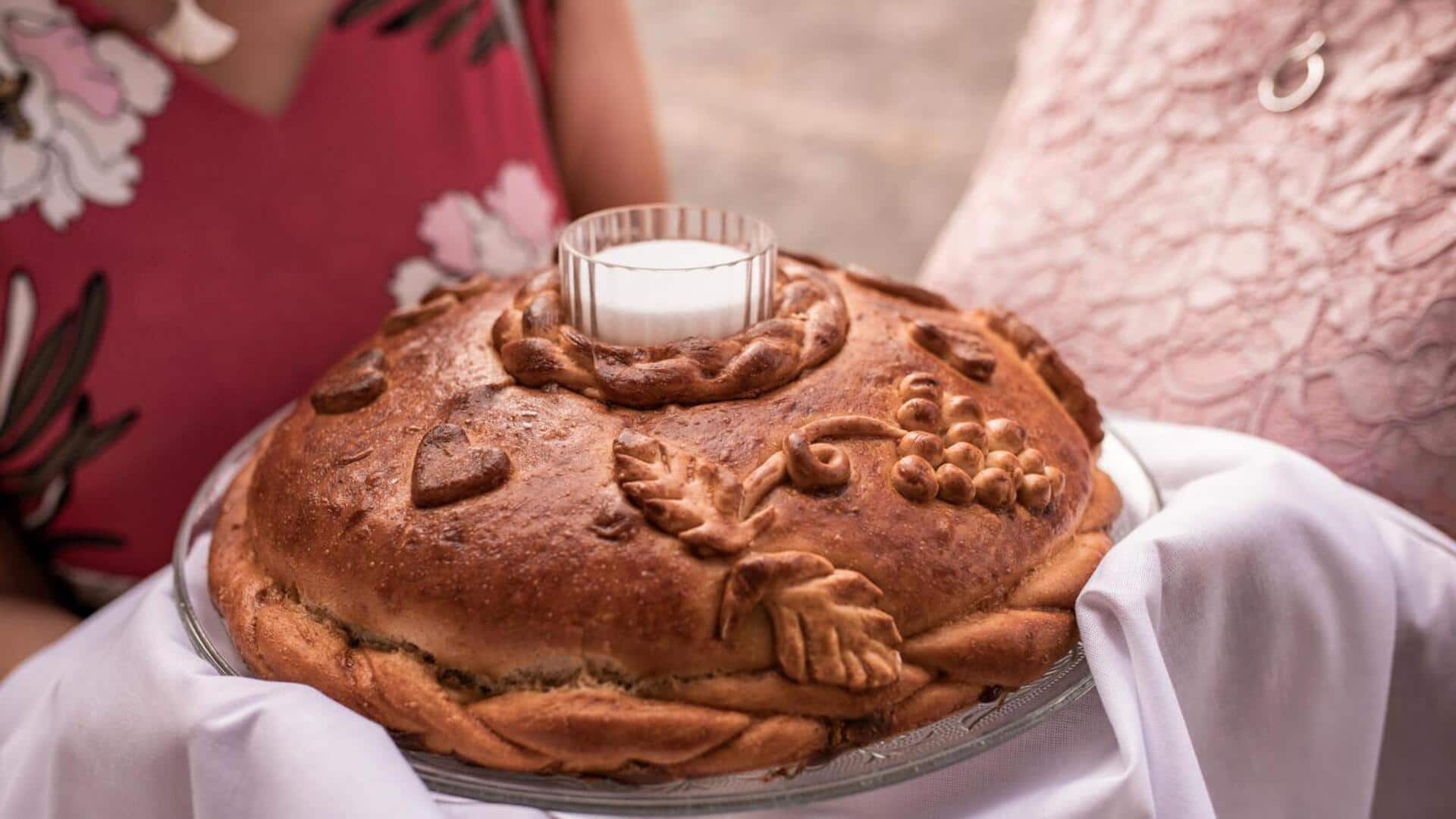
Let's know about bread traditions in Austrian weddings
What's the story
Austrian wedding bread, or Hochzeitsbrot, is steeped in history and tradition. This special bread is usually prepared for weddings and symbolizes prosperity, happiness, and unity. Its preparation involves age-old customs that have been passed down generations. Each step in making this bread holds significance, reflecting cultural values and beliefs. Understanding these traditions gives insight into Austrian wedding customs and the importance of this delightful bread.
#1
The significance of braiding
Braiding the dough is an important part of making Hochzeitsbrot.
The act of braiding symbolizes the intertwining of two lives into one. It is often done by the bride and groom together as a symbol of their partnership.
The number of braids may differ according to regional customs, but each braid stands for a different blessing or wish for the couple's future together.
#2
Ingredients with meaning
The ingredients used in Hochzeitsbrot also have symbolic meanings.
Flour represents purity, while water stands for life.
Yeast indicates growth and development in the marriage.
Sugar adds sweetness to life together, and salt signifies strength and endurance through challenges faced as a couple.
#3
Decorative symbols on bread
Austrian wedding bread is often decorated with symbols that have special meanings.
Hearts stand for love, circles denote eternity, and flowers symbolize beauty and joy in life together.
These designs are not just visually appealing but also serve as reminders of the values that are important in a marriage.
#4
Regional variations in preparation
Different regions in Austria have their own versions of Hochzeitsbrot, each with its own unique twist on traditional recipes.
Some areas may use nuts or dried fruits for added flavor or texture, while others stick to simpler ingredients to highlight the bread's natural taste.
These variations show how local culture influences wedding traditions across Austria.
Tip 1
Rituals during baking process
Certain rituals are performed during baking to ensure good fortune for newlyweds.
Some families may recite prayers or blessings over the dough before shaping it into loaves or braids.
Others might involve family members who offer their wishes aloud as part of this cherished tradition passed down through generations within communities across Austria.