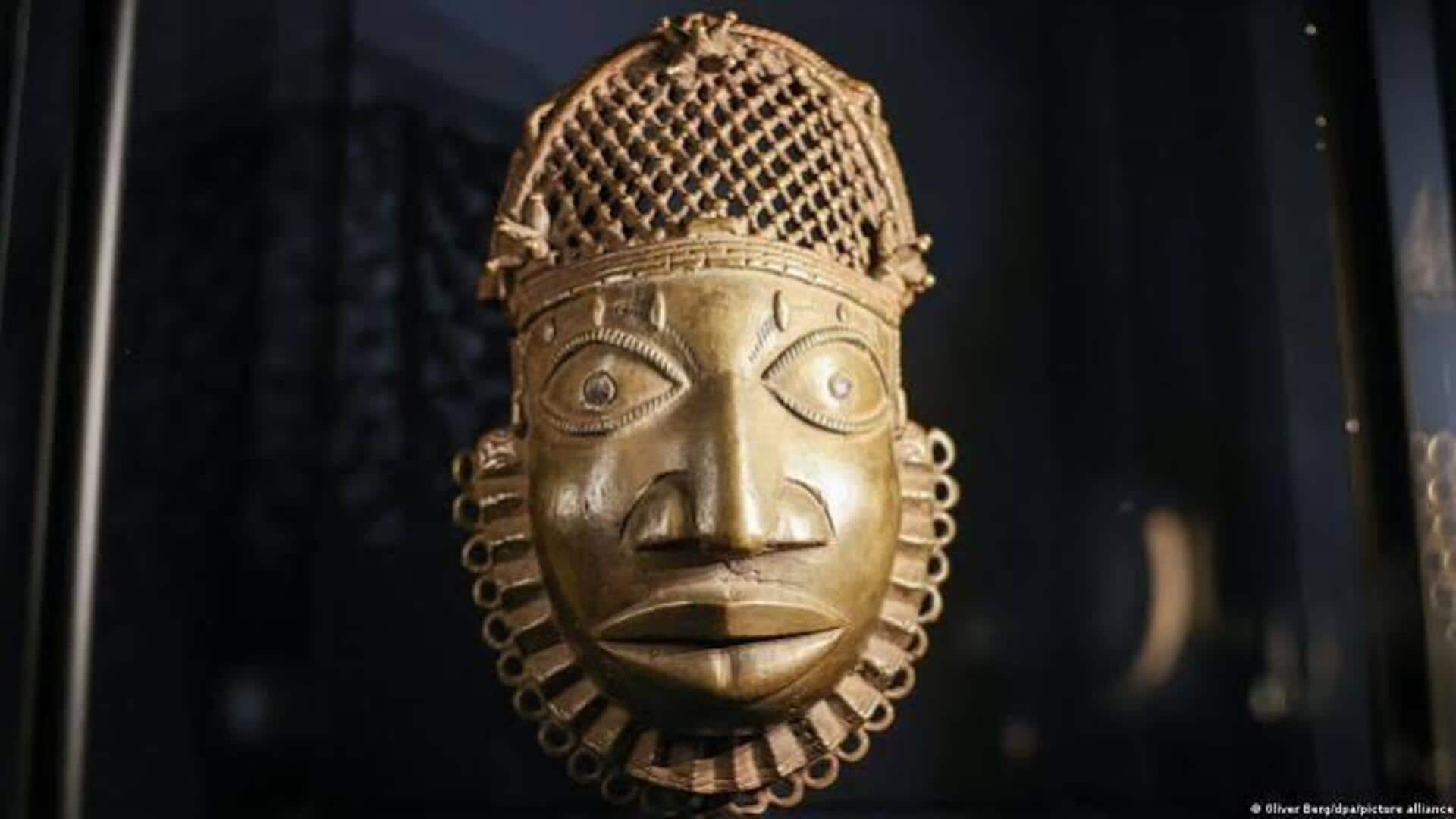
How recycled metals are giving bronze art new life
What's the story
Benin bronze sculptures are famous for their intricate designs and historical importance. These artworks, which originated in the Kingdom of Benin (modern-day Nigeria), are now being reimagined with recycled metals. This innovative approach not only preserves the artistic heritage but also promotes sustainability. By using recycled materials, artists can create unique pieces that reflect both traditional techniques and modern environmental consciousness.
#1
Historical significance of Benin bronzes
The Benin bronzes are a collection of plaques and sculptures that decorated the Royal Palace of Benin City.
They were made by the Edo people from the 13th to the 19th centuries.
These artworks depict historical events, court life, and cultural practices, giving a glimpse of the kingdom's rich history.
The bronzes are famous for their detailed craftsmanship and artistic expression.
#2
Techniques in creating bronze sculptures
Traditionally, Benin bronzes were made using the "lost-wax casting" technique. The process involved creating a wax model, covering it with clay, and then melting away the wax to leave a mold for molten metal.
This technique allowed artisans to create intricate designs with great precision.
Today, some artists are adapting this method by incorporating recycled metals into their work.
#3
Environmental impact of using recycled metals
Using recycled metals in sculpture-making has a positive impact on the environment by reducing waste and conserving natural resources.
Mining new metal can be environmentally damaging, while recycling cuts down on energy consumption by up to 95%.
By using recycled materials, artists not only create beautiful pieces but also contribute to sustainable practices that benefit the planet.
#4
Modern interpretations and innovations
Modern artists are reinterpreting traditional Benin bronze styles by adding contemporary elements with recycled metals.
These works often mix old-world craftsmanship with modern design sensibilities, resulting in pieces that appeal to both history buffs and art lovers.
The use of recycled materials also opens up new avenues for creativity, as artists experiment with different textures and forms.