
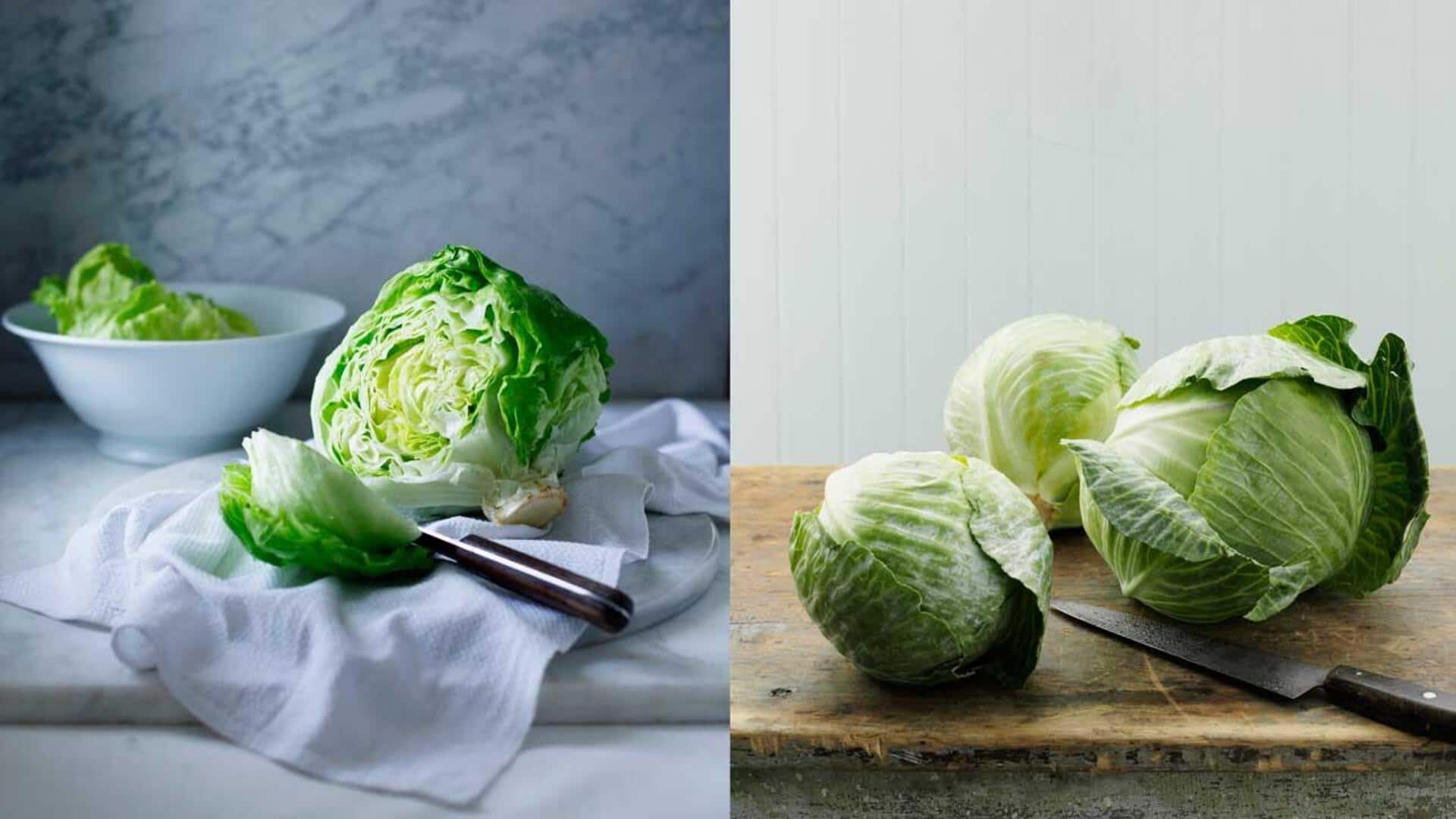
Cabbage v/s lettuce: Which is better for you?
What's the story
Cabbage and lettuce are two of the most popular leafy greens, often used in salads and other dishes. While both are low in calories and provide essential nutrients, they differ in their nutritional profiles. Knowing these differences can help you make informed dietary choices. Here's a look at the nutritional differences between cabbage and lettuce, including their vitamin content, fiber levels, and other health benefits.
#1
Vitamin content comparison
Cabbage is rich in vitamin C, offering more than 60% of the daily recommended intake per cup. It also provides a good amount of vitamin K. Lettuce, on the other hand, has a lower vitamin C content but is still a good source of vitamin A due to its beta-carotene content. Both vegetables provide important vitamins that contribute to overall health but cater to different nutritional needs.
#2
Fiber levels in each vegetable
Fiber is an important part of a healthy diet, aiding digestion and keeping cholesterol levels in check. Cabbage has a higher fiber content than lettuce, with about two grams per cup compared to lettuce's one gram. The extra fiber in cabbage can help with digestion and make you feel full, making it a great option for those trying to lose weight.
#3
Caloric value analysis
When it comes to caloric value, both cabbage and lettuce are low-calorie options for those looking to keep their weight in check. Cabbage has about 22 calories per cup, while lettuce has roughly 15 calories per cup. The difference is negligible but worth noting for those who keep a close watch on their caloric intake.
Tip 1
Antioxidant properties explored
Both cabbage and lettuce provide antioxidants that help fight oxidative stress in the body. Cabbage has compounds like sulforaphane that may have cancer-fighting properties. Lettuce has flavonoids that may help reduce inflammation. Including either or both of these greens in your diet can boost your antioxidant intake, supporting your body's natural defense mechanisms.