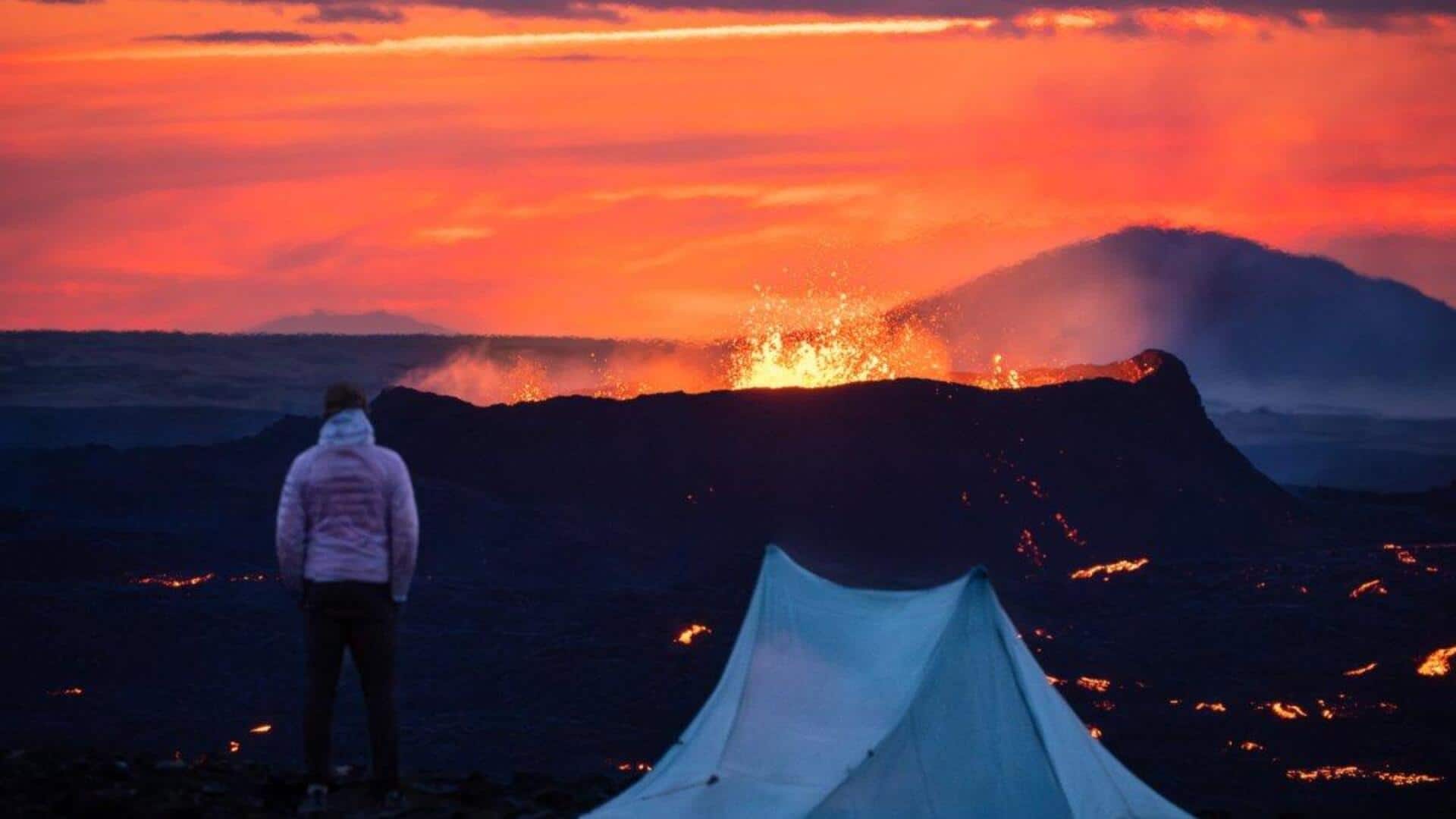
Camping in Iceland's lava fields: A unique experience
What's the story
Exploring Iceland's lava fields is a unique experience, combining adventure and the beauty of nature. These volcanic landscapes, formed by ancient eruptions, offer a glimpse into the Earth's dynamic processes. Camping in these areas allows you to immerse yourself in the rugged terrain and enjoy breathtaking views. Whether you are an experienced camper or a novice, Iceland's lava fields promise an unforgettable journey through one of nature's most fascinating creations.
#1
Choosing the right location
Selecting the right spot is key to a successful camping trip in Iceland's lava fields.
Some areas are more accessible than others, so it's important to consider your skill level and equipment.
Popular spots include regions near Reykjavik and Akureyri, where facilities are more available. However, if you're looking for solitude, head further into less-traveled areas.
Always check local maps and guides for safe routes and potential hazards.
#2
Essential gear for lava field camping
Proper gear is essential for comfort and safety while camping in lava fields.
A sturdy tent that can withstand strong winds is a must.
Layered clothing will help you deal with the unpredictable weather, and durable hiking boots are essential for rocky terrain.
Do not forget essentials like a first aid kit, navigation tools, and enough food and water supplies to last your trip.
#3
Understanding volcanic activity
Understanding Iceland's volcanic activity is key to planning your camping trip.
The country sits on the Mid-Atlantic Ridge, where tectonic plates meet, resulting in frequent eruptions.
Stay updated on current volcanic activity through reliable sources like the Icelandic Meteorological Office.
Knowing these patterns will help you avoid dangerous areas and make informed decisions about your safety during your adventure.
#4
Respecting nature's boundaries
While exploring lava fields can be thrilling, it's important to respect nature's boundaries by following guidelines set by local authorities.
Stay on marked trails to minimize environmental impact and avoid disturbing wildlife habitats.
Leave no trace by packing out all waste materials and not taking natural souvenirs like rocks or plants from these protected areas.