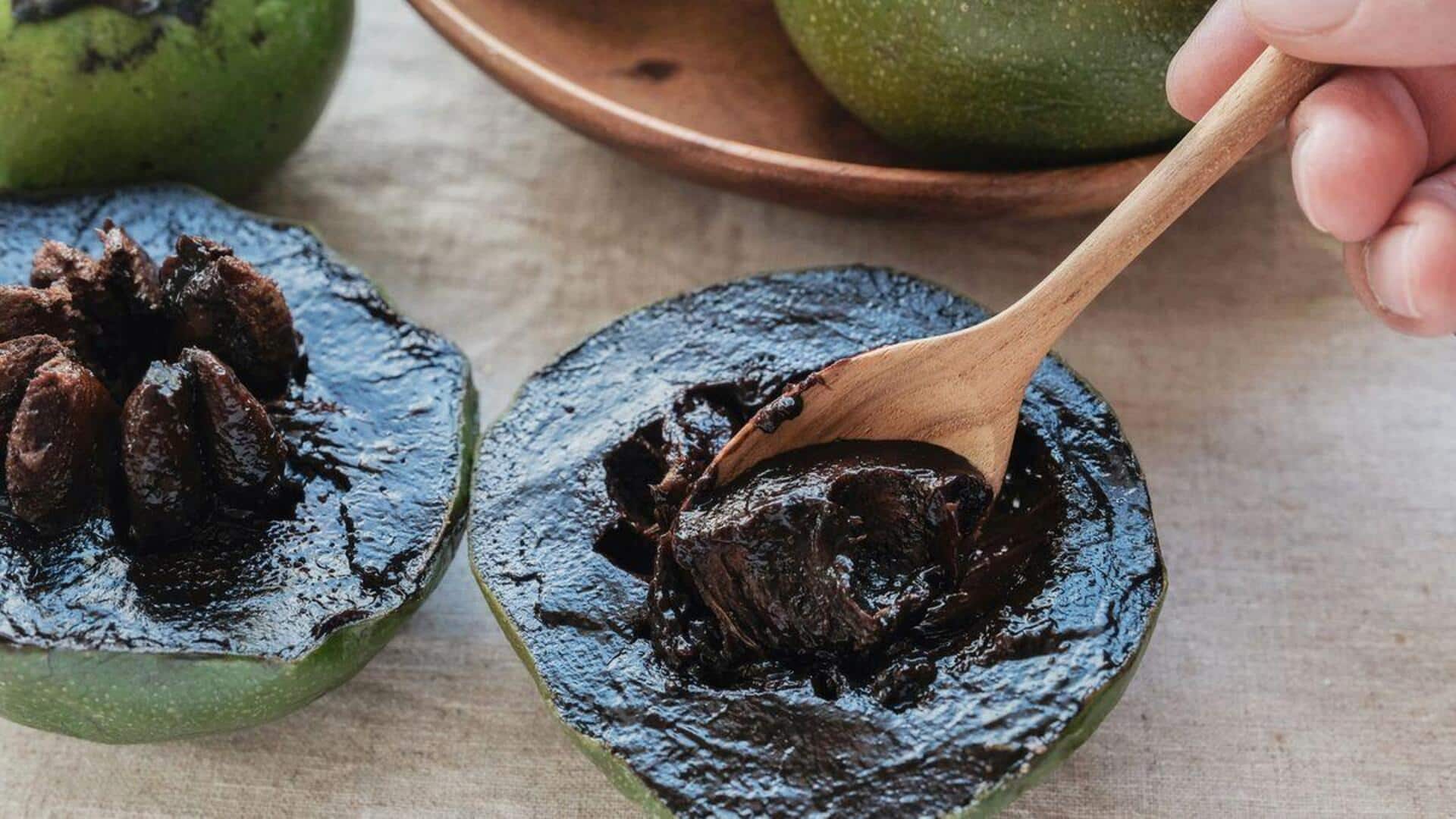
Black sapote: The chocolate-flavored fruit everyone loves
What's the story
Often referred to as African chocolate, black sapote is a tropical fruit that has captivated many with its unique flavor profile. Native to Central America and Mexico, the fruit is now being cultivated in Africa. With its creamy texture and subtle sweetness, black sapote is becoming a popular choice among health enthusiasts. Here is a look at the benefits and uses of this exotic fruit.
#1
Nutritional profile of black sapote
Black sapote is loaded with essential nutrients, including vitamins C and B6, potassium, and fiber.
Vitamin C boosts the immune system, while B6 helps in brain health. Potassium regulates blood pressure levels, and fiber aids digestion.
The low-calorie fruit makes for an excellent option for anyone looking to maintain their weight.
#2
Culinary uses of black sapote
The creamy texture of black sapote makes it perfect for a number of culinary applications.
It can be eaten raw or blended into smoothies for a chocolate-like flavor without any added sugar.
It can also be used in desserts like puddings or cakes as a natural sweetener.
Its versatility makes it an interesting ingredient for both sweet and savory dishes.
#3
Potential health benefits
Eating black sapote can offer a number of health benefits, thanks to its rich nutrient content.
The antioxidants present in the fruit may help fight oxidative stress and lower the risk of chronic diseases.
Its high fiber content promotes digestive health by keeping bowel movements regular.
Further, the potassium content helps keep heart health in check by regulating blood pressure levels.
Tip 1
Tips for selecting and storing black sapote
When picking black sapotes at the store or market, look for ones with smooth skin that yield slightly when pressed gently—this indicates ripeness.
Store unripe fruits at room temperature until they soften before consuming them to ensure optimal flavor and texture.
Ripe fruits can be stored in the refrigerator for a few days if needed, but should ideally be eaten fresh for maximum taste benefits.