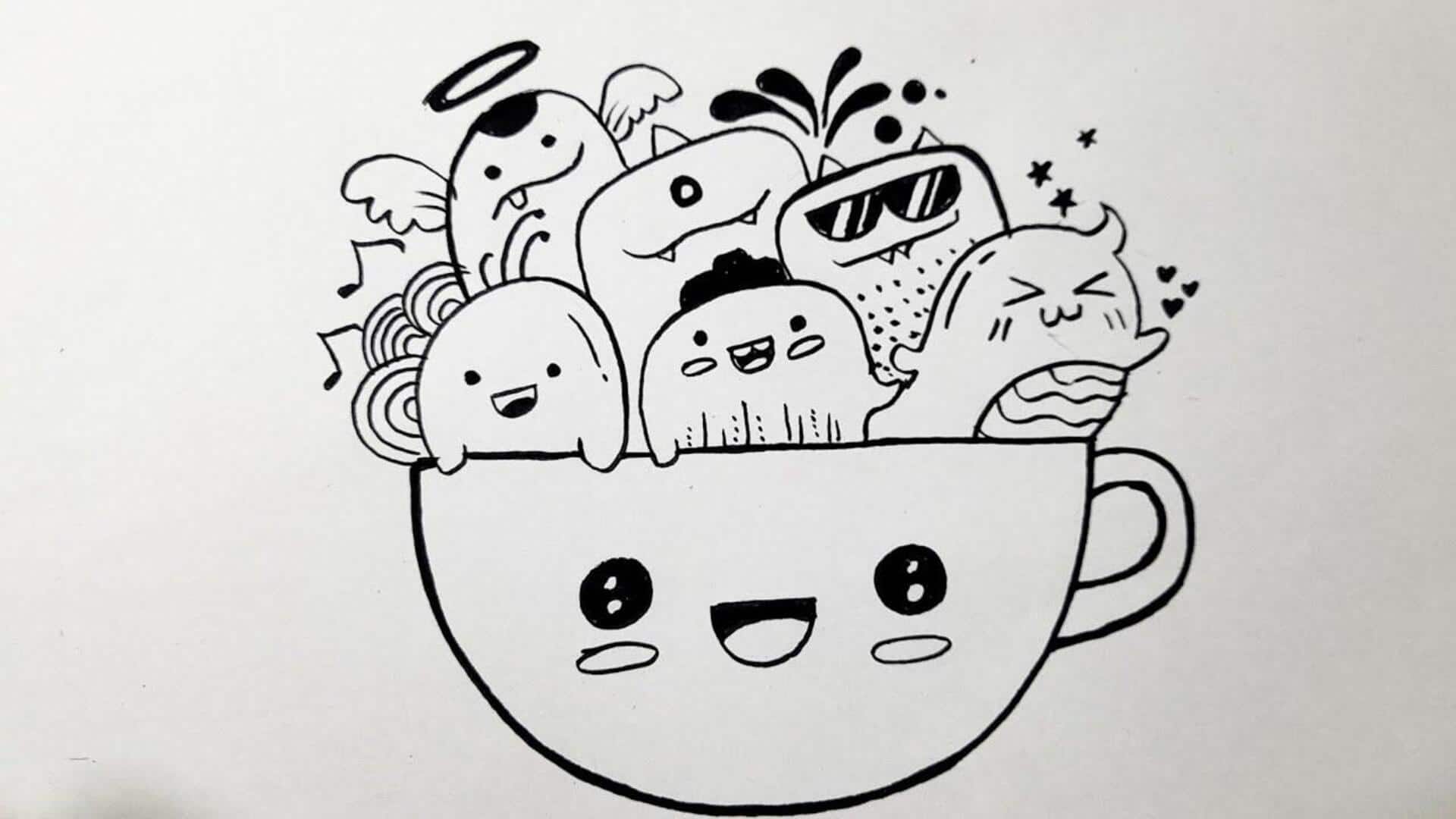
Doodling is an effective self-care practice: Tips to get started
What's the story
Doodling is one of the simplest, yet most effective, ways to practice self-care. It requires little to no skill and can be done anywhere, anytime. For beginners, doodling can be a great way to express creativity and relieve stress. It does not require any special tools or materials, making it accessible to everyone. Here are some practical tips and insights on how beginners can use doodling as a self-care practice.
Basic shapes
Start with simple shapes
Start your doodling journey by creating simple shapes like circles, squares, and triangles.
These basic forms are the building blocks of more complex designs.
As you get comfortable with these shapes, you can gradually move on to more intricate patterns.
This approach helps in building confidence and skill over time.
Everyday inspiration
Use everyday objects as inspiration
Look around you for inspiration in everyday objects like leaves, clouds, or even household items.
These common sights can spark unique doodle ideas that are personal and meaningful.
By incorporating familiar elements into your art, you make the process more relatable and enjoyable.
Scheduled practice
Set aside dedicated time for doodling
Allocate specific times during your day for doodling sessions.
Whether it's 5 minutes during lunch or 10 minutes before bed, consistency is key in developing this habit.
Regular practice not only enhances your skills but also provides a routine that contributes positively to your mental health.
Style exploration
Experiment with different styles
Don't limit yourself to one style of doodling; experiment with various techniques like *zentangle* or *mandalas*.
Trying out different styles keeps the process exciting and helps discover what resonates most with you personally.
It also broadens your creative horizons by exposing you to new ways of expression.
Community engagement
Join a community or group
Joining a community or group of fellow doodlers can be incredibly motivating and fun.
Sharing your work with others gives you a chance to get feedback and learn from different perspectives.
It also makes you feel like you are a part of a community, which can be a great source of support and encouragement on your artistic journey.