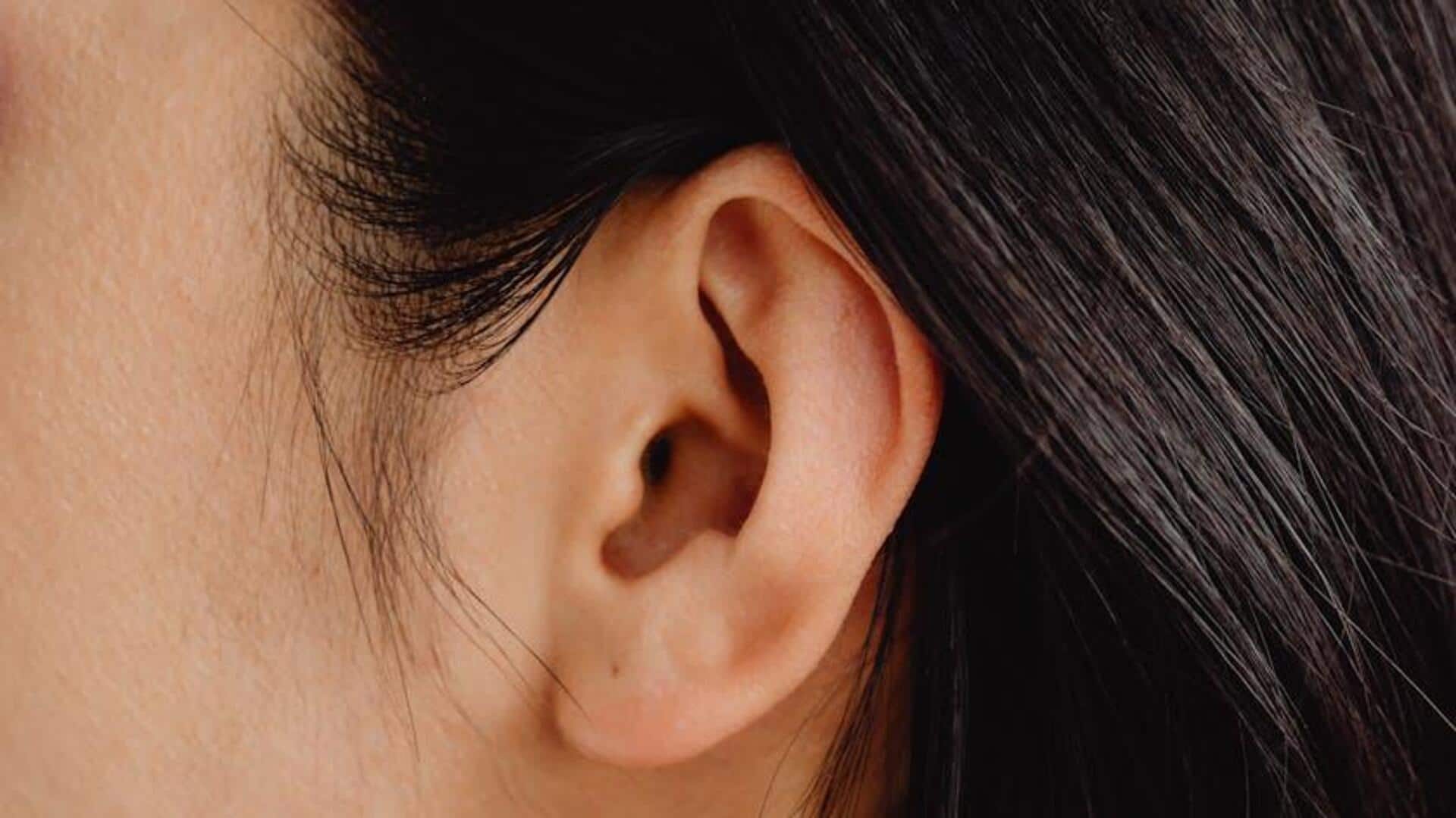
Busting all myths about ear care
What's the story
Ear care is often surrounded by a number of myths that can mislead people into thinking they are doing the right thing for their ears. Many of these myths have been passed down generations, but they are not backed by scientific evidence. Knowing the truth behind these myths is important to keep your ears healthy and avoid unnecessary problems. Here are some common ear care myths and the facts that debunk them.
Tip 1
Myth: Cotton swabs are safe for cleaning ears
Many believe that cotton swabs are a safe way to clean their ears, but that's not true.
In fact, using cotton swabs can push wax deeper into the ear canal, resulting in blockages and even damage to the eardrum.
Doctors recommend cleaning only the outer part of the ear with a cloth and letting the body naturally expel wax.
Tip 2
Myth: Earwax is dirty and needs frequent removal
Some think earwax is dirty and needs to be removed regularly.
However, earwax is actually good for you as it protects your ears from dust, dirt, and bacteria. It also keeps the skin in your ear canal healthy.
Unless you have an excessive buildup causing problems, you shouldn't worry about how much wax you have.
Tip 3
Myth: Ear candling removes earwax effectively
Ear candling is often touted as a natural way to remove earwax, but it doesn't work and can even be dangerous.
The procedure involves placing a lit candle in the ear canal, which supposedly creates suction to pull out wax.
However, there is no scientific evidence supporting its effectiveness, and it may lead to burns or perforation of the eardrum.
Tip 4
Myth: Water in ears causes infections
Many think that getting water in their ears while swimming or showering will cause infections.
But water alone doesn't cause infections; it's usually bacteria or fungi that enter through breaks in the skin or other means.
Drying your ears after exposure to water is good practice, but don't worry too much about occasional moisture exposure.
Tip 5
Myth: Hearing aids restore hearing completely
Some people believe that hearing aids can restore hearing completely, like normal hearing ability would be restored after usage, but that's not true.
Hearing aids amplify sound, but they don't cure hearing loss conditions, such as age-related loss, which affects clarity and volume perception differently than natural hearing abilities would do so, normally without assistance devices like these ones available today on the market.