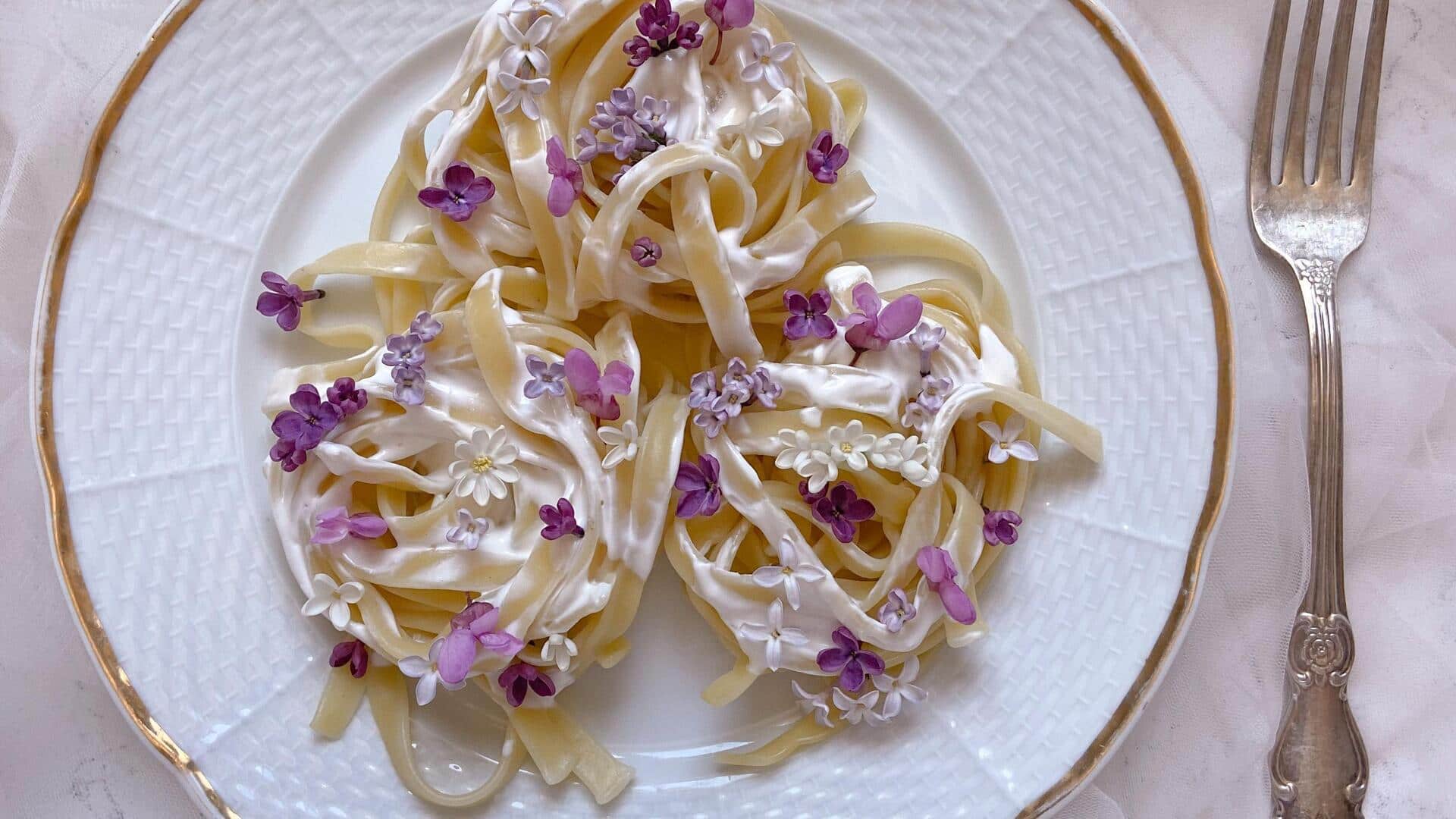
Flowers on your plate? Try these 5 edible varieties
What's the story
Edible flowers have been a part of vegetarian cuisine for centuries, adding a unique flavor and aesthetic appeal to dishes. These flowers not only enhance the taste but also offer nutritional benefits. From salads to desserts, edible flowers can be used in a variety of ways to elevate your meals. Here are five edible flowers that every vegetarian should consider incorporating into their cooking repertoire.
Nasturtium
Nasturtium: A peppery delight
Nasturtium is famous for its peppery taste, which is similar to watercress.
The flowers and leaves can be added to salads or used as a garnish on soups and main courses.
Nasturtium is rich in vitamin C and has antimicrobial properties.
Its vibrant colors also make it an attractive addition to any dish, giving both flavor and visual appeal.
Calendula
Calendula: The poor man's saffron
Calendula, popularly known as marigold, has a mild tangy taste that complements many dishes well. It is often used as a substitute for saffron because of its bright color.
Calendula petals can be added to rice, pasta, or used as a garnish on desserts.
The flower is also rich in antioxidants and has anti-inflammatory properties.
Hibiscus
Hibiscus: Tart and tangy
Hibiscus flowers lend a tart and tangy flavor to dishes, much like cranberries.
They can be used to make teas or syrups, or added directly to salads and desserts for an extra zest.
Hibiscus is loaded with vitamin C and other antioxidants, which promote good health by fighting oxidative stress in the body.
Lavender
Lavender: Aromatic floral notes
Lavender is famous for its aromatic scent and slightly sweet taste.
It is commonly used in baking (cookies or cakes) or infused into syrups for drinks like lemonade or iced tea.
Lavender also goes well with savory dishes like roasted vegetables or grains like rice or quinoa. It adds depth with its unique floral notes.
Squash blossoms
Squash blossoms: Delicate zucchini flavor
Squash blossoms have a delicate zucchini-like flavor that complements both savory and sweet preparations.
They are usually stuffed with cheese or herbs before being lightly sautéed or fried.
This way, the blossoms retain their shape while enhancing the dish's overall taste profile.
This is done without overpowering other ingredients present within the recipe itself.