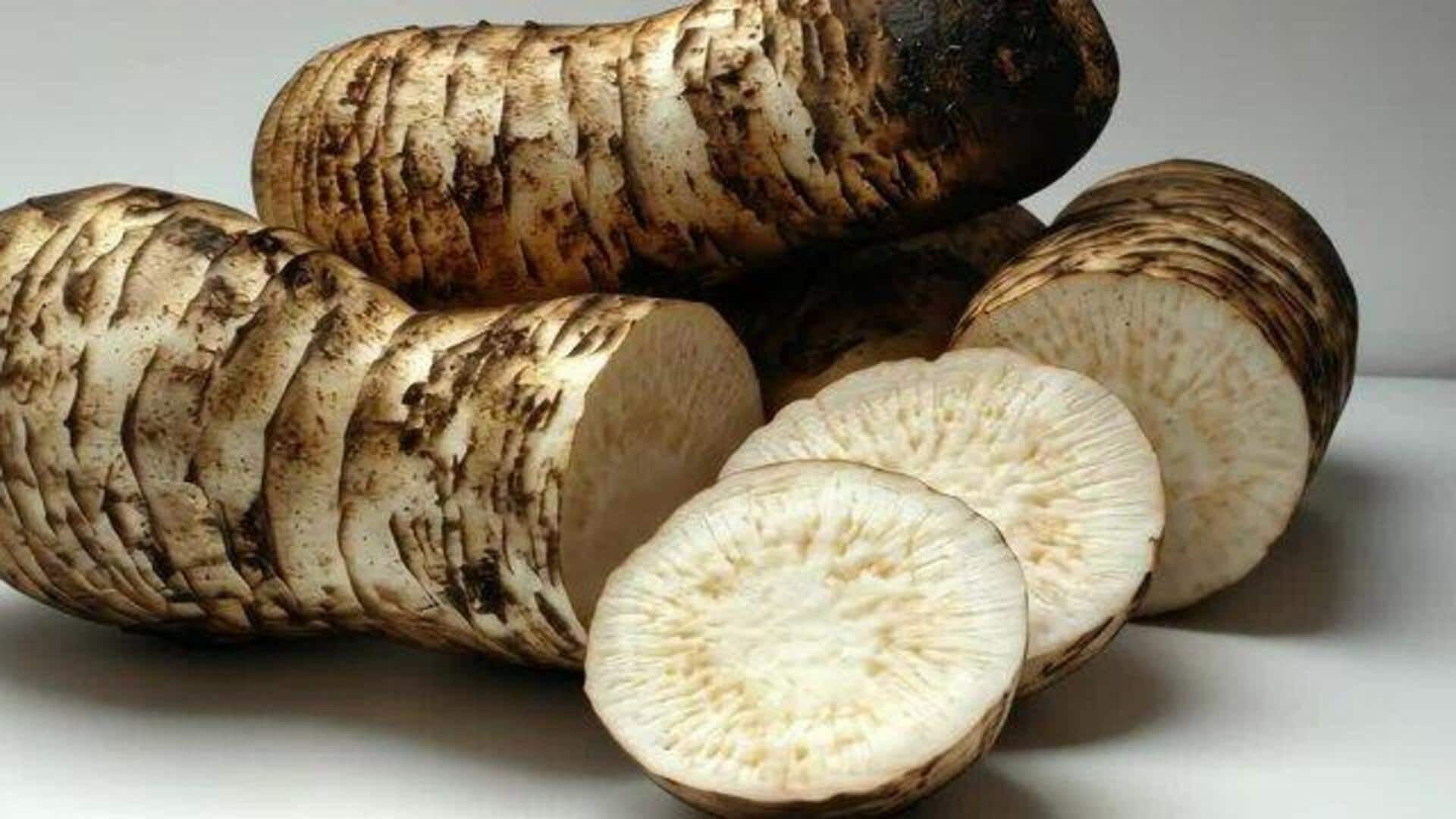
How to grow elephant foot yam
What's the story
Growing elephant foot yam indoors can be an interesting experience for gardening enthusiasts. This tropical plant, known for its unique appearance and nutritional benefits, requires specific conditions to thrive indoors. With the right setup and care, you can successfully cultivate this yam in your home environment. Here are some practical tips to help you grow elephant foot yam indoors.
Tip 1
Choosing the right container
Selecting an appropriate container is crucial for growing elephant foot yam indoors.
Choose a pot that is at least 18 inches deep and wide to accommodate the plant's root system.
Ensure that the container has drainage holes to prevent waterlogging, which can damage the roots.
Using a lightweight material like plastic or fiberglass can make it easier to move the pot if needed.
Tip 2
Providing adequate light
Elephant foot yam needs a lot of light to grow well indoors.
Place your plant near a south-facing window where it can get direct sunlight for at least six hours every day.
If natural light is not sufficient, you can use grow lights to give the required illumination.
Keep the lights about 12 inches above the plant, and adjust them as it grows.
Tip 3
Maintaining optimal soil conditions
The soil mix you use plays a major role in the health of your elephant foot yam.
Use well-draining potting soil mixed with organic matter like compost or peat moss to improve fertility and moisture retention.
Maintain a slightly acidic pH level between six and seven by testing your soil regularly with a pH meter or test kit.
Tip 4
Watering and fertilizing properly
Proper watering is key to keeping your elephant foot yam healthy indoors.
Water when the top inch of soil feels dry but avoid overwatering as it can lead to root rot.
Fertilize every four weeks with a balanced liquid fertilizer diluted to half strength during the growing season from spring through summer.
Reduce fertilization during fall and winter when growth slows down naturally.