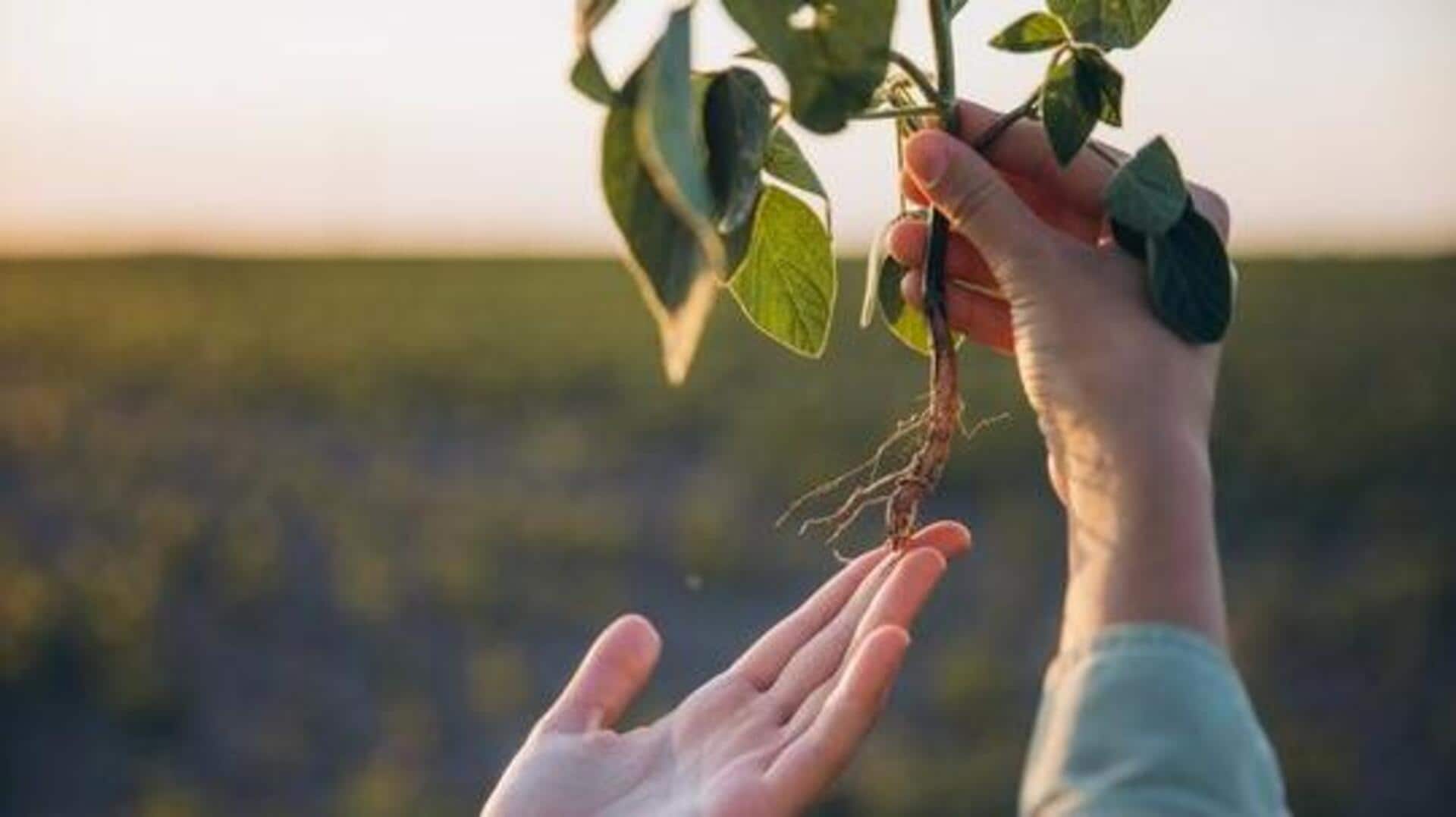
How to fix unhealthy roots in houseplants
What's the story
Houseplants can be a great way to liven up your space, but they need a lot of care to stay healthy. One of the most important aspects of plant care is checking the roots. Healthy roots are essential for plants to absorb water and nutrients properly. By regularly checking your houseplant roots, you can prevent common problems like root rot and ensure your plants thrive.
#1
Signs of healthy roots
Healthy roots should be firm and white or light tan in color. They should not be mushy or brown, which indicates rot.
A well-developed root system will also have plenty of fine hairs that help with nutrient absorption.
If you see these signs when inspecting your plant's roots, it is a good indication that your plant is healthy.
#2
Identifying root rot
Root rot is a common problem that occurs when roots sit in waterlogged soil for too long.
The first signs include yellowing leaves and stunted growth.
On inspecting the roots, you will find them soft and darkened in color.
If you catch root rot early, you can save your plant by trimming away affected roots and repotting it in fresh soil.
#3
Importance of proper drainage
Proper drainage is essential to keep your plant roots healthy.
Without it, excess water can quickly lead to root rot.
To avoid this, make sure your pots have drainage holes and use a well-draining soil mix.
This will prevent water from sitting at the bottom of the pot, keeping the roots from getting too wet.
#4
Repotting for healthier roots
Repotting gives houseplants a chance to grow by giving them fresh soil and more space for their roots.
When repotting, check if your plant's roots have outgrown its current pot by looking for roots coming out of drainage holes or circling tightly around the root ball.
If so, transfer it into a larger pot with new soil to promote healthier growth.
Tip 5
Tips for maintaining root health
To keep your houseplant roots healthy, water them properly according to their needs, and avoid overwatering.
Let the top inch of soil dry out between waterings for most houseplants, before watering again.
This prevents excess moisture around roots, which can lead to problems like root rot if not managed well over time.