
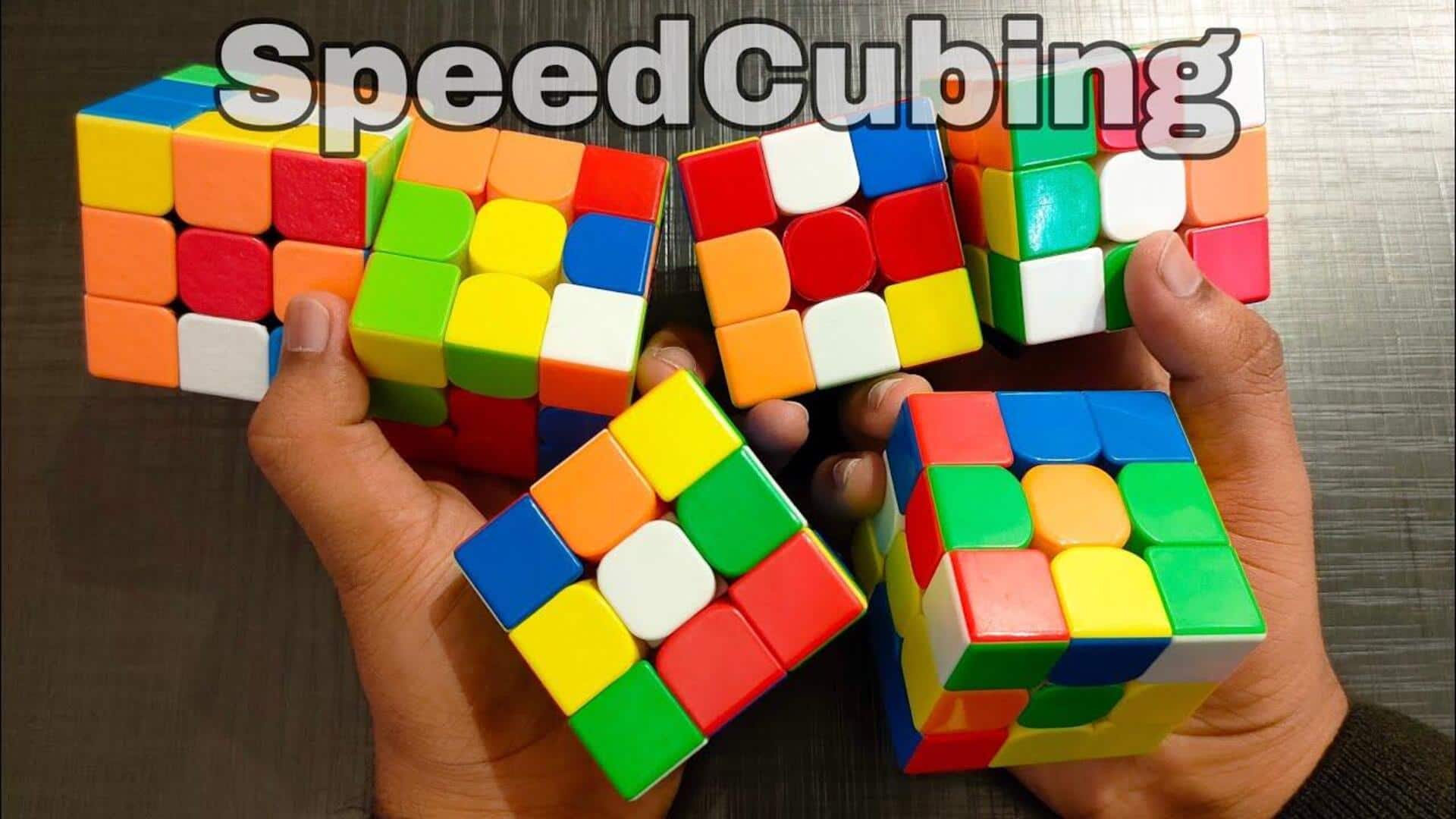
For better hand-eye coordination, try either footbag or speed cubing
What's the story
Footbag and speed cubing are two activities that may seem worlds apart, but both do wonders for improving your hand-eye coordination. While footbag involves juggling a small bag with your feet, speed cubing is all about solving a Rubik's Cube as fast as possible. Both the activities require intense focus, quick reflexes, and precise movements, making them great for honing this important skill. Here's how they help.
#1
Enhancing reflexes through footbag
Footbag requires players to perform a variety of tricks by kicking a small bag with their feet. This activity improves reflexes by forcing players to react quickly to the changing position of the bag. As players progress, they develop faster response times and better coordination between their eyes and feet. The repetitive nature of footbag tricks helps solidify these reflexes over time.
#2
Speed cubing: A mental workout
Speed cubing is not just about physical dexterity; it also requires mental agility. Solving a Rubik's Cube quickly requires recognizing patterns and making decisions in split seconds. This mental workout enhances cognitive functions related to visual processing and spatial awareness. As you practice speed cubing, you'll notice improved hand-eye coordination as your brain becomes more adept at processing visual information rapidly.
#3
Balancing precision with footbag tricks
In footbag, precision is key to executing tricks successfully without dropping the bag or losing balance. Players must develop an acute sense of timing and spatial awareness to perform complex maneuvers smoothly. This focus on precision translates directly into improved hand-eye coordination skills that can be beneficial in various other activities requiring fine motor control.
#4
Building patience and focus through speed cubing
Speed cubing requires a lot of patience and focus as you try to solve the puzzle in the shortest time possible. The need to concentrate on every move and anticipate the next one improves your ability to focus for long periods of time. This increased focus also improves your hand-eye coordination by allowing you to make precise movements based on visual cues from the cube's changing patterns.