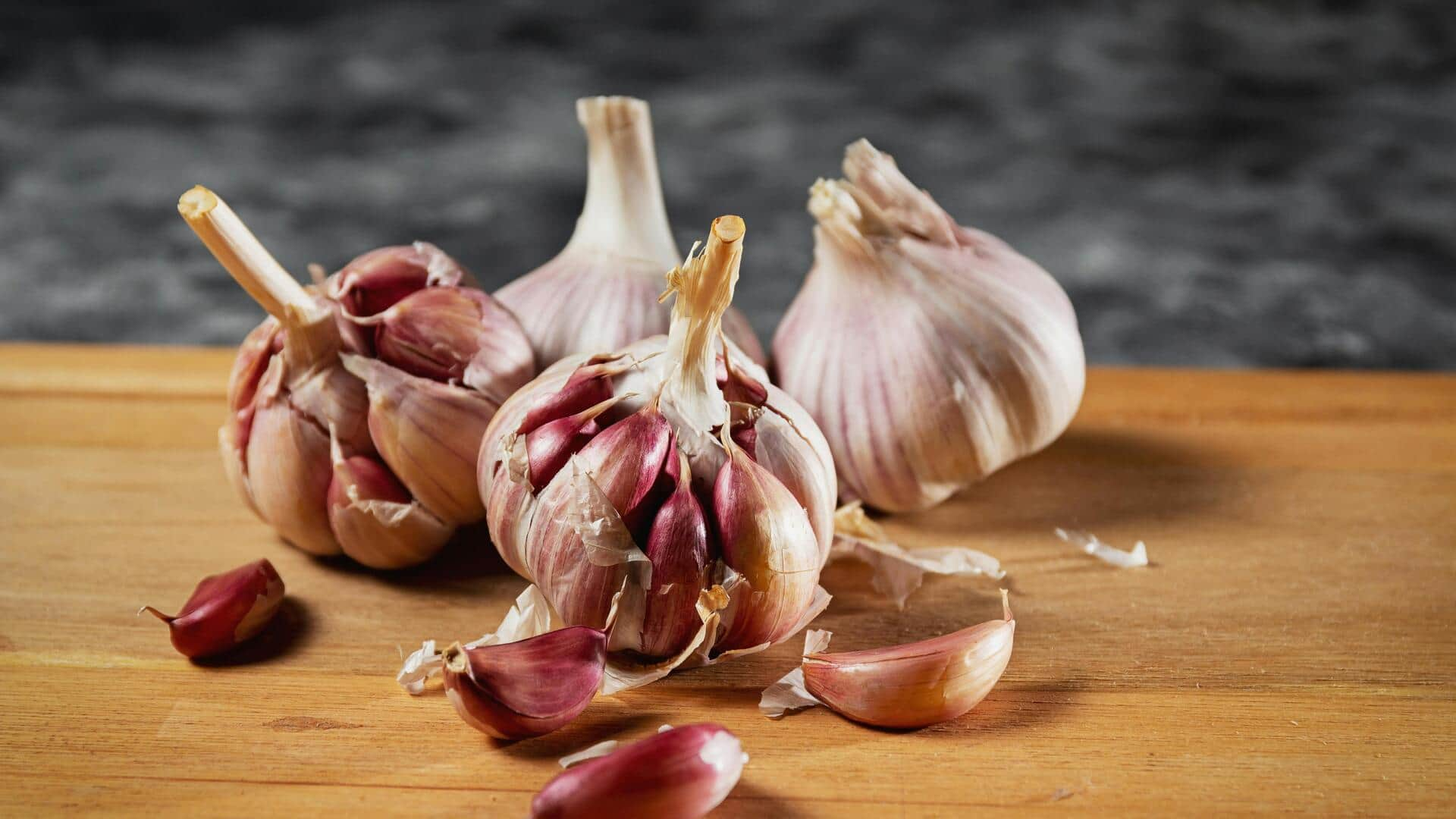
Garlic and heart health: What to know
What's the story
Garlic has been long praised for its heart health benefits, but many misconceptions surround its effects. While some swear by garlic as a natural remedy to keep heart diseases at bay, others are skeptical of its real impact. This article aims to debunk common myths about garlic and heart health, and provide insights based on scientific evidence. Knowing the truth can help you make informed dietary choices.
#1
Myth: Garlic lowers cholesterol significantly
One common myth is that garlic significantly lowers cholesterol levels.
While some studies indicate a modest reduction in total cholesterol, the effect is not as pronounced as many believe.
Research shows that garlic might reduce total cholesterol by about 4% to 10% at best.
It's important to note that this effect varies among individuals and shouldn't be relied upon as the sole method for managing cholesterol levels.
#2
Myth: Garlic prevents heart disease entirely
Another common misconception is that eating garlic can prevent heart disease entirely.
Though garlic has certain compounds that may promote cardiovascular health, such as allicin, it's not a magic bullet against heart disease.
A healthy lifestyle, including a balanced diet and regular exercise, is essential for heart disease prevention.
Garlic can be a part of this lifestyle but shouldn't be solely relied upon.
#3
Myth: More garlic equals better heart health
Many believe that consuming large amounts of garlic will greatly improve heart health.
However, excessive consumption may lead to side effects like digestive discomfort or bad breath without providing additional cardiovascular benefits.
Moderation is key; incorporating a reasonable amount of garlic into your diet can offer some health benefits without adverse effects.
#4
Myth: All forms of garlic are equally beneficial
Not all forms of garlic provide the same health benefits.
Raw garlic is usually considered more beneficial than cooked because heat can destroy some beneficial compounds like allicin.
However, if you prefer cooked garlic for taste reasons, you can still reap some benefits by crushing or chopping it before cooking to preserve its active components.