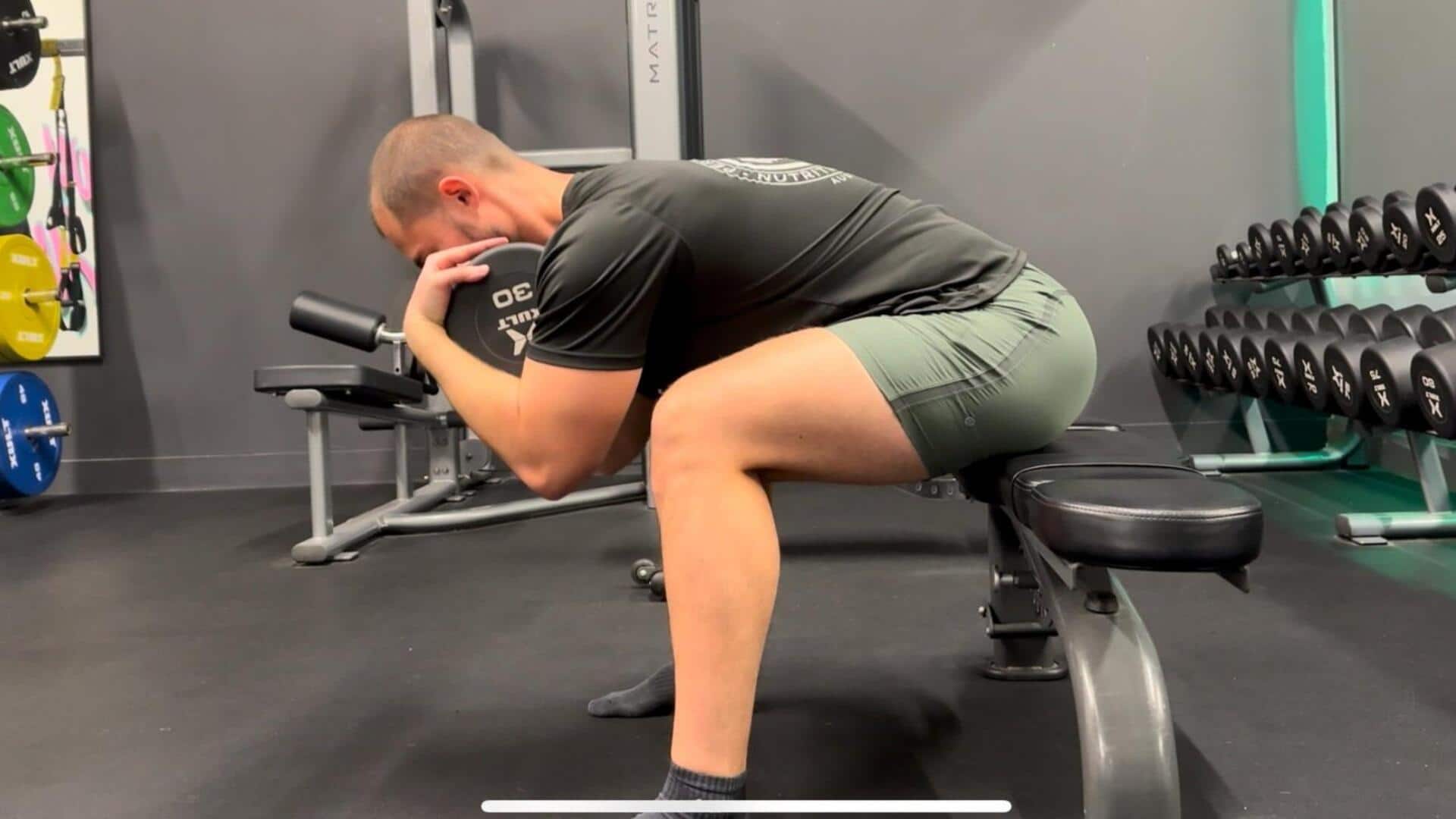
Good morning exercise: Here's how to do it effectively
What's the story
The good morning exercise is a staple in many strength training routines, particularly for the lower back and hamstrings. It involves a simple yet effective movement that can help improve flexibility, strength, and posture. By focusing on proper form and technique, you can maximize the benefits of this exercise while minimizing the risk of injury. Here's a look at how to do this exercise effectively.
Tip 1
Proper stance and grip
Start by standing with feet shoulder-width apart.
Hold a barbell or dumbbells at shoulder level with palms facing forward.
Ensure your grip is firm but not overly tight to avoid unnecessary strain on your hands and wrists.
A proper stance sets the foundation for maintaining balance throughout the movement.
Tip 2
Engaging core muscles
Before you begin the movement, engage your core muscles by pulling your belly button towards your spine.
This helps stabilize your torso and protects your lower back from injury during the exercise.
Maintaining core engagement throughout the movement is crucial for effectiveness.
Tip 3
Controlled movement technique
Begin by hinging at your hips while keeping a slight bend in your knees.
Lower the weights toward the ground while maintaining a straight back and neutral spine position.
Avoid rounding your shoulders or arching your lower back to prevent strain.
Tip 4
Breathing patterns during exercise
Inhale deeply as you lower the weights towards the ground, ensuring that you maintain control over the movement.
Once you reach the lowest point of the exercise, exhale slowly as you return to the starting position.
This synchronized breathing pattern not only helps in maintaining focus but also plays a crucial role in stabilizing your core, making the exercise safer and more effective.
Tip 5
Common mistakes to avoid
Avoid common mistakes such as using too much weight, which can lead to improper form and injury.
Also, steer clear of locking out your knees at any point during the exercise to ensure that your joints are protected and the focus remains on the targeted muscle groups.
This way, you can achieve better results and avoid unnecessary strain.