Handball v/s dodgeball: Which improves agility faster?
What's the story
Handball and dodgeball are two popular sports that promise to improve agility. Both games have their own unique set of challenges and benefits, making them ideal for those looking to improve their physical fitness. While handball is a fast-paced game that requires quick reflexes and strategic thinking, dodgeball focuses on dodging and throwing balls at opponents. Here's how each sport improves agility.
#1
Handball's fast-paced nature
Handball is played in a small court with two teams of players who try to score by throwing a ball into the opponent's goal.
The fast-paced nature of the game requires players to make quick movements, change directions rapidly, and maintain balance while running at high speeds.
This constant need to adapt helps improve overall agility by enhancing coordination between different muscle groups.
#2
Dodgeball's focus on reflexes
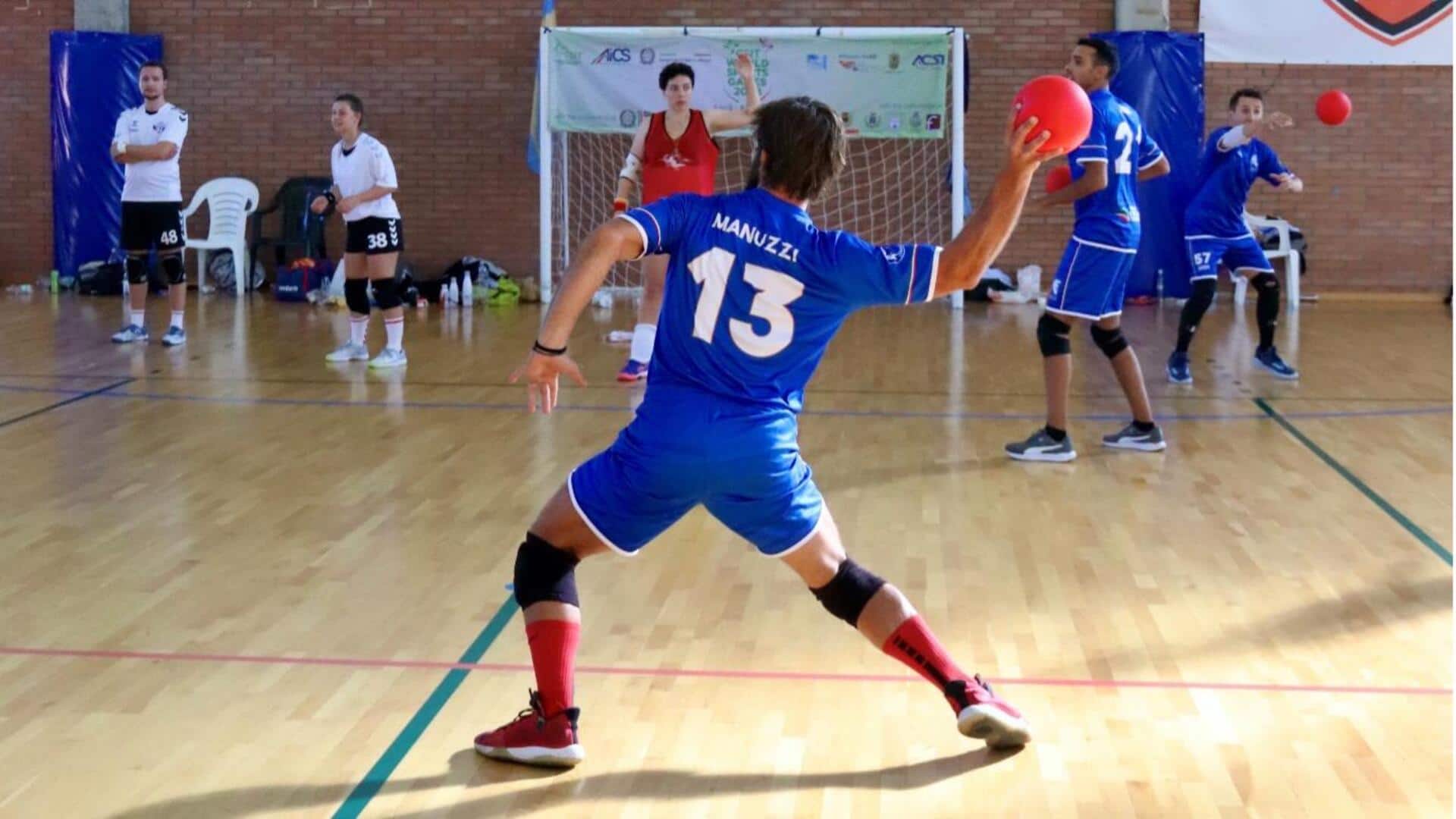
Dodgeball involves two teams trying to hit opponents with balls or dodge incoming throws.
The game emphasizes quick reflexes as players have to react instantly to incoming throws or dodge them skillfully.
This constant need for alertness and swift movement helps improve reaction times and hand-eye coordination, both of which are crucial components of agility.
#3
Cardiovascular benefits of both sports
Both handball and dodgeball are high-intensity sports that provide excellent cardiovascular benefits.
Playing these games regularly elevates heart rate, improves endurance, and promotes better circulation throughout the body.
A healthy cardiovascular system is essential for overall agility, as it supports efficient oxygen delivery to muscles during physical activity.
Tip 1
Social interaction boosts motivation
Participating in team sports such as handball or dodgeball also provides social interaction opportunities that can boost motivation levels among players.
The camaraderie developed through teamwork encourages individuals to push themselves further during practice sessions or matches.
This increased motivation often leads to improved performance over time, contributing positively towards enhancing agility skills naturally through consistent play experiences.