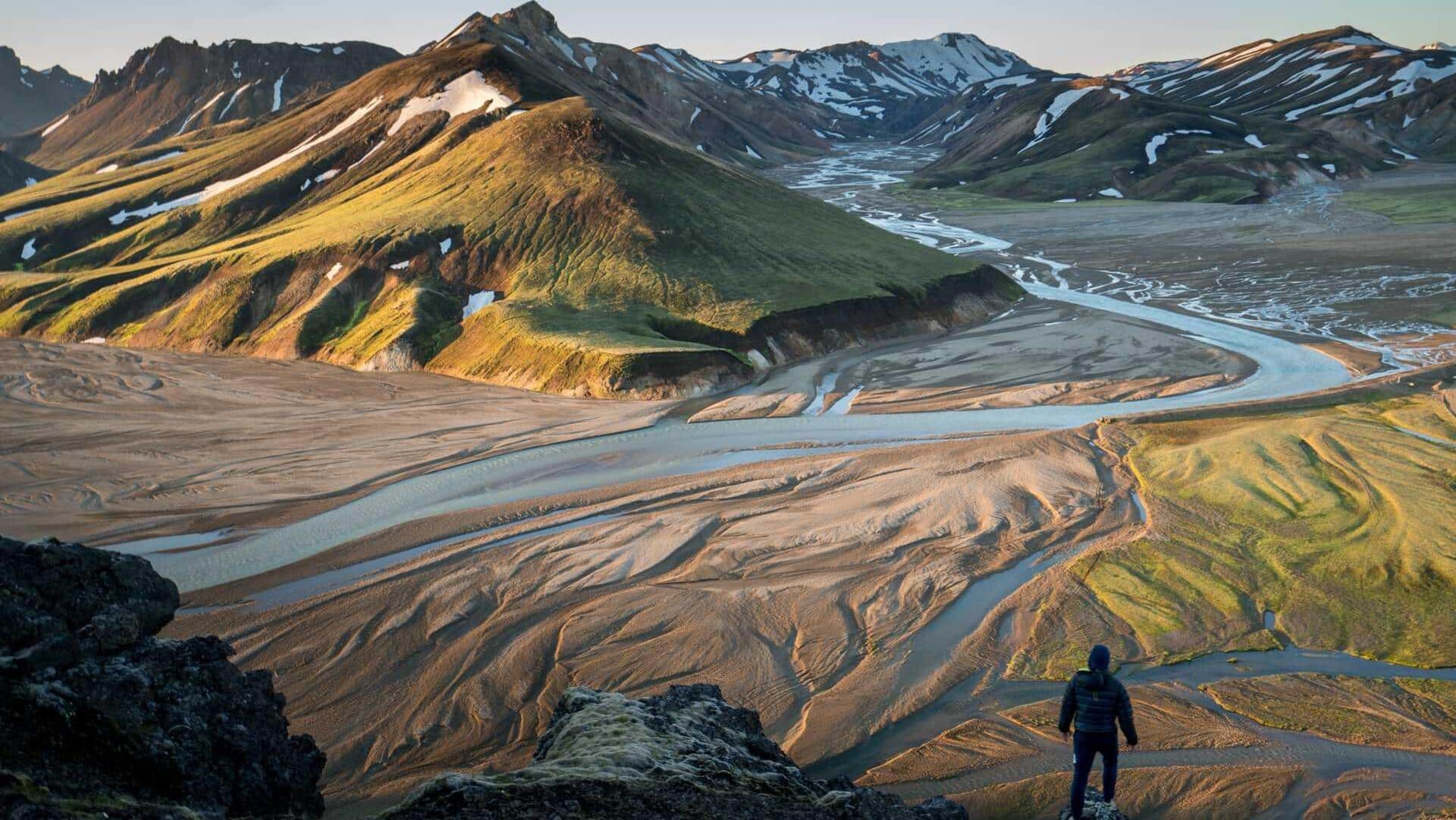
Iceland's Laugavegur trail is a must-do adventure
What's the story
The Laugavegur Trail in Iceland is a hiker's dream, spanning 55 kms between Landmannalaugar and Thórsmörk. Famous for its diverse landscapes, the trail takes you through colorful rhyolite mountains, vast lava fields, and green valleys. Hikers from all over the world come to experience the unique natural beauty and challenging terrain. Here's everything you need to know about this iconic trail.
Preparation
Preparing for the hike
Before you embark on the Laugavegur Trail, proper preparation is key.
Make sure you have sturdy hiking boots, weather-appropriate clothing, and a reliable backpack. The weather can be unpredictable, so layers are important.
Carry enough food and water purification methods, as there are limited facilities along the way.
Familiarize yourself with the trail map and plan your daily distances according to your fitness level.
Terrain
Understanding the terrain
The Laugavegur Trail is famous for its diverse terrain, from geothermal areas with hot springs to glaciers and volcanic landscapes.
Each section has its own challenges, from steep ascents to river crossings.
Be prepared for varying conditions, as some parts may be muddy or slippery due to rain or melting snow.
Knowing what lies ahead will help you navigate safely.
Accommodation
Accommodation options along the trail
Along the Laugavegur Trail, there are a number of huts and campsites where you can rest.
While some huts require prior booking, campsites are generally first come, first serve. It is advisable to check availability in advance during peak seasons, when demand is high.
Carrying a tent gives you more flexibility, but check weather forecasts regularly.
Safety
Safety tips for hikers
Safety should always be a priority when hiking in remote areas like Iceland's Laugavegur Trail.
Always inform someone about your itinerary before you leave, in case of emergencies.
Carry a first aid kit, and know basic first aid procedures.
Avoid taking unnecessary risks, like crossing rivers when the water level is high.