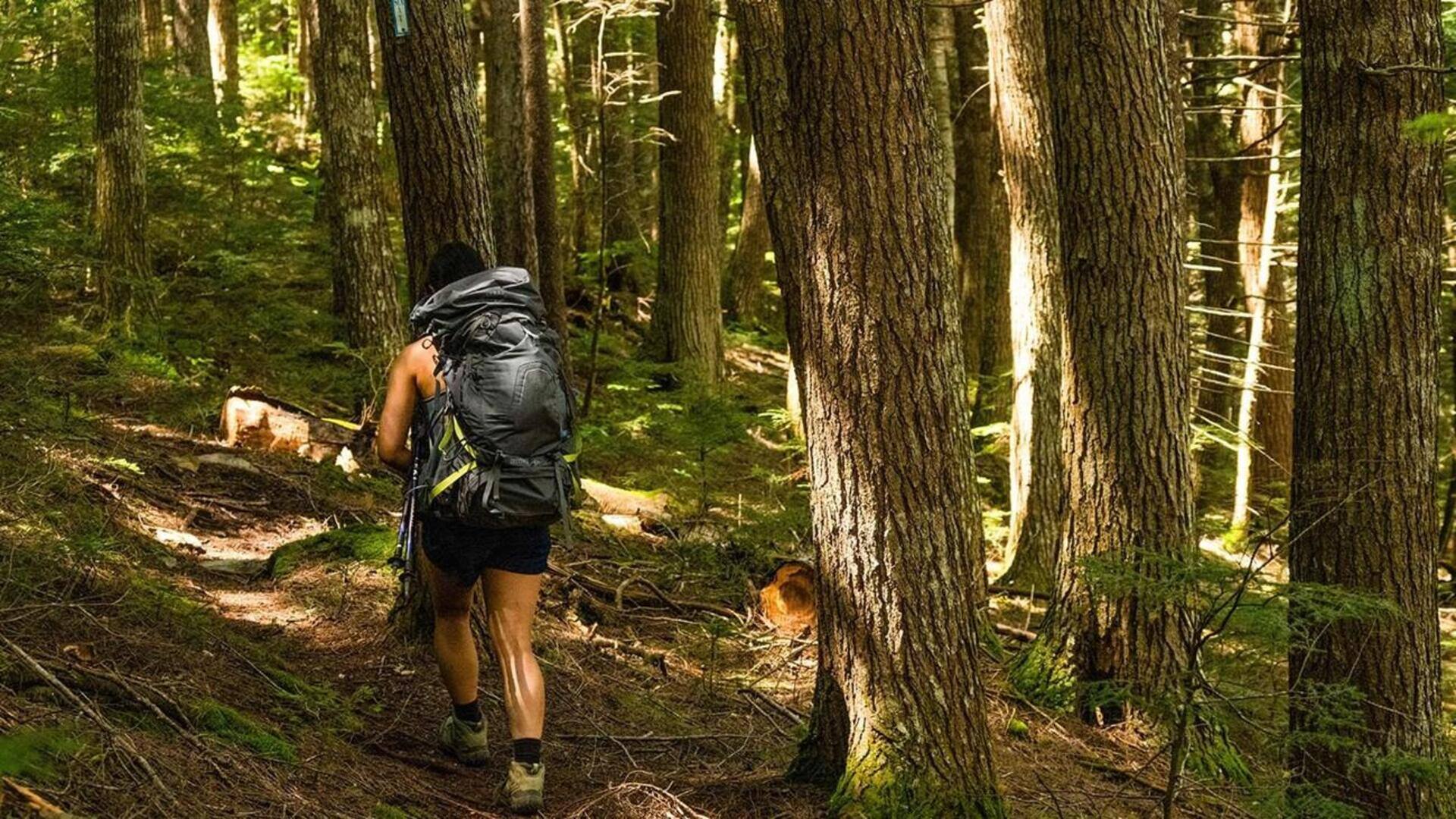
Why you should hike uneven forest trails more
What's the story
Exploring uneven forest trails can be a rewarding experience for those looking to enhance their hiking skills. These trails offer unique challenges that help hikers improve their balance, endurance, and navigation abilities. By venturing into less-traveled paths, hikers can also gain a deeper appreciation for nature while developing practical skills that are beneficial in various outdoor settings. Here are five ways to boost hiking skills through uneven forest trails.
#1
Improve balance and coordination
Navigating uneven terrain requires a high level of balance and coordination.
As hikers encounter rocks, roots, and varying elevations, they must constantly adjust their footing and posture.
This practice helps strengthen stabilizing muscles and improves overall body awareness.
Over time, these skills contribute to greater agility both on and off the trail.
#2
Enhance endurance with varied terrain
Uneven forest trails often feature steep inclines, declines, and varying surfaces that challenge cardiovascular endurance.
By tackling these diverse terrains regularly, hikers can significantly improve their stamina over time.
The continuous movement required on such trails promotes cardiovascular health and increases overall physical resilience.
#3
Develop navigation skills
Exploring less-marked forest trails encourages hikers to hone their navigation skills using maps or GPS devices.
This practice is crucial for safely traversing unfamiliar areas without relying solely on marked paths or signs.
Developing these skills enhances confidence in navigating through various environments, while ensuring a safer hiking experience.
#4
Foster mental resilience
Hiking on uneven forest trails often means dealing with unexpected obstacles such as sudden weather changes or difficult passages.
Overcoming these challenges fosters mental resilience by teaching problem-solving skills under pressure.
This mental fortitude is not only beneficial during hikes but also translates into other aspects of life where adaptability is required.
#5
Gain deeper appreciation for nature
Exploring less-traveled forest trails allows hikers to experience nature more intimately than popular routes might offer.
The solitude of these paths often leads to a greater connection with the environment around you—encouraging mindfulness practices that enhance your overall well-being while fostering an appreciation for natural landscapes.