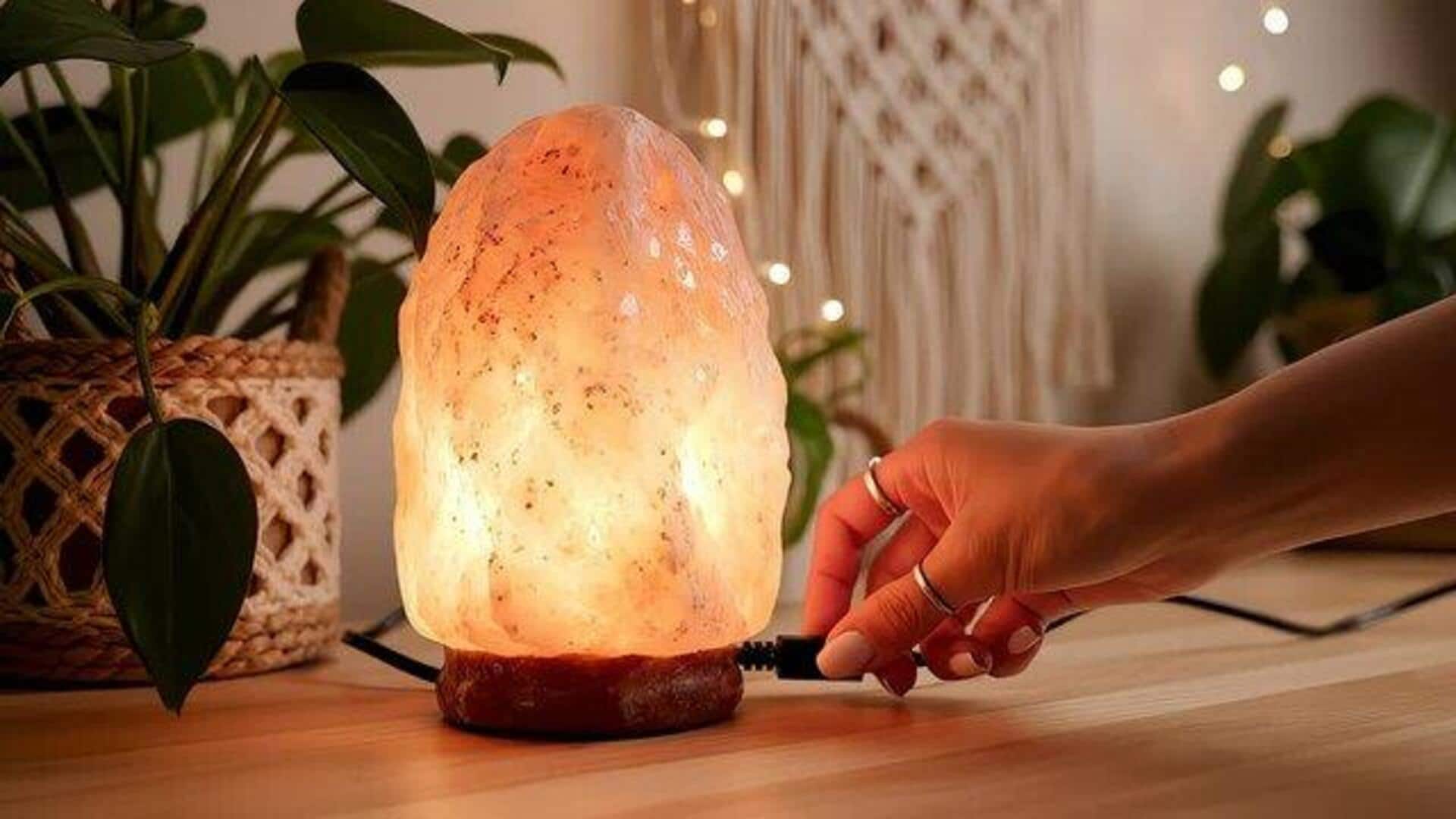
Do Himalayan salt lamps really work?
What's the story
Himalayan salt lamps have become a popular home decor item, credited with a number of health benefits. However, many of these claims are more myth than fact. While they look beautiful and provide a soft glow, it is important to separate fact from fiction when it comes to their impact on health. Here are some common myths about Himalayan salt lamps, and the truth behind them.
Air purification
Myth: They purify air
One of the most common claims is that Himalayan salt lamps purify the air by releasing negative ions.
While it is true that negative ions can help improve air quality by neutralizing pollutants, the effect of a small lamp in a room is negligible.
Studies have not shown any significant change in ion levels, or air purity, due to these lamps.
Allergy reduction
Myth: They reduce allergies
Another popular belief is that Himalayan salt lamps can reduce allergy symptoms by removing allergens from the air.
However, there is no scientific evidence to support this claim.
Allergies are caused by various factors, and relying solely on a salt lamp for relief may not be effective.
Proper management of allergies usually requires medical intervention and avoiding known triggers.
Sleep enhancement
Myth: They improve sleep quality
Many people believe the soft light emitted by Himalayan salt lamps can improve sleep quality by creating a calming atmosphere.
While low lighting can help some people relax before bedtime, there is no direct evidence linking these lamps to better sleep or reduced insomnia symptoms.
Sleep quality is influenced by many factors, including lifestyle habits and environmental conditions.
Mood enhancement
Myth: They boost mood levels
It is often claimed that Himalayan salt lamps can elevate mood levels by increasing serotonin production through their light emission.
However, this assertion lacks scientific backing.
Mood regulation is complex and influenced by various biological and psychological factors beyond the scope of a lamp's light effects alone.