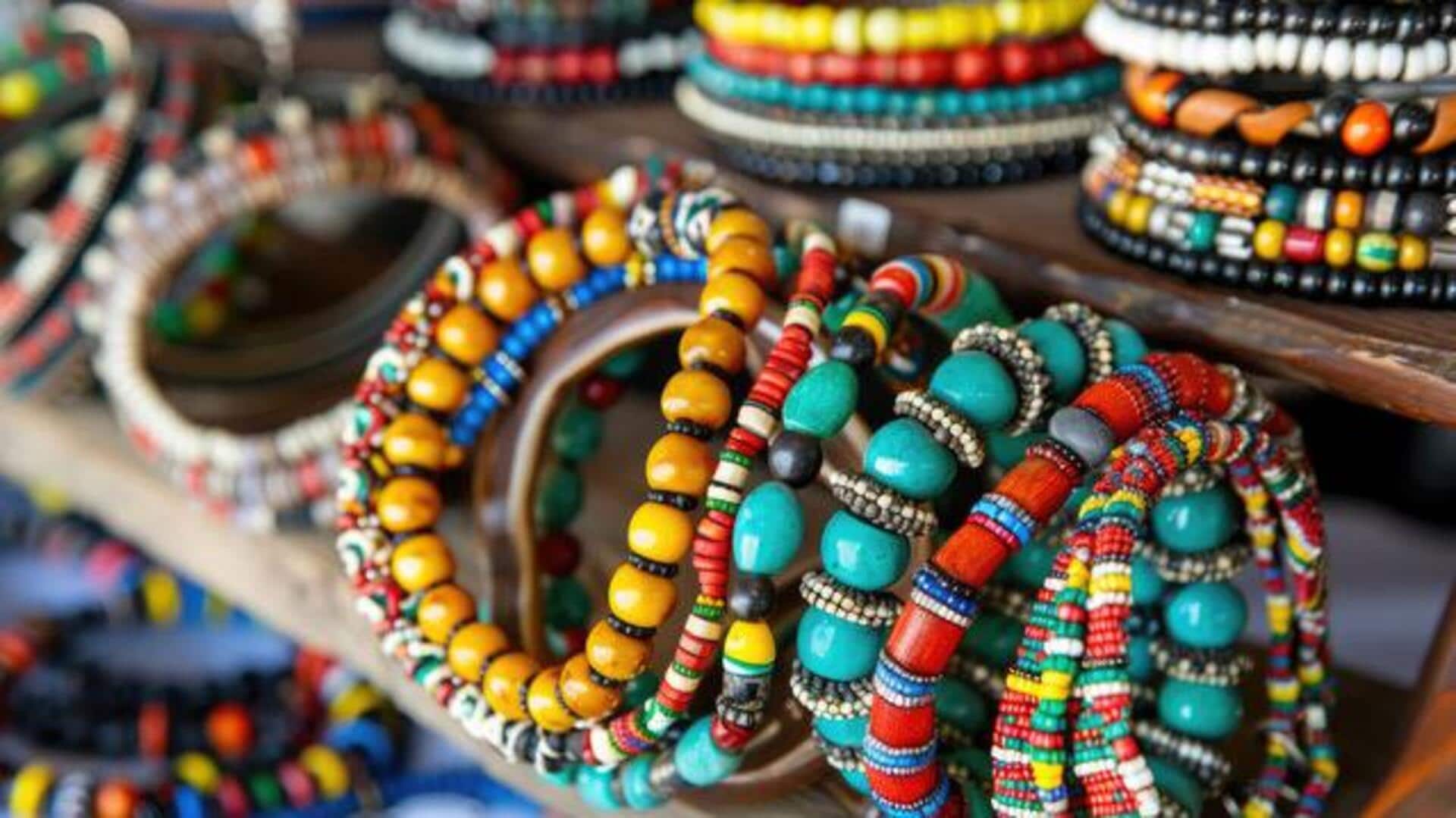
How jewelry artists are redefining wearable art
What's the story
African jewelry artists are redefining wearable art by marrying traditional craftsmanship with modern aesthetics. These artists are not only preserving cultural heritage but also making a mark in the global fashion industry. Their creations often reflect the rich history and diverse cultures of Africa, while also appealing to contemporary tastes. Here are some insights into how these artists are changing the landscape of wearable art.
#1
Embracing traditional techniques
Many African jewelry artists adhere to traditional techniques passed down through generations. Be it beadwork, metal forging, or carving, these techniques are central to their work.
They use locally sourced materials such as beads, shells, and metals to create unique pieces that tell a story.
By adhering to these methods, artists keep cultural traditions alive while also appealing to a global audience.
#2
Fusion of cultures in designs
The best part about African jewelry artists is that they incorporate elements from different cultures into their designs.
This fusion creates pieces that are not only visually stunning but also culturally rich.
For instance, some artists blend African motifs with contemporary styles or even elements from other parts of the world.
This cross-cultural approach widens their appeal and makes their work stand out in the global market.
#3
Sustainable practices in production
Sustainability is another key focus area for many African jewelry artists. They often use recycled materials or sustainably sourced resources to minimize environmental impact.
Not only does this practice align with global sustainability trends, but it also attracts eco-conscious consumers looking for ethical fashion choices.
By prioritizing sustainability, these artists contribute positively to both the environment and the economy.
#4
Empowering communities through art
Many African jewelry artists work with local communities to empower them through skill development and economic opportunities.
By providing training and employment, they help uplift marginalized groups while also fostering creativity within communities.
This collaborative approach not only supports livelihoods but also encourages a greater appreciation for African art on a global scale.