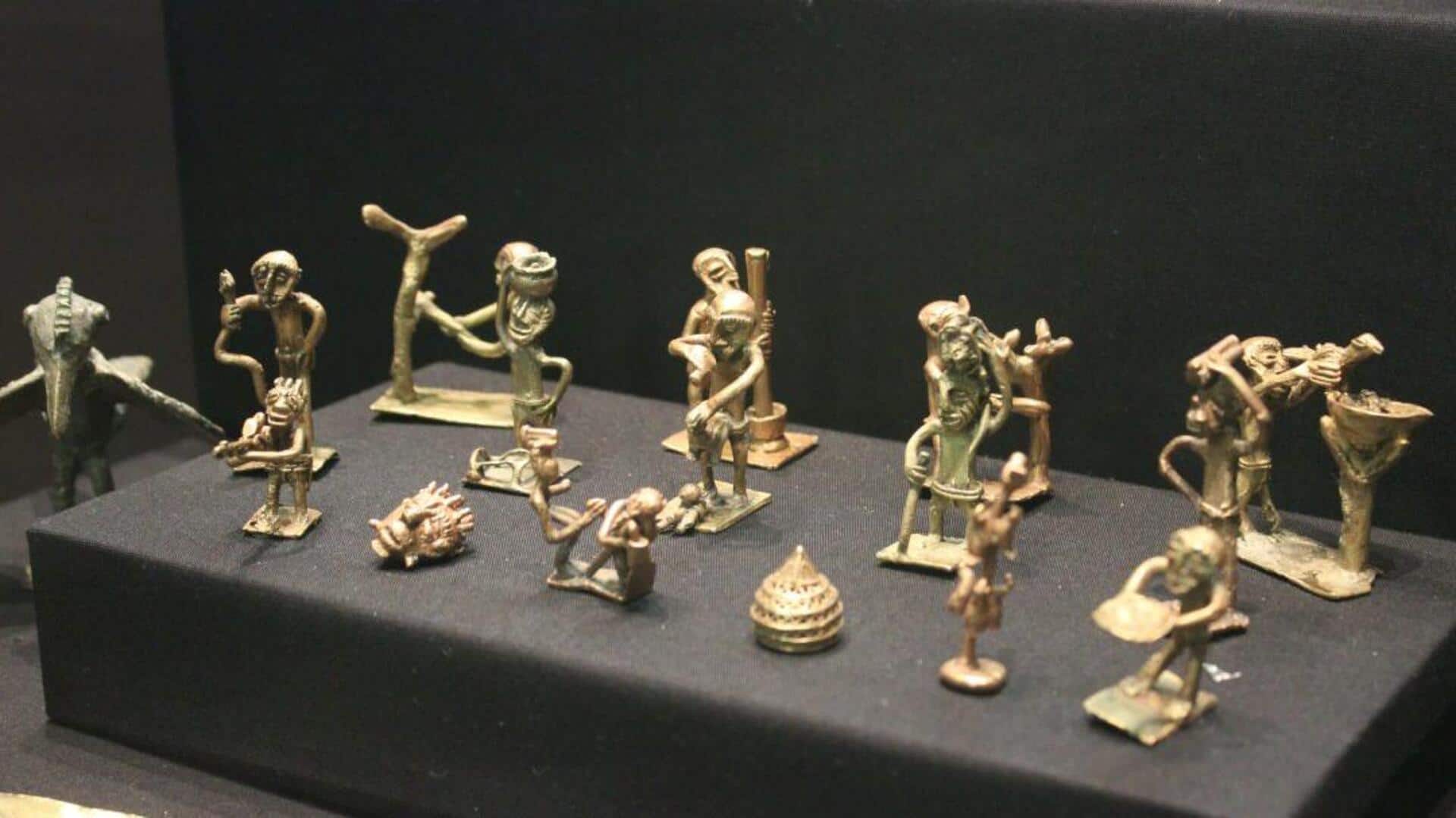
Akan goldweights: All about these iconic brass sculptures
What's the story
Akan goldweights, small brass sculptures from West Africa, are being creatively reimagined by contemporary African artists. These pieces, which were once used to weigh gold for trade, are now being used to explore themes of identity, culture, and history. Artists are using these traditional forms to make statements about modern life and the past's influence on it. Here are some ways artists are transforming Akan goldweights into modern art.
#1
Redefining cultural significance
Contemporary artists are redefining the cultural significance of Akan goldweights by incorporating them into new artistic contexts.
By doing so, they highlight the importance of these historical artifacts in understanding African heritage.
The reinterpretation allows for a dialogue between past and present, showcasing how traditional art forms can adapt and remain relevant in today's society.
#2
Exploring identity through art
Many African artists use Akan goldweights as a means to explore personal and collective identity.
By integrating these symbols into their work, they delve into questions of belonging, heritage, and self-perception.
This exploration often results in pieces that resonate deeply with audiences who share similar cultural backgrounds or experiences.
#3
Challenging perceptions of value
Artists also challenge perceptions of value by juxtaposing Akan goldweights with contemporary materials or settings.
This contrast prompts viewers to reconsider what constitutes value in art and society at large.
By placing traditional objects alongside modern elements, artists create a dialogue about materialism, cultural worth, and the shifting nature of value over time.
#4
Fostering dialogue between past and present
Through their work with Akan goldweights, artists foster dialogue between past and present cultures.
They create spaces for conversation about history, tradition, and innovation.
This dialogue encourages viewers to reflect on how historical artifacts continue to shape contemporary life while acknowledging their enduring significance within African culture.