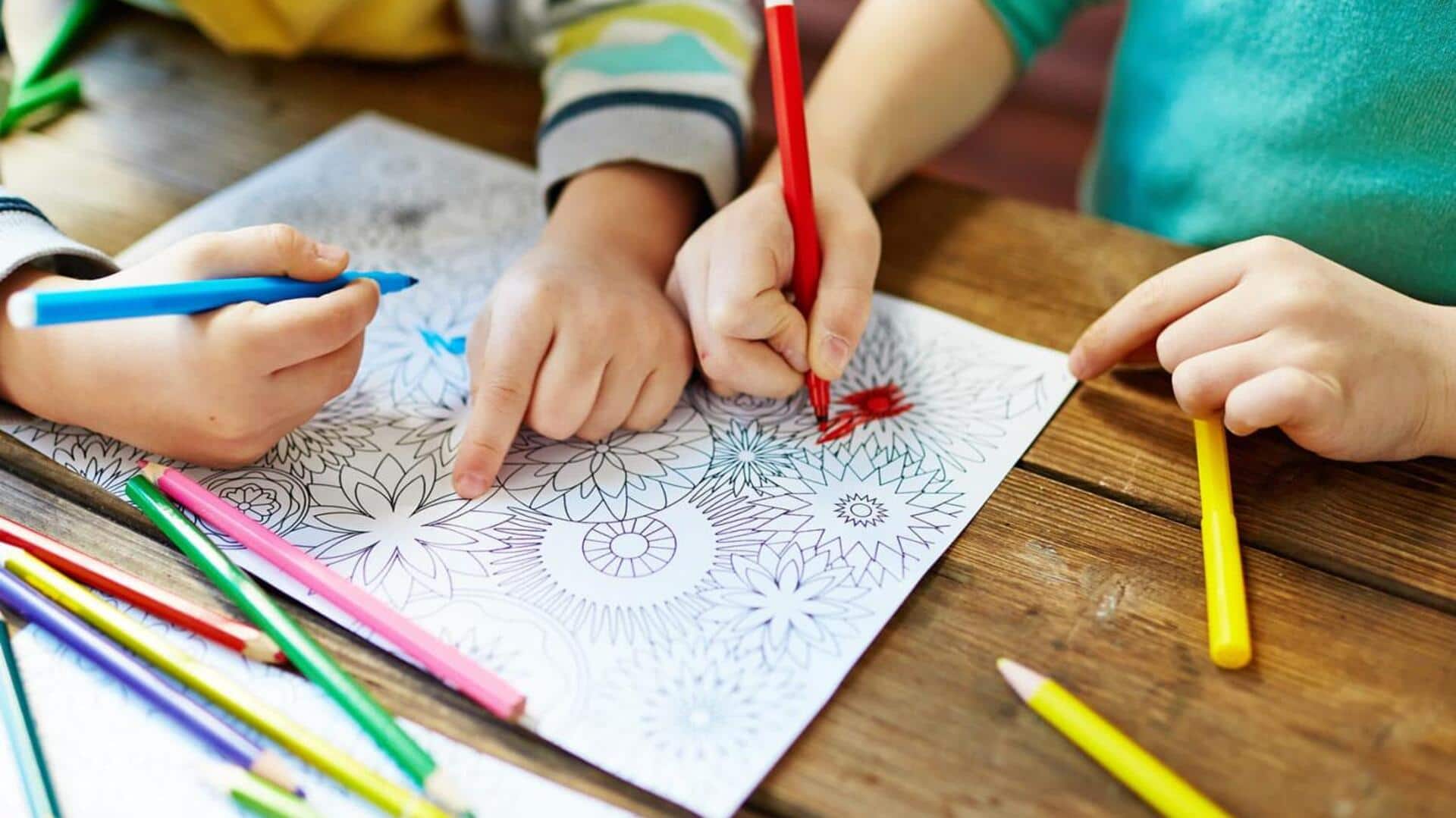
How coloring activities can help kids develop empathy
What's the story
Coloring activities can be a powerful tool for developing empathy in children. By engaging in coloring, kids learn to express emotions, understand different perspectives, and develop social skills. These activities encourage creativity and offer a platform for kids to explore their feelings and the feelings of others. Here are five effective ways to use coloring to foster empathy in kids.
Tip 1
Use diverse characters in coloring books
Choosing coloring books with diverse characters can help children understand different cultures and backgrounds.
By coloring characters from various ethnicities and communities, kids learn to appreciate diversity and develop a sense of empathy towards others' experiences.
This exposure helps break down stereotypes and encourages acceptance.
Tip 2
Incorporate storytelling with coloring
Pairing storytelling with coloring activities can deepen children's understanding of characters' emotions and motivations.
When kids color scenes from stories, they become more engaged with the narrative, allowing them to empathize with the characters' situations.
This practice not only enhances their emotional intelligence but also encourages them to think critically about how different characters might feel in various scenarios.
Tip 3
Encourage group coloring sessions
Organizing group coloring sessions can teach children the importance of teamwork and cooperation.
As they work together on a project, kids learn to communicate effectively, share ideas, and respect each other's opinions.
These interactions promote empathy by helping children understand different viewpoints within a collaborative environment.
Tip 4
Integrate emotion-focused themes
Selecting coloring books that focus on emotions is another effective way to teach empathy.
Books that illustrate different emotional expressions give kids a chance to recognize and understand feelings that are not their own.
This way, they can learn how to respond sensitively when others are feeling a certain way.
Tip 5
Use role-playing scenarios in coloring
Incorporating role-playing scenarios into coloring activities allows children to step into someone else's shoes.
By coloring scenes where characters face challenges or conflicts, kids practice empathy by considering how they would feel or react in those situations.
This technique helps develop compassionate thinking skills as children navigate complex social dynamics through artful expression.