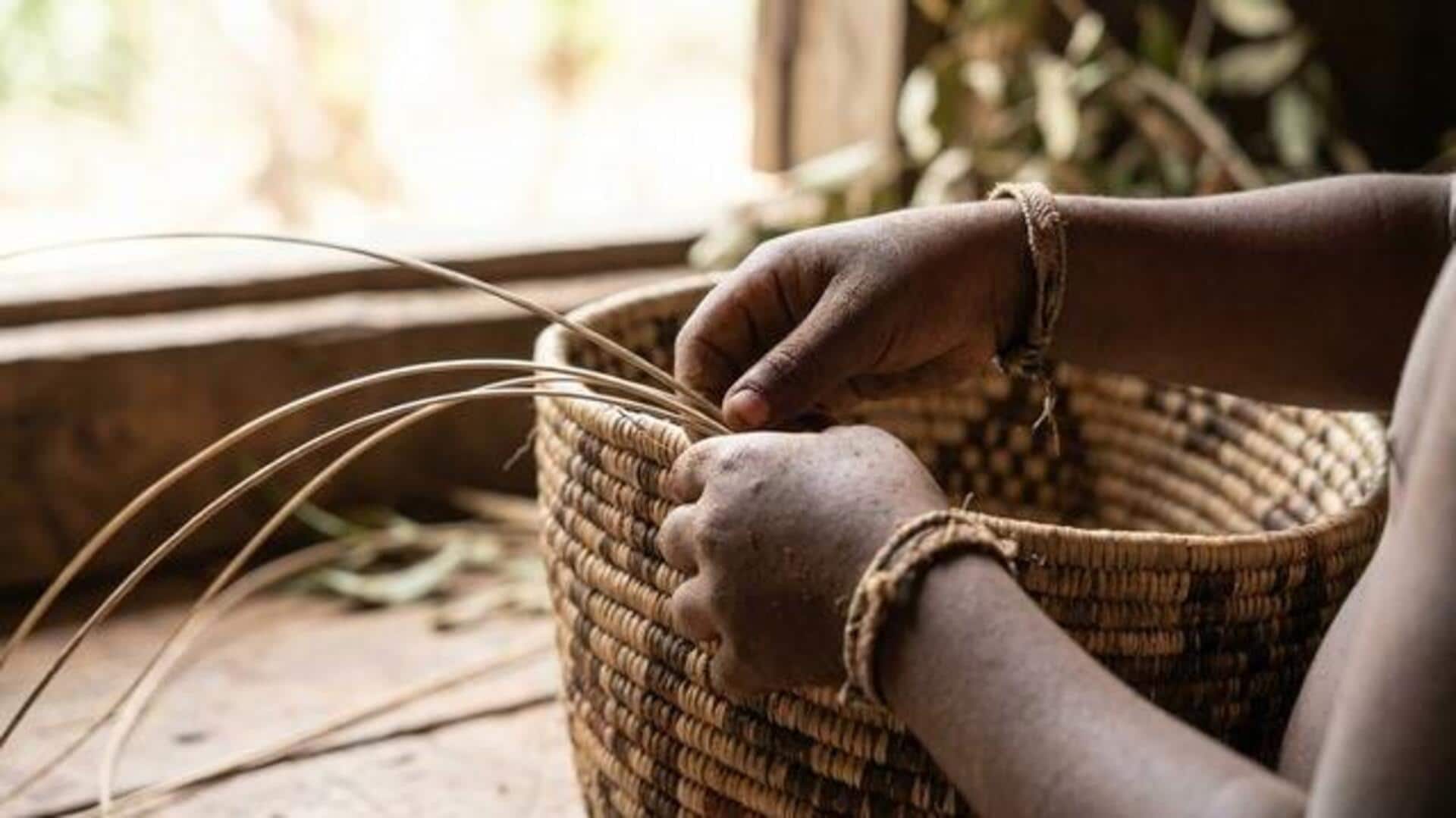
What makes Eritrean basket weaving a remarkable craft
What's the story
Eritrean basket weaving is making a comeback as a sustainable craft. The age-old art, which has been passed down generations, is now getting recognition for its eco-friendly practices. The craft uses locally sourced materials and traditional techniques to create beautiful, functional baskets. As the world becomes more aware of sustainability, Eritrean basket weaving offers a glimpse into how traditional crafts can contribute to environmental conservation.
#1
The art of basket weaving
Eritrean basket weaving is an intricate process that requires skill and patience.
The artisans use natural materials like palm fronds and grasses, which are abundant in the region.
These materials are not only sustainable but also durable, making them ideal for crafting baskets.
The weaving techniques involve intricate patterns that reflect cultural significance and artistic expression.
#2
Economic impact on local communities
The revival of Eritrean basket weaving has also positively impacted local economies.
By promoting these crafts, communities have found new sources of income through local and international markets.
This economic boost helps preserve traditional skills while providing financial stability to artisans and their families.
#3
Environmental benefits of traditional crafts
Eritrean basket weaving also promotes environmental sustainability by using renewable resources and minimizing waste.
Since the artisans rely on natural materials that are abundantly available, they do not need to depend on synthetic or non-biodegradable products.
This not only helps reduce the carbon footprint but also encourages eco-friendly practices in the community.
#4
Promoting cultural heritage through crafts
Reviving Eritrean basket weaving helps promote cultural heritage by keeping traditional practices alive.
As more people learn about this craft, it fosters appreciation for Eritrea's rich history and artistry.
Educational programs and workshops can further raise awareness about the cultural significance of these handmade items.