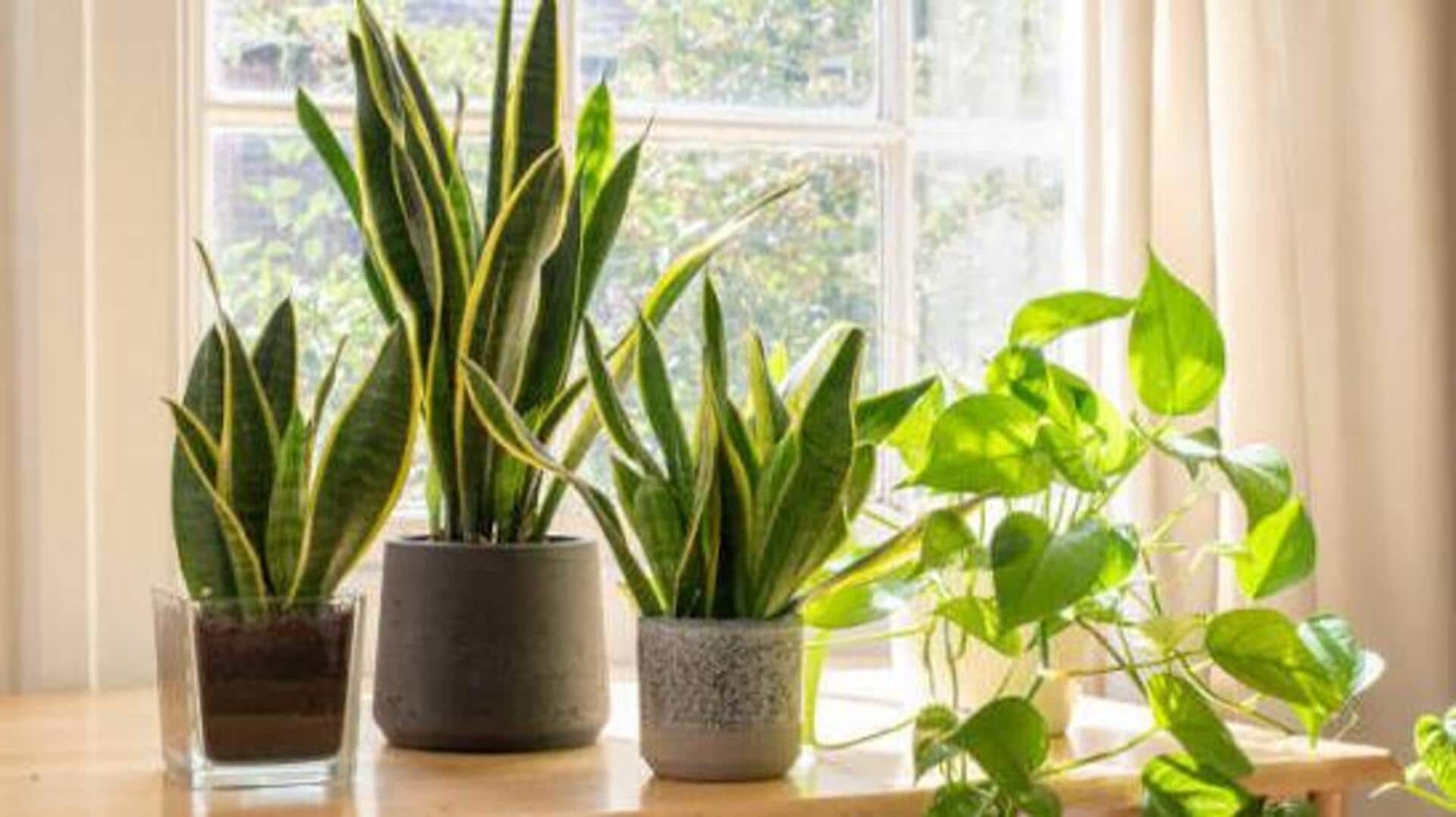
How to care for low-light indoor plants
What's the story
Caring for low-light indoor plants can be a rewarding experience, especially for those living in spaces with limited natural light. These plants not only beautify your home but also purify the air, making them an ideal choice for many. Understanding the specific needs of these plants is essential to keep them healthy and thriving. Here are some practical tips to help you care for your low-light indoor plants effectively.
Plant selection
Choose the right plant varieties
Choosing the right plant is key to success in low-light conditions.
Snake plants, pothos, and peace lilies are some of the popular options that flourish in low light.
These varieties are known for their hardiness and ability to adapt to less-than-ideal lighting conditions.
When selecting a plant, consider its growth habits and how much space it will occupy in your home.
Watering tips
Watering techniques for low-light plants
Overwatering is a common mistake when caring for low-light plants.
Since these plants grow slowly in less light, they require less frequent watering than those in brighter spaces.
A good rule of thumb is to check the soil moisture by sticking your finger about one inch deep into the soil; if it's dry, it's time to water.
Humidity control
Importance of humidity levels
Indoor environments often have lower humidity levels than what many plants prefer.
To keep your low-light indoor plants healthy, you can increase humidity by placing a small humidifier nearby, or grouping several plants together so they create a microclimate through transpiration.
Fertilization advice
Fertilizing sparingly
While indoor plants do need nutrients, they need them less in low-light conditions than in bright ones.
Fertilizing sparingly ensures that you do not overwhelm your plant with nutrients it cannot use efficiently under such conditions.
Use a balanced liquid fertilizer every four to six weeks during the growing season, but skip fertilization during the dormant winter months.
Maintenance routine
Pruning and cleaning leaves regularly
Regular pruning helps keep your low-light indoor plants looking their best by removing dead or yellowing leaves, which can affect overall health and appearance.
Cleaning leaves with a damp cloth removes dust buildup, which can hinder photosynthesis, even in low-light conditions.
This simple maintenance routine keeps your plants healthy and vibrant.