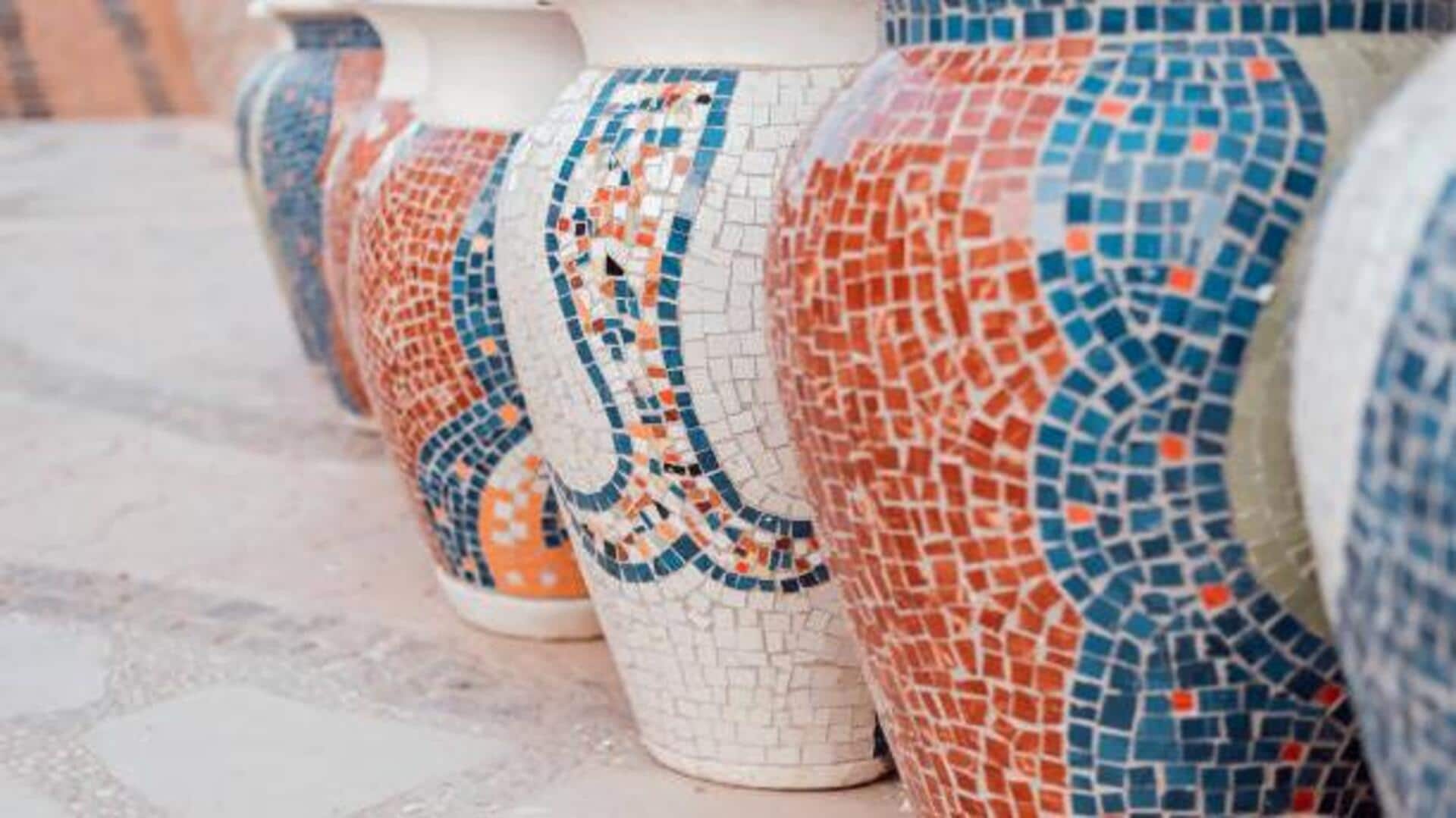
This is how you can create mosaic jars at home
What's the story
African seed and shell mosaic jars are a beautiful representation of traditional African art. These decorative pieces combine the natural beauty of seeds and shells with intricate designs to create stunning home decor items. Not only are these jars visually appealing, but they also hold cultural significance, showcasing the craftsmanship and creativity of African artisans. Here's a look at how these mosaic jars are made, their cultural importance, and tips for incorporating them into your home decor.
#1
Materials used in crafting
African seed and shell mosaic jars are made with natural materials such as seeds, shells, beads, and sometimes even stones.
The artisans select these materials for their color, texture, and durability.
The seeds are often sourced from local plants native to Africa. The shells are collected from coastal areas or traded in markets.
These materials are carefully chosen to create intricate patterns on the jars.
#2
Techniques employed by artisans
Artisans use traditional techniques passed down through generations to create these mosaics.
The process involves arranging the seeds and shells in specific patterns before adhering them to the jar's surface with natural adhesives like plant resins or glue made from organic materials.
Precision is key, as each piece must fit perfectly into its designated spot on the design template.
#3
Cultural significance of mosaic jars
Mosaic jars hold cultural significance across various African communities, as they are used in rituals, ceremonies, or as symbols of status within households.
They reflect regional styles unique to different tribes or areas within Africa.
The designs often tell stories or represent elements of daily life or spiritual beliefs prevalent among those communities.
Tip 1
Incorporating mosaic jars into home decor
To incorporate African seed and shell mosaic jars into your home decor effectively, consider placing them on shelves or tables where they can be admired without being disturbed too much by daily use.
Their vibrant patterns can serve as focal points in living rooms or entryways, while adding an element of cultural richness to your space.