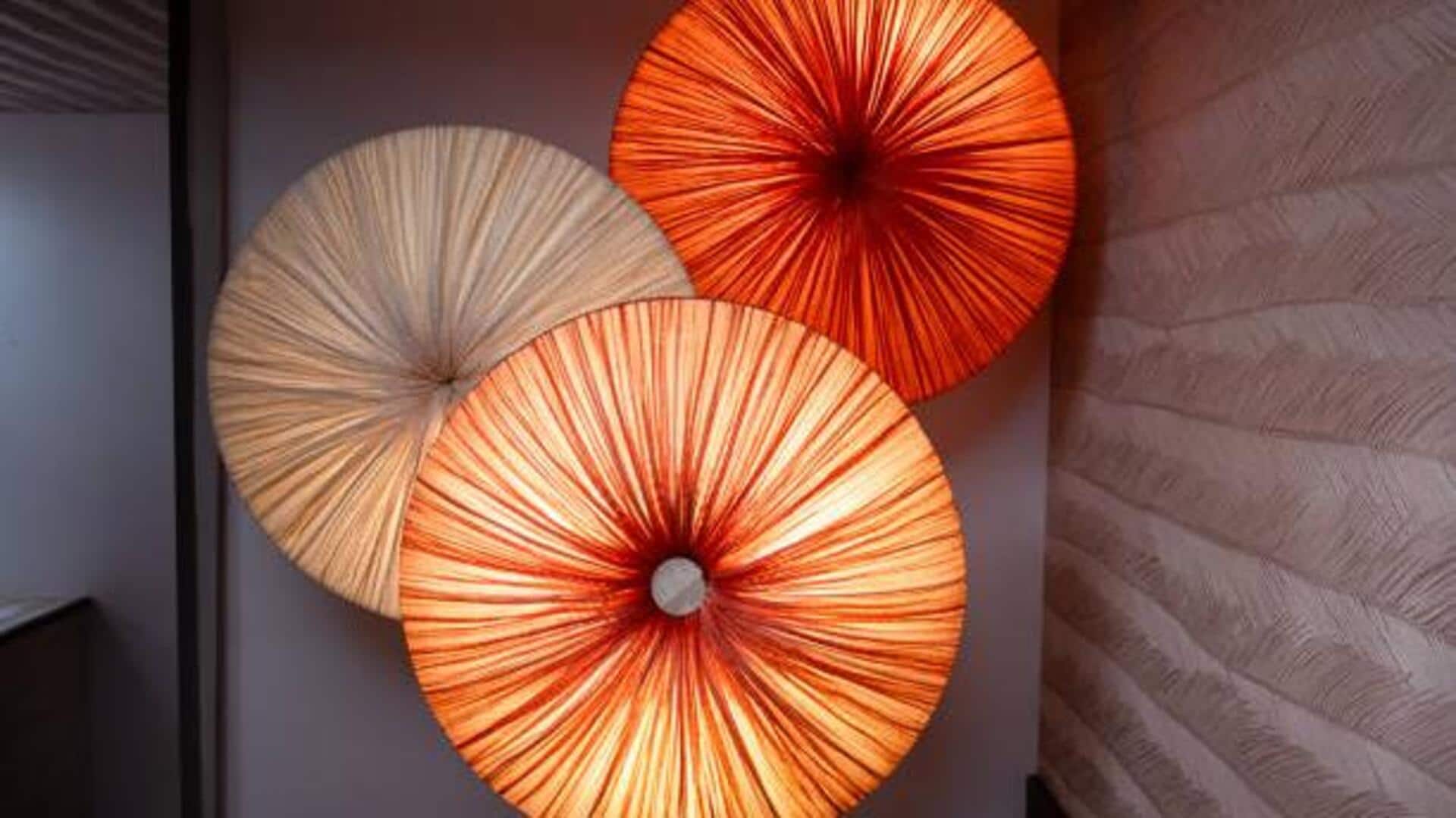
How to create fabric lampshades at home
What's the story
African tie-dye is a vibrant, traditional art form that can easily be adapted to create unique fabric lampshades. With its intricate patterns and bold colors, this technique can transform ordinary lampshades into eye-catching pieces of art. By following a few simple steps, you can bring the essence of African culture into your home decor. Here are some practical insights on how to use African tie-dye techniques for crafting distinctive lampshades.
Fabric selection
Choosing the right fabric
Selecting the right fabric is crucial for your lampshade project. Cotton or linen are ideal choices, as they absorb dye well and hold patterns effectively. Ensure that the fabric is pre-washed to remove any finishes that might interfere with dye absorption. The texture and weight of the fabric will also affect how well it holds its shape when applied to a lampshade frame.
Dye preparation
Preparing dye solutions
To prepare your dye solutions, use natural dyes like indigo or plant-based alternatives. These dyes are not only eco-friendly, but also provide rich colors that complement traditional African designs. Follow instructions on dye packages for mixing ratios and safety precautions. Test small samples before applying them to ensure desired color outcomes.
Dye application
Applying tie-dye techniques
Start by folding, twisting, or binding the fabric in different ways to create patterns like spirals or stripes. Secure these folds with rubber bands or string before immersing them in dye solutions. The way you manipulate the fabric will determine the final pattern on your lampshade.
Shade Construction
Assembling the lampshade
Once your dyed fabric is dry, carefully cut it according to the shape of your lampshade frame. Use fabric glue or a sewing machine to attach the dyed material securely onto the frame, without wrinkles or bubbles. Ensure all edges are neatly finished for a polished look.
Care tips
Maintaining your lampshade
To keep your African tie-dye lampshade looking vibrant, avoid direct sunlight exposure, which can fade colors over time. Clean gently with a damp cloth if necessary, but avoid soaking in water, as this may cause colors to bleed or fade.