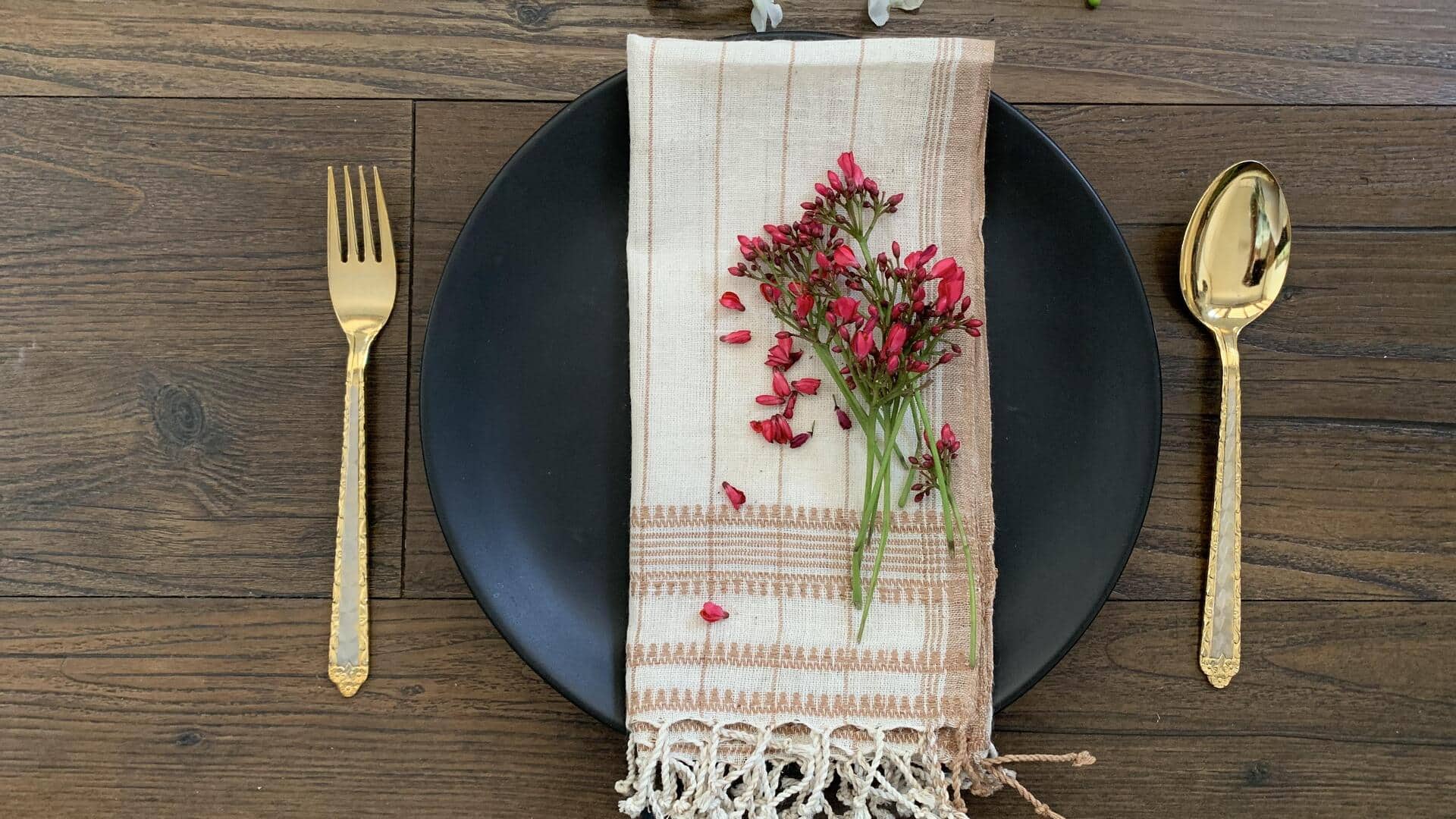
Elevate your dining decor with beadwork napkins
What's the story
African Maasai beadwork is known for its vibrant colors and intricate patterns. This traditional art can be used to create unique, handmade napkins that add a cultural touch to any dining experience. By incorporating these designs, you can enjoy a blend of functionality and artistry in your home. The process involves simple materials and techniques, making it accessible for anyone interested in exploring this craft.
Materials
Selecting materials for your napkins
Choosing the right materials is essential for creating durable and beautiful napkins.
Start with cotton or linen fabric as they are easy to work with and absorbent.
You will also need beads in various colors, thread, and needles. Make sure the beads are not too heavy so that they don't weigh down the fabric.
These elements will ensure your napkins are both functional and visually appealing.
Design
Designing your beadwork pattern
Designing your beadwork pattern is where creativity comes into play.
Look at traditional Maasai patterns for inspiration, which often include geometric shapes and symmetrical designs.
Sketch out your pattern on paper before transferring it onto the fabric to ensure accuracy.
Consider using contrasting colors to make your design stand out while maintaining harmony with the overall look of the napkin.
Stitching
Stitching techniques for bead application
Once you have your materials ready and a design in mind, it's time to start stitching beads onto the fabric.
Use basic sewing techniques like backstitch or running stitch to attach beads securely without damaging the fabric's integrity.
Take care not to pull threads too tightly as this may cause puckering or distortion of the design over time.
Completion
Completing your handmade napkins
After all beads have been stitched onto each napkin according to your chosen pattern, it's time for final touches.
Trim any excess threads carefully so they don't fray over time when washed or used during meals.
Iron lightly if needed, but avoid direct heat on beaded areas, as this could damage them permanently.