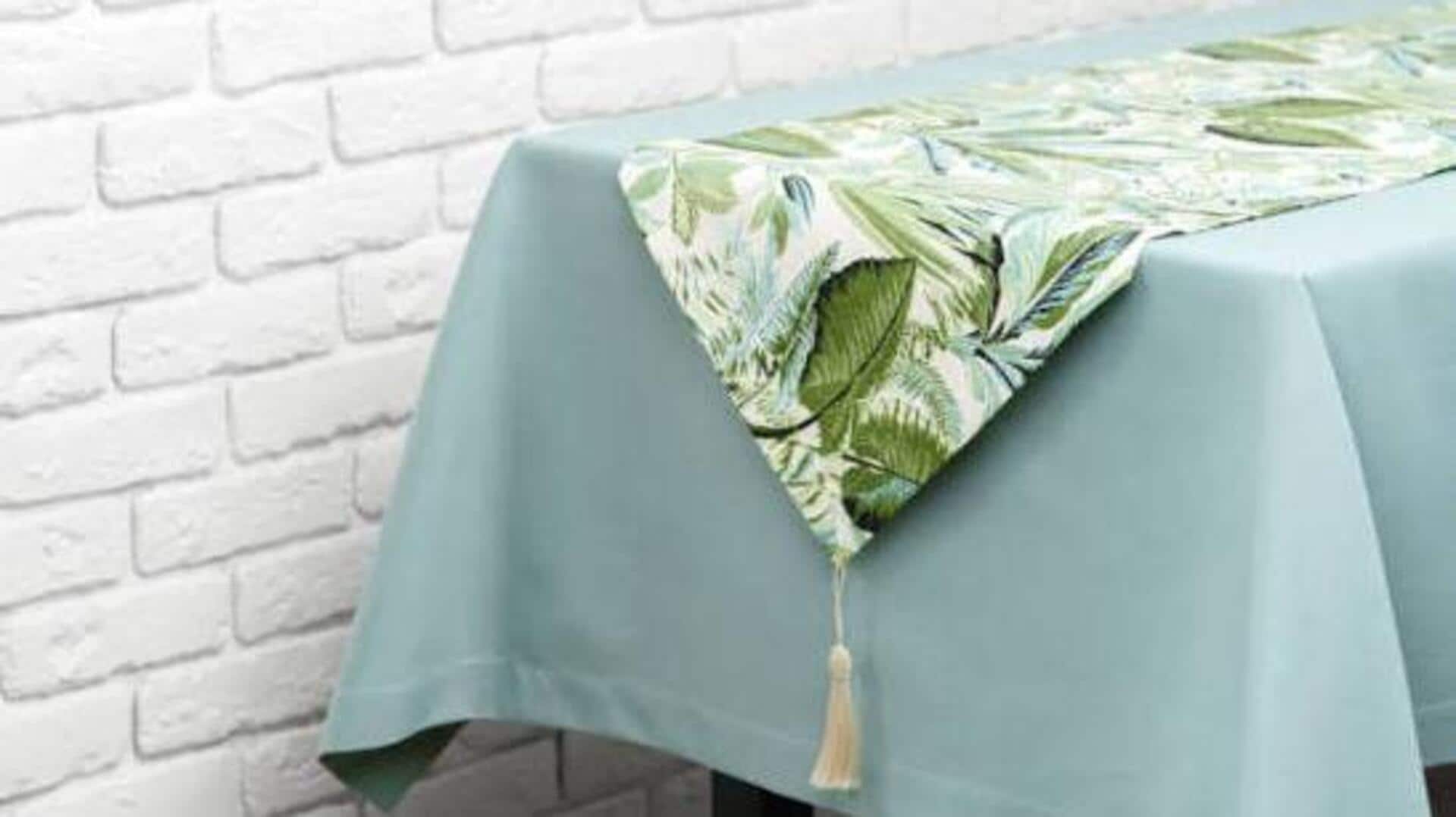
Here's how to add flair to your dining table
What's the story
Kente cloth, a vibrant and symbolic textile from Ghana, is famous for its intricate patterns and bright colors. This traditional fabric can be used to create stunning table runners, adding a touch of cultural elegance to any dining space. By incorporating Kente patterns into your table runners, you can bring an element of artistry and history to your home decor. Here are some insights on crafting beautiful table runners using Kente designs.
Fabric selection
Choosing the right fabric
Selecting the right fabric is essential when making Kente-inspired table runners.
Cotton is a popular choice because of its durability and ease of maintenance. It also allows the vivid colors of Kente patterns to shine through.
However, you can also opt for linen or polyester blends for a different texture and sheen.
Make sure the fabric is easy to clean, as table runners tend to get stains from food and drinks.
Pattern knowledge
Understanding Kente patterns
Kente patterns are characterized by their geometric shapes and vibrant colors, each symbolizing different meanings or stories in Ghanaian culture.
Familiarize yourself with common motifs like stripes, zigzags, and checks.
This knowledge will help you choose designs that resonate with your personal style while honoring the cultural significance of the patterns.
Fabric preparation
Measuring and cutting fabric
Accurate measurements are key to ensuring your table runner fits perfectly on your dining table.
Measure the length and width of your table before cutting the fabric accordingly.
A standard table runner is usually about 14 inches wide and can range from 60 to 108 inches long, depending on the size of your table.
Cutting the fabric precisely will ensure a polished look when finished.
Sewing tips
Sewing techniques for durability
To make sure your Kente-inspired table runner lasts, use strong sewing techniques like straight stitches or zigzag stitches along the edges.
Hemming prevents fraying, and reinforcing seams ensures durability even after repeated use.
If you're new to sewing, practice on scrap fabric first before working on your final piece.
Final details
Adding finishing touches
Once sewn together, add finishing touches like tassels or fringes at each end for extra flair.
These elements complement traditional Kente aesthetics beautifully, without overpowering them visually.
Consider adding a layer of backing material if you want extra weight. This helps keep the runner in place during meals, preventing it from slipping off tables accidentally.