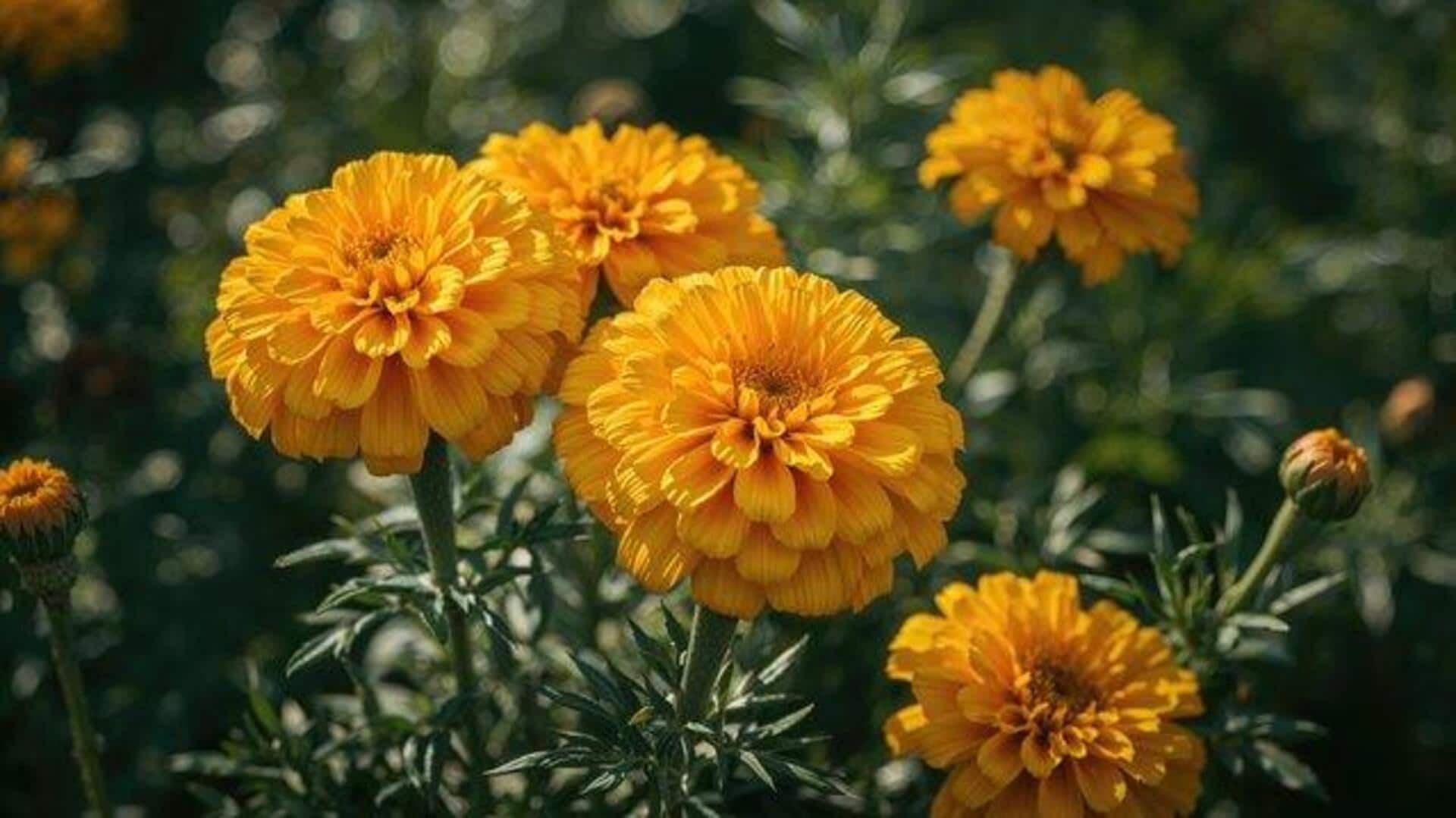
How to grow marigolds at home
What's the story
Marigolds are the perfect flower for beginners, thanks to their vibrant colors and easy maintenance. These flowers can brighten up any garden or balcony with their cheerful blooms. They are also known for repelling pests, making them a great companion plant. With just a little care, marigolds can flourish in several conditions. Here's everything you need to know about growing marigolds at home.
#1
Choosing the right variety
Selecting the right marigold variety is essential for your gardening success.
French marigolds are perfect for small spaces with their compact growth, while African marigolds are ideal for larger areas with their tall stature.
Signet marigolds offer a delicate appearance and a citrus scent.
Consider your space and aesthetic preferences when choosing a variety to ensure it fits well in your garden or balcony setup.
#2
Soil preparation and planting
Marigolds thrive in well-drained soil with a pH level between six and seven.
Before planting, enrich the soil with organic matter like compost to enhance its fertility.
You can either sow seeds directly into the ground or start them indoors six weeks prior to the last frost date.
Ensure that seeds are planted at a depth of about one-quarter inch and keep them moist until germination.
#3
Watering and sunlight requirements
Marigolds love full sun, so place them where they'll get at least six hours of direct sunlight every day.
Water them regularly but don't overwater; let the top inch of soil dry out between waterings to avoid root rot.
In hotter climates, you may need to increase watering frequency during peak summer months.
#4
Pest management tips
One of the best things about marigolds is that they naturally repel pests like aphids and nematodes with their strong scent and compounds.
However, if you notice any pest problems, try natural remedies like neem oil or insecticidal soap instead of chemical pesticides, which can harm beneficial insects in your garden ecosystem.