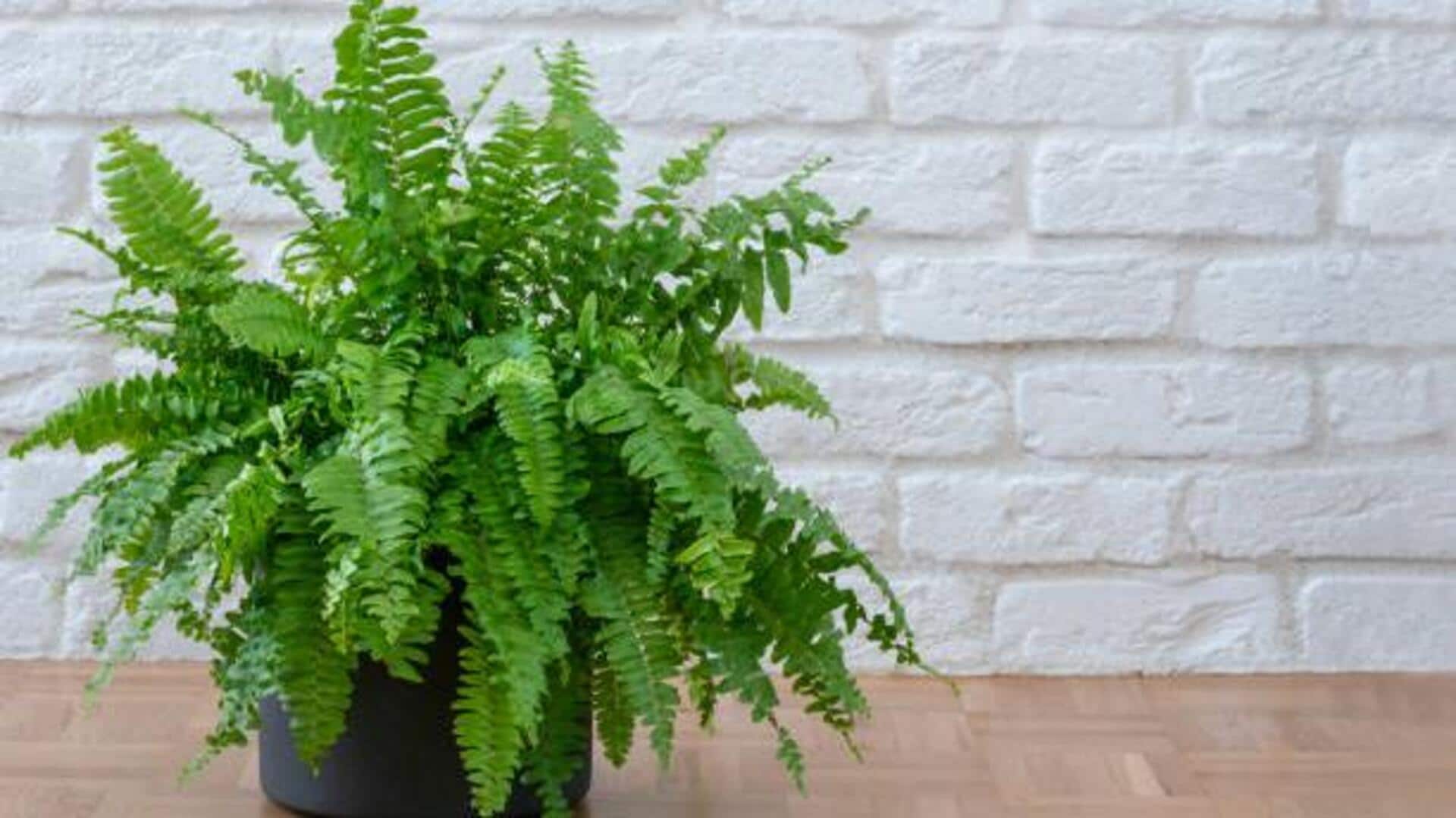
How to keep indoor ferns pest-free
What's the story
Indoor ferns are a popular choice for plant lovers owing to their lush greenery and air-purifying qualities. However, these delicate plants are often prone to pest infestations, which can ruin their beauty and health. Knowing the common pests that attack ferns and how to keep them away is essential to keep your indoor plants thriving. Here are practical tips to naturally keep your ferns pest-free.
Pest awareness
Identifying common fern pests
Indoor ferns can be affected by a number of pests, like spider mites, aphids, and mealybugs.
Spider mites usually thrive in dry conditions and leave tiny webbing on leaves.
Aphids suck sap from new growths, causing curling leaves.
Mealybugs appear as white cottony masses on stems and leaves, weakening the plant by feeding on its juices.
Organic solutions
Natural remedies for pest control
Using natural remedies is an effective way to control pests without harming your ferns or the environment.
A mixture of water and mild soap can be sprayed on affected areas to suffocate soft-bodied insects like aphids and mealybugs.
Neem oil is another effective organic solution that disrupts the life cycle of many common pests while being safe for plants.
Environmental factors
Maintaining optimal fern conditions
Keeping your ferns in the right environment can make them less prone to pest problems.
Ensure proper humidity levels by misting the plants regularly, or using a humidifier, as ferns love moisture.
Avoid overwatering, as it can lead to root rot and stress the plant, making it more susceptible to pests.
Proper air circulation around the ferns also helps prevent pest infestations.
Routine care
Regular monitoring and maintenance
Regularly checking your ferns for signs of pests is key to early detection and control.
Inspect leaves and stems weekly for any unusual spots or webbing.
Remove dead leaves promptly, as they can attract pests.
Prune any infested parts immediately to prevent spreading while maintaining plant health with adequate light exposure and nutrition through balanced fertilizers.