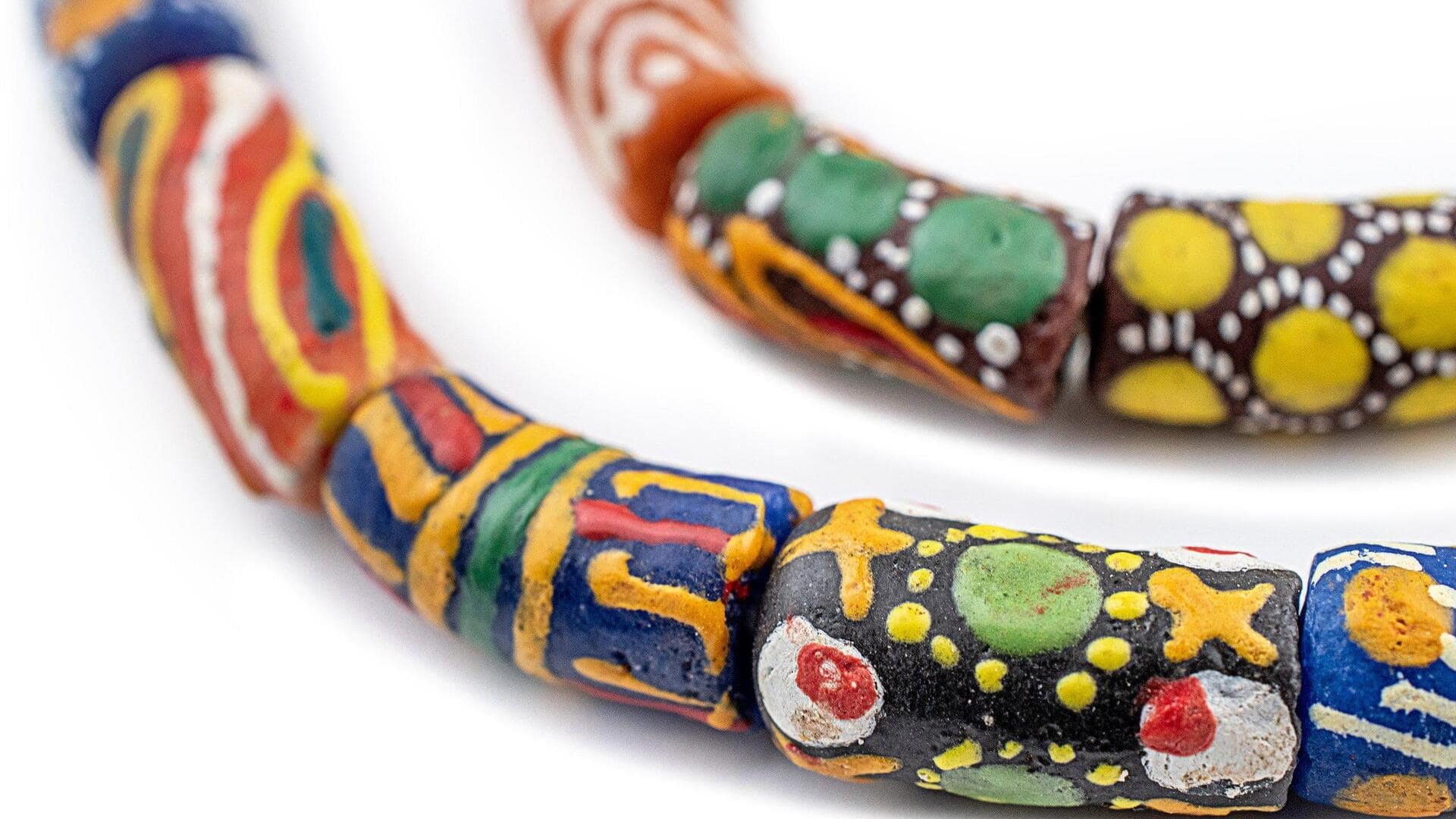
All about Krobo glass beads
What's the story
Krobo-style glass bead jewelry is an African art form that has captivated many with its vibrant colors and intricate designs. This traditional craft, which originated in Ghana, involves recycling glass into beautiful beads that are used to create unique pieces of jewelry. The process not only preserves cultural heritage but also promotes sustainability by repurposing materials. Here are some insights into this fascinating craft and how it continues to thrive today.
#1
The history of Krobo glass beads
Krobo glass beads have a rich history, dating back centuries.
Traditionally, the beads were made by recycling broken glass and molding them into desired shapes. The beads were then used for adornment and as a form of currency in trade.
Today, the art continues to be passed down through generations, keeping the cultural significance and adapting to modern trends.
#2
The bead-making process
The process of making Krobo-style beads begins with collecting discarded glass.
The glass is then crushed into small pieces and heated until it melts.
Once melted, artisans shape the glass into beads using simple tools.
The beads are then cooled and polished to achieve a smooth finish.
This meticulous process showcases the skill and dedication involved in creating each piece.
#3
Cultural significance of the beads
Krobo glass beads are not just decorative items; they hold deep cultural significance among the Krobo people.
They are often used in ceremonies, such as weddings or initiations, where they symbolize wealth and status.
The colors and patterns of each bead can also convey specific meanings or tell stories about the wearer's lineage or achievements.
#4
Modern adaptations in jewelry design
In recent years, there has been a resurgence of interest in Krobo-style jewelry among designers looking for sustainable materials with cultural roots.
Modern adaptations often blend traditional techniques with contemporary styles to appeal to a wider audience.
This fusion allows for creativity while honoring the original craftsmanship that makes these pieces unique treasures.