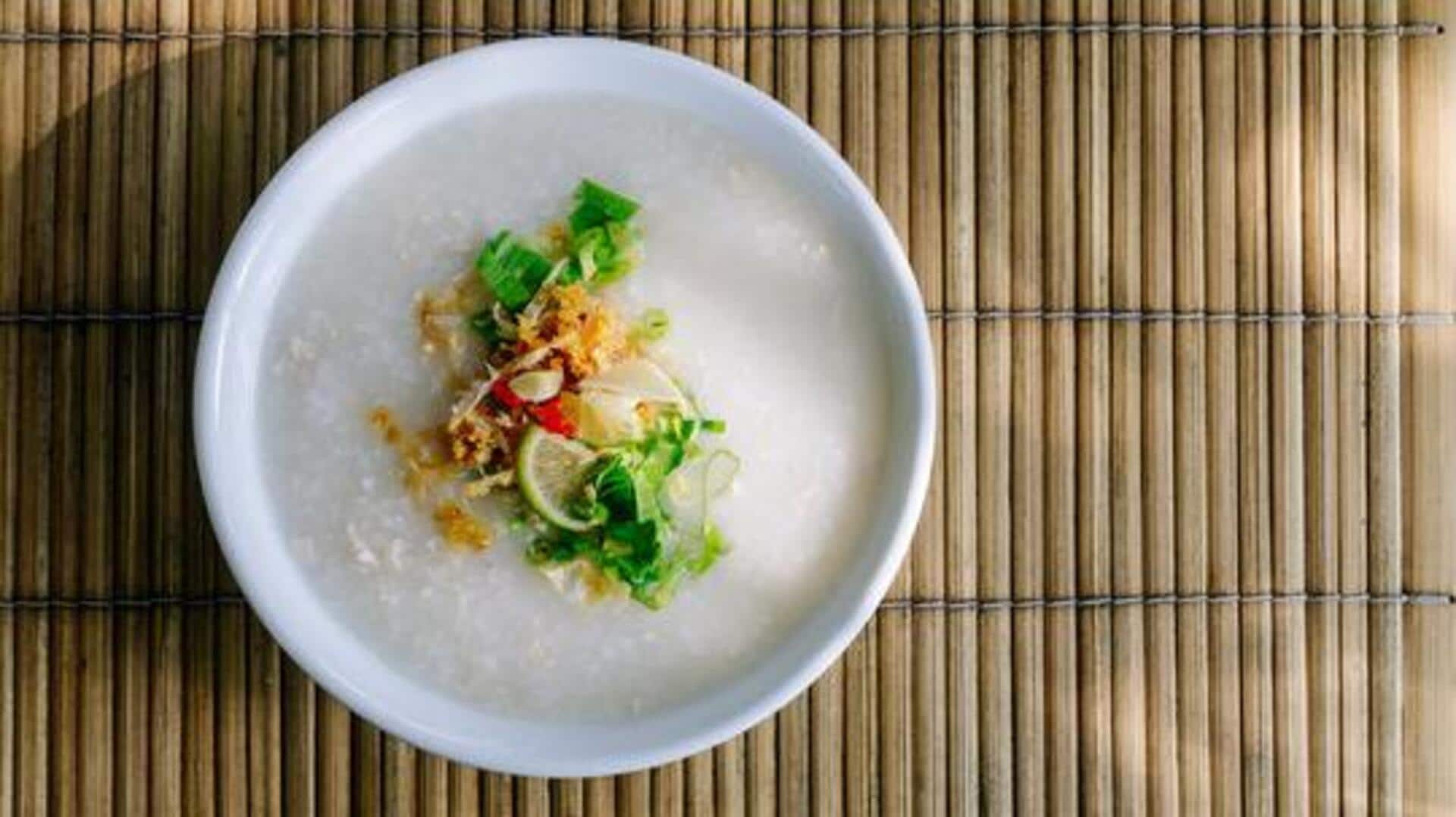
Congee: How to perfect this classic rice dish
What's the story
Congee, a rice porridge, is a staple breakfast dish across many Asian cultures. It is loved for its simplicity and versatility. Making congee at home can be a rewarding experience, giving you control over the ingredients and flavors. With a few basic steps, you can prepare this comforting dish easily. Here are some practical tips to help you make perfect congee every time.
Rice selection
Choosing the right rice
Selecting the right type of rice is key to making congee.
Short-grain or medium-grain rice is recommended, as they release more starch while cooking, giving the porridge its creamy texture.
Jasmine or sushi rice also makes a good choice.
Avoid long-grain rice, as it does not break down as well during cooking.
Liquid balance
Water-to-rice ratio
The water-to-rice ratio is important in getting the right consistency of congee.
A common ratio is one cup of rice to eight cups of water for a thick porridge, or one cup of rice to 10 cups of water for a thinner version.
Adjust the amount depending on how thick or runny you want your congee.
Cooking technique
Cooking method
Traditionally, congee is cooked on low heat for hours, stirring occasionally to avoid sticking.
However, using a slow cooker or pressure cooker can cut down the cooking time drastically, without compromising on texture.
If you're using a pressure cooker, cook it for about 30 minutes under high pressure, and let it release naturally.
Seasoning tips
Flavoring your congee
Congee can be customized with different toppings and seasonings according to taste.
Common additions include ginger slices, scallions, soy sauce, sesame oil, and pickled vegetables.
For those who prefer sweeter versions, adding sugar or fruits like bananas can be an option.
Experimenting with various toppings allows you to personalize each bowl according to your preferences.
Storage tips
Storing leftover congee
If you have leftover congee, store it in an airtight container in the refrigerator for up to three days.
To reheat without losing its creamy texture, add a little water while warming it on low heat over the stovetop or microwave until hot throughout.