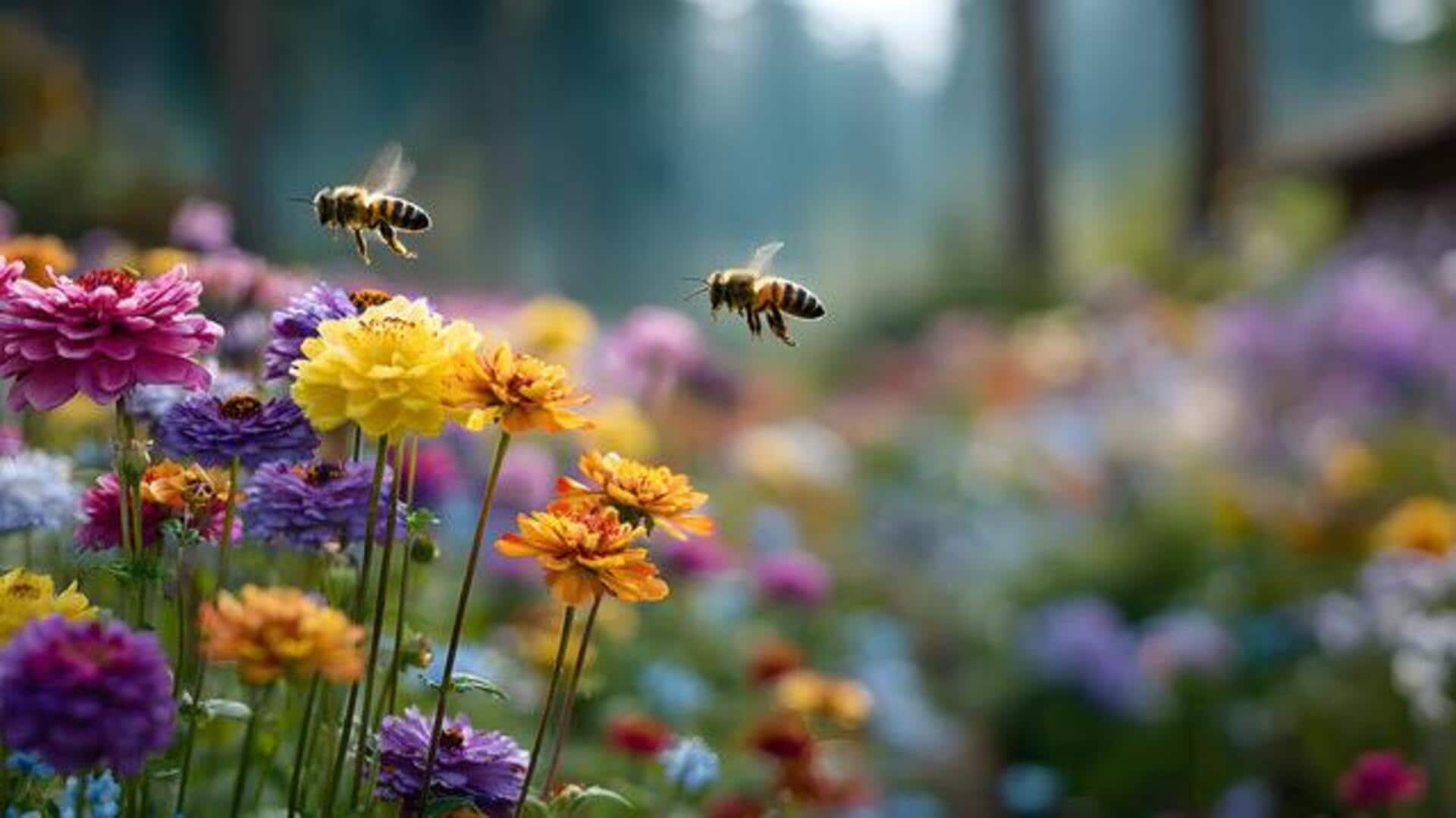
How to create a pollinator-friendly garden
What's the story
Creating a pollinator-friendly balcony garden can be an exciting way to contribute to the environment while enjoying the beauty of nature. Pollinators like bees, butterflies, and hummingbirds are essential for maintaining ecological balance. By selecting the right plants and designing your space thoughtfully, you can attract these beneficial creatures to your urban oasis. Here are some practical tips to help you design a balcony garden that supports pollinators effectively.
Tip 1
Choose native plants
Native plants are best for pollinators, as they have co-evolved with local wildlife.
These plants are more resilient to local climate and soil conditions, making them easier to maintain.
By choosing native species, you ensure that your balcony garden provides the right habitat and food sources for local pollinators.
Research which native plants flourish in your area and incorporate them into your garden design.
Tip 2
Provide diverse flower shapes
Different pollinators have different preferences when it comes to flower shape and size.
While bees prefer open, flat flowers, butterflies go for tubular blooms. Hummingbirds love long, trumpet-shaped flowers.
By including a variety of flower shapes in your garden, you can attract a wider range of pollinator species.
This diversity ensures that your garden supports multiple pollinator populations effectively.
Tip 3
Ensure continuous blooming season
To keep pollinators coming to your balcony all year round, make sure there's a continuous bloom period from spring through fall.
Choose plants with staggered blooming times so that some flowers are always available for pollinators.
This way, you provide a consistent food source throughout the growing season, which is crucial for sustaining healthy pollinator populations.
Tip 4
Create sheltering spaces
Providing sheltering spaces in your balcony garden can make it more inviting for pollinators.
Adding features like small rock piles or dense foliage gives them protection from predators and harsh weather conditions.
These elements create microhabitats where insects can rest or hide when required. They also add texture and interest to your garden design.
Tip 5
Use organic gardening practices
Organic gardening practices are essential for keeping pollinators safe in your balcony garden.
Steer clear of synthetic pesticides and fertilizers that can be harmful to these beneficial creatures.
Instead, go for natural alternatives like compost or neem oil if you have to deal with pests.
This way, you keep a healthy ecosystem intact while ensuring that your plants thrive without harming the wildlife they depend on.