
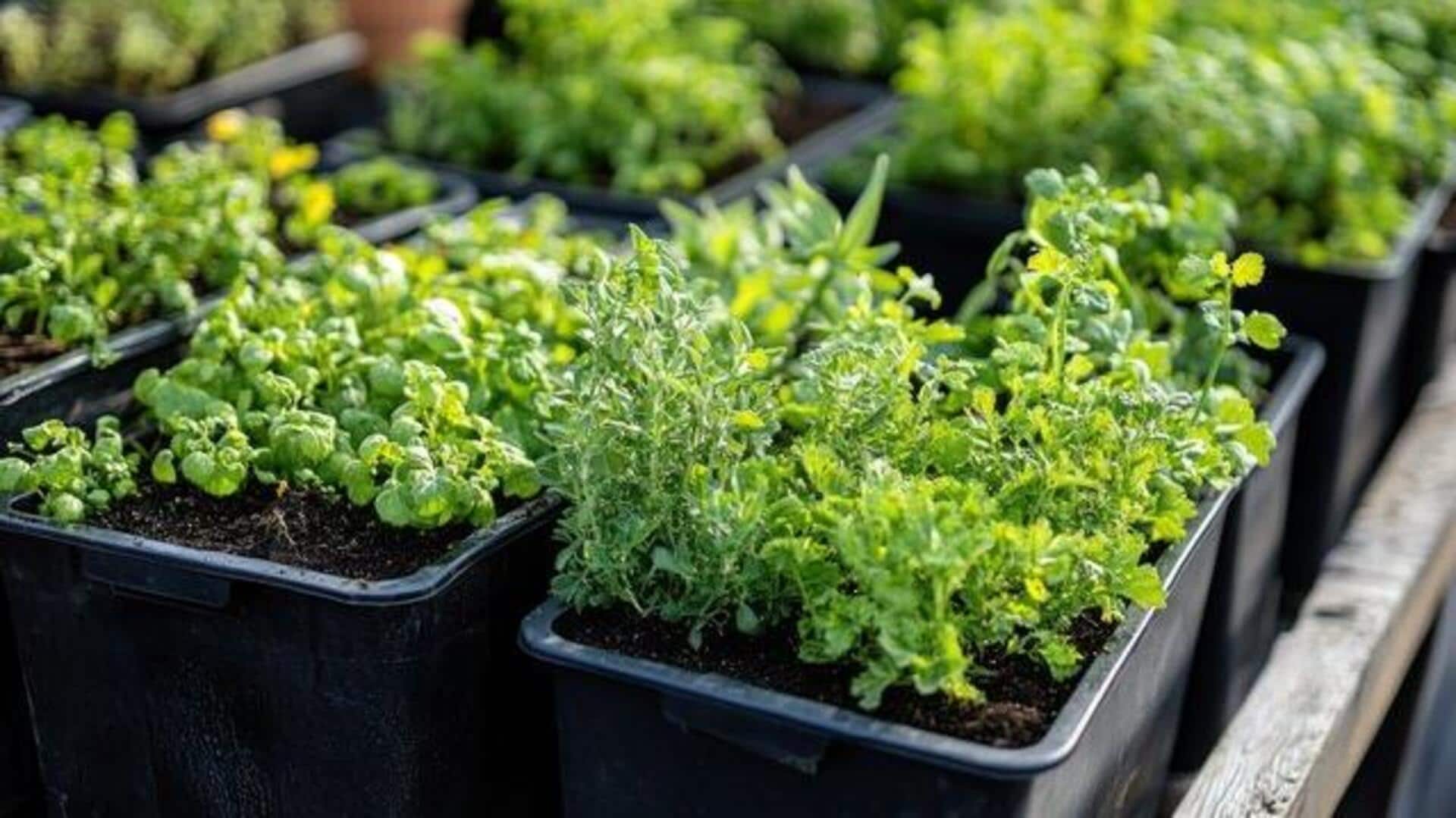
Indoor gardening 101: How to grow parsley
What's the story
Propagating African parsley indoors is a simple and rewarding task. With the right conditions and care, you can grow this herb all year round. African parsley, known for its aromatic leaves, can be propagated easily from seeds or cuttings. This article gives you practical insights into how to successfully propagate African parsley indoors, ensuring optimal growth and flavor.
Tip 1
Choosing the right container
Selecting an appropriate container is essential for indoor propagation of African parsley. Choose pots with drainage holes to avoid waterlogging, which can damage the roots. A size of about six inches in diameter is ideal for each plant. Using lightweight materials like plastic or clay helps maintain moisture levels without being too heavy to move around.
Tip 2
Soil preparation and planting
African parsley needs well-draining soil enriched with organic matter. A mix of potting soil with compost or peat moss makes an ideal growing medium. Sow seeds about half an inch deep and cover lightly with soil. If propagating from cuttings, ensure they are at least four inches long and remove lower leaves before placing them in moist soil.
Tip 3
Optimal light conditions
African parsley flourishes in bright, indirect sunlight. If you don't have such conditions, you can keep your plants under fluorescent lights for 12-16 hours a day. Keep the lights about two inches above the plants to prevent overheating. This will ensure your plants get the right amount of light without getting too hot.
Tip 4
Watering techniques for healthy growth
Proper watering is key to keeping African parsley healthy indoors. Water when the top inch of soil feels dry to touch but avoid overwatering, as it can cause root rot. Use room temperature water and ensure excess moisture drains out completely from the pot's base after each watering session.
Tip 5
Fertilizing for robust flavor
To enhance flavor and growth, fertilize African parsley every four weeks during its active growing season (spring through early fall). Use a balanced liquid fertilizer diluted to half strength to prevent nutrient burn on young plants. Apply fertilizer directly onto moist soil after watering to ensure even distribution and absorption by the roots.