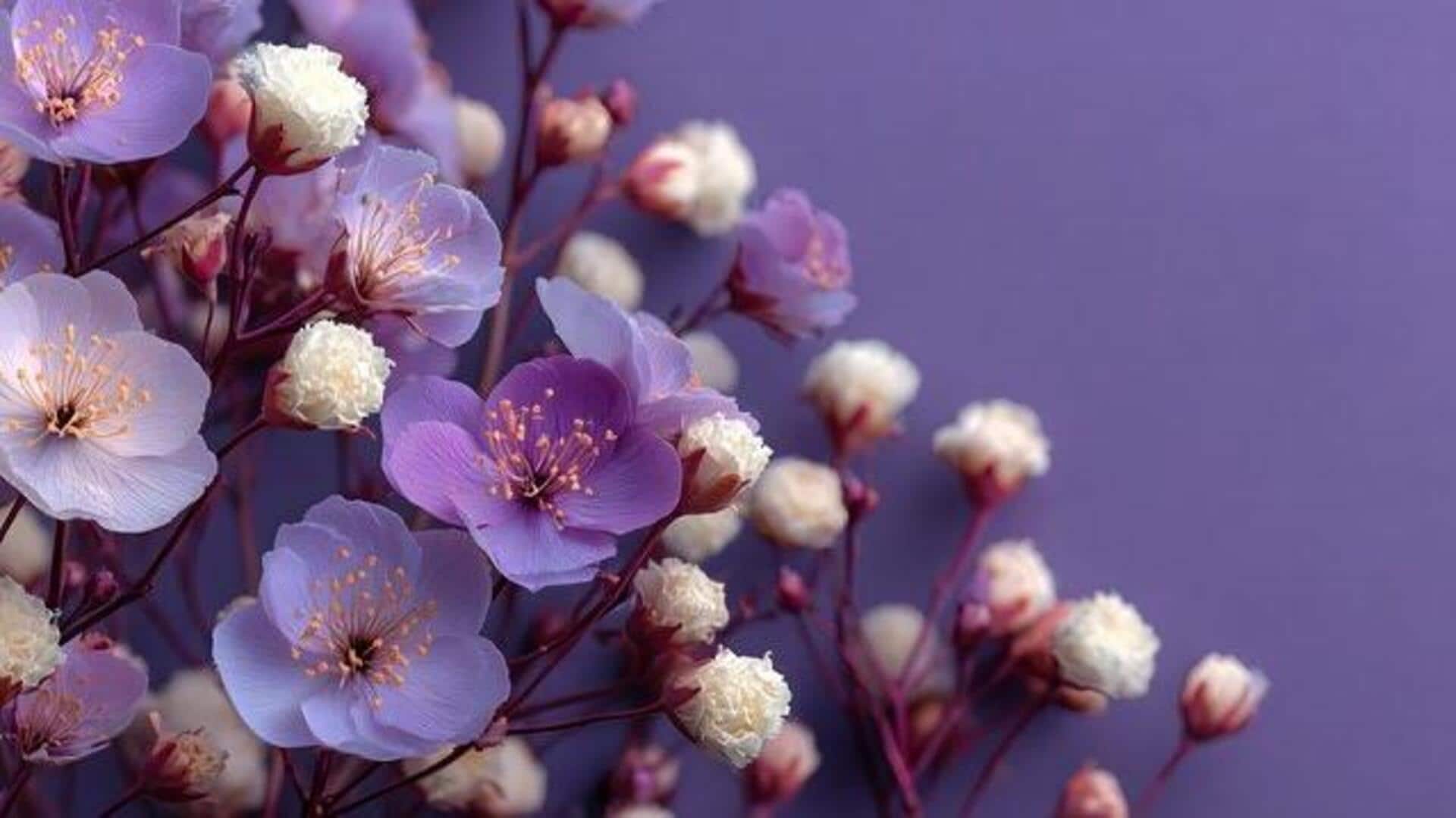
How to restore wilting violet flowers
What's the story
African violets are famous for their gorgeous blooms, but they can sometimes droop or wilt. This can be a result of several factors, including improper watering, inadequate light, or temperature changes. Knowing the right ways to revive these plants is essential for keeping them healthy and blooming. Here are five practical ways to bring back wilting African violet flowers, ensuring they get the care they need to flourish.
Tip 1
Adjust watering schedule
Overwatering or underwatering is one of the most common reasons behind droopy African violet blooms. Make sure you're watering them properly by letting the top inch of soil dry out between waterings. Use room temperature water and avoid letting the plant sit in standing water, as this can cause root rot and further drooping.
Tip 2
Optimize light conditions
African violets thrive in bright, indirect sunlight. If your plant's leaves are turning yellow along with drooping flowers, it might not be getting enough light. Move it closer to a window but avoid direct sunlight, which can scorch the leaves. A north or east-facing window usually provides ideal lighting conditions.
Tip 3
Maintain consistent temperature
Temperature fluctuations can stress African violets and cause their blooms to droop. Keep them in an environment where temperatures range between 65 degrees Fahrenheit and 75 degrees Fahrenheit (18 degrees Celsius and 24 degrees Celsius). Avoid placing them near drafts, heaters, or air conditioners that can cause sudden changes in temperature.
Tip 4
Use appropriate fertilizer
Proper fertilization is key to keeping African violets healthy and blooming. Use a balanced fertilizer formulated for African violets every four to six weeks during the growing season. This will provide essential nutrients without overloading the plant with chemicals that could harm it.
Tip 5
Prune dead leaves and flowers
Regular pruning of dead leaves and flowers not only makes your African violet look better but also encourages new growth and healthier blooms. Use clean scissors or shears to remove any dead parts, being careful not to damage the healthy ones. This practice keeps the plant's energy focused on producing vibrant blooms instead of maintaining dead foliage.