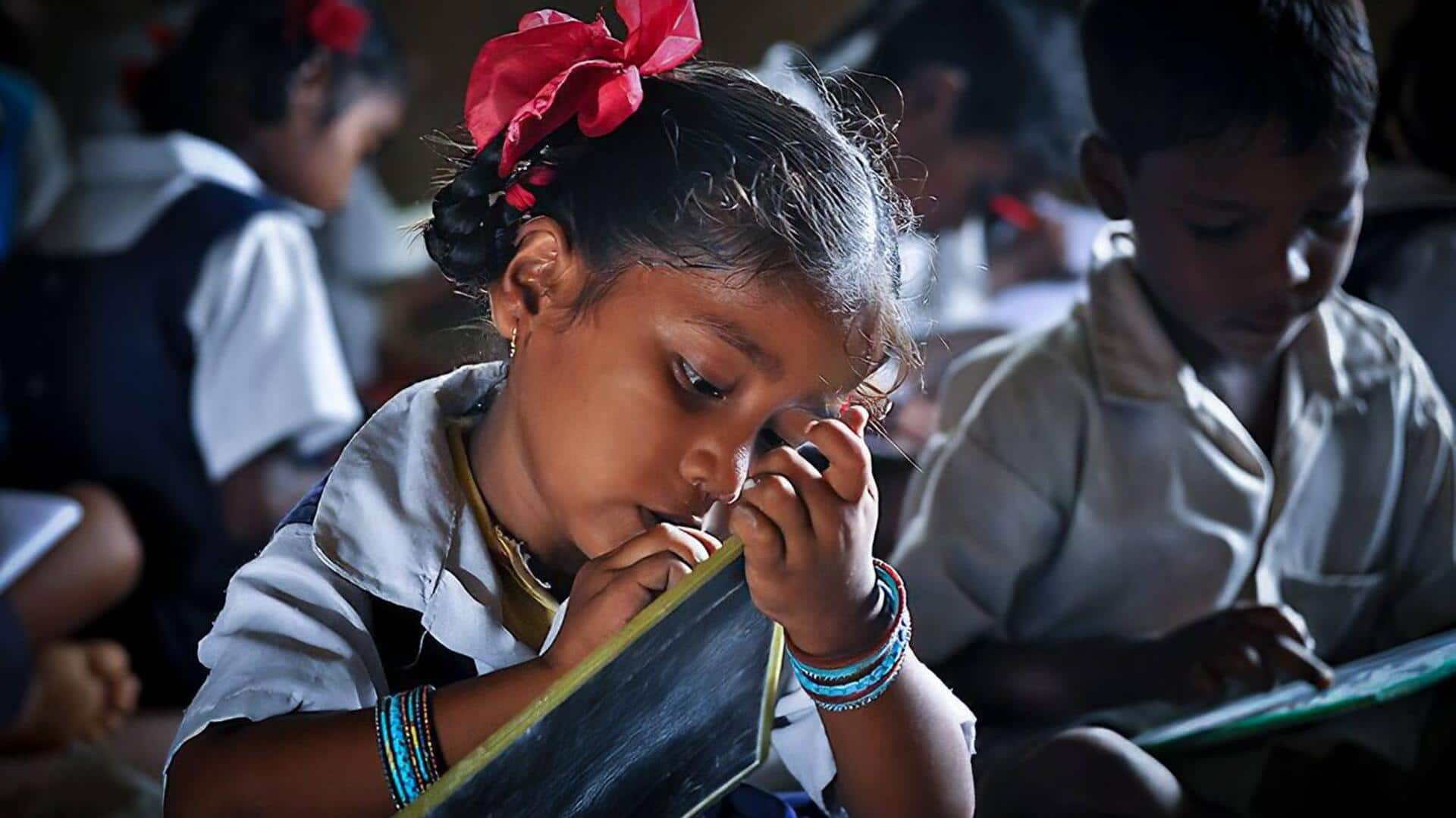
International Day of Education: Why every child deserves education
What's the story
The International Day of Education, observed on 24 January by the United Nations, reminds the world that education is not a privilege but a fundamental human right and the foundation for peace and development. It draws attention to the need for inclusive and equitable quality education for all children and urges governments and societies to invest in learning as a tool for empowerment.
#1
Education as a fundamental right
Article 26 of the 1948 Universal Declaration of Human Rights declares that everyone has the right to education.
Yet, today, 57 million children remain out of school. Education is not only a right but also a gateway to human development, empowering children with knowledge, skills, and confidence.
Ensuring every child can learn is a responsibility that builds fairer societies and stronger nations.
#2
Breaking the cycle of poverty
Education plays a critical role in reducing poverty across generations.
When children receive quality education, they gain better employment opportunities and improved living standards.
Educated individuals contribute more effectively to economic growth and community development.
By investing in children's education today, societies can break long-standing cycles of poverty and inequality and create pathways for sustainable development.
#3
Promoting equality and inclusion
Education promotes equality by giving all children, regardless of gender, background, or ability, an equal chance to succeed.
It helps reduce discrimination and empowers marginalized groups to participate fully in society.
Inclusive education fosters respect, understanding, and social harmony, preparing children to become responsible citizens who value diversity and justice in their communities and beyond.
#4
Education and global challenges
In a world facing challenges such as climate change, conflict, and technological change, education equips children with the skills to respond effectively.
It builds critical thinking, creativity, and problem-solving abilities needed to address complex global issues.
An educated generation is better prepared to innovate, cooperate, and lead efforts toward a more peaceful and sustainable future.
#5
Investing in the future
Educating every child is an investment in the future. Educated girls are more likely to earn higher incomes and raise healthier families.
Skilled graduates contribute to innovation in medicine, technology, and environmental protection.
Strong education systems reduce poverty, improve civic participation, and strengthen democratic values, making education the most powerful tool for building a just, prosperous, and sustainable world.