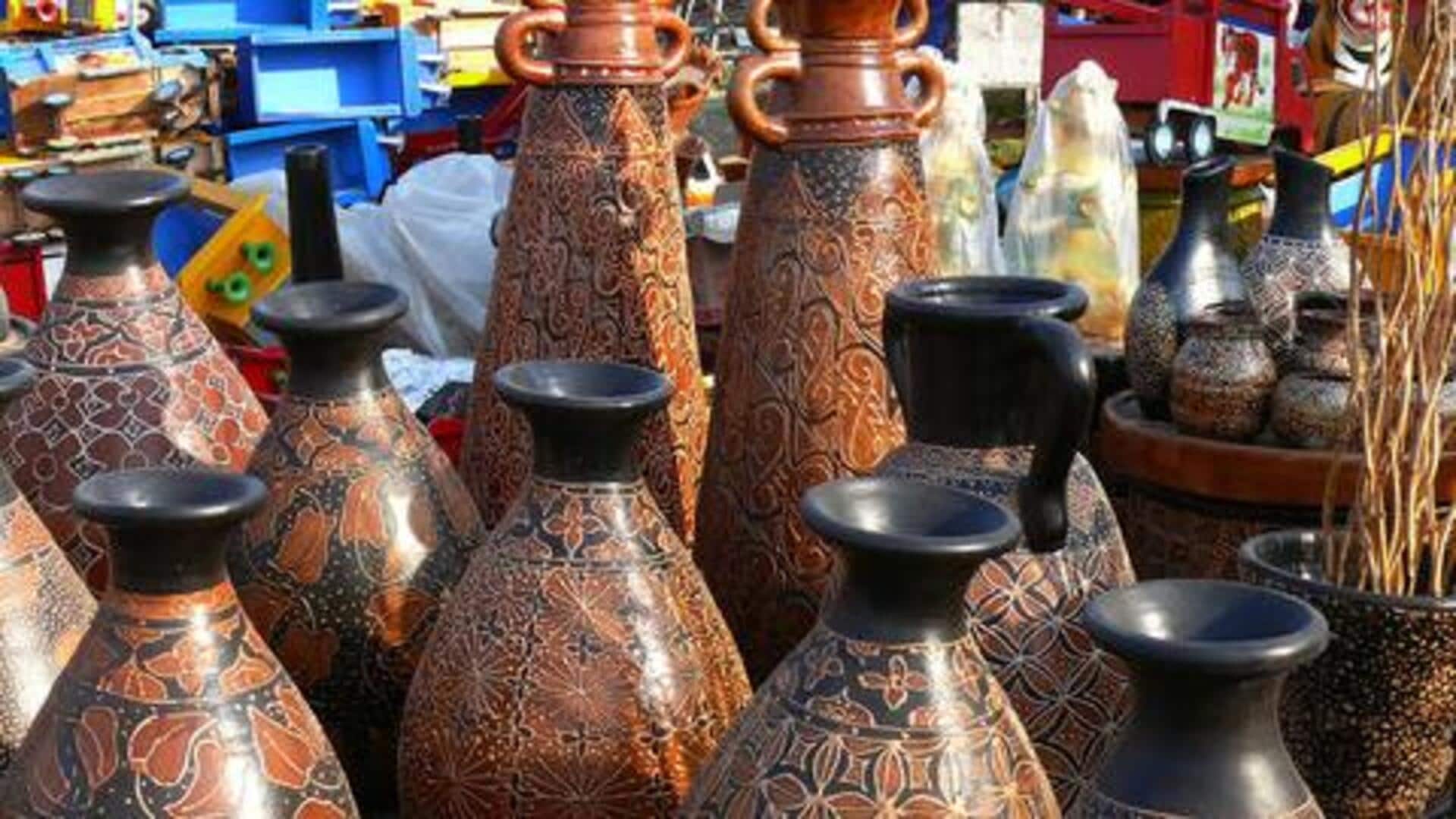
What makes Kenyan pottery a unique art form
What's the story
Kenya's rich cultural heritage is reflected in its pottery, which has been a part of the country's traditions for centuries. The art of pottery has evolved over the years, blending traditional techniques with modern designs. This evolution shows how artisans are adapting to current trends while preserving their cultural identity. The article explores the journey of Kenyan pottery from traditional roots to contemporary innovations, highlighting key aspects that define this unique craft.
#1
Traditional techniques in Kenyan pottery
Traditional Kenyan pottery is characterized by hand-building techniques, such as coiling and pinching.
These methods have been passed down through generations, allowing artisans to create functional and decorative items.
The use of locally sourced clay is common, ensuring that each piece retains its authentic character.
Patterns and motifs often reflect cultural symbols or stories, making every item a work of art with historical significance.
#2
Influence of modern designs
In recent years, modern designs have made their way into Kenyan pottery. Artisans are now experimenting with new shapes, colors, and finishes to appeal to a wider audience.
While some stick to traditional forms, others blend them with contemporary styles for a unique look.
This fusion allows for greater creativity and innovation, while still honoring the roots of the craft.
#3
Economic impact on local communities
The pottery industry provides a source of income to many local communities across Kenya.
By selling their creations at local markets or online platforms, artisans can earn a living while also promoting their culture.
The demand for both traditional and modern pieces has grown internationally, giving Kenyan potters a chance to showcase their skills on a global stage.
#4
Challenges faced by artisans today
Despite its growth, the pottery sector faces challenges like high production costs and competition from mass-produced goods.
Artisans often struggle with access to affordable materials or tools needed for production.
However, many remain resilient by focusing on quality craftsmanship over quantity, or by collaborating with other artists for shared resources or knowledge exchange initiatives.