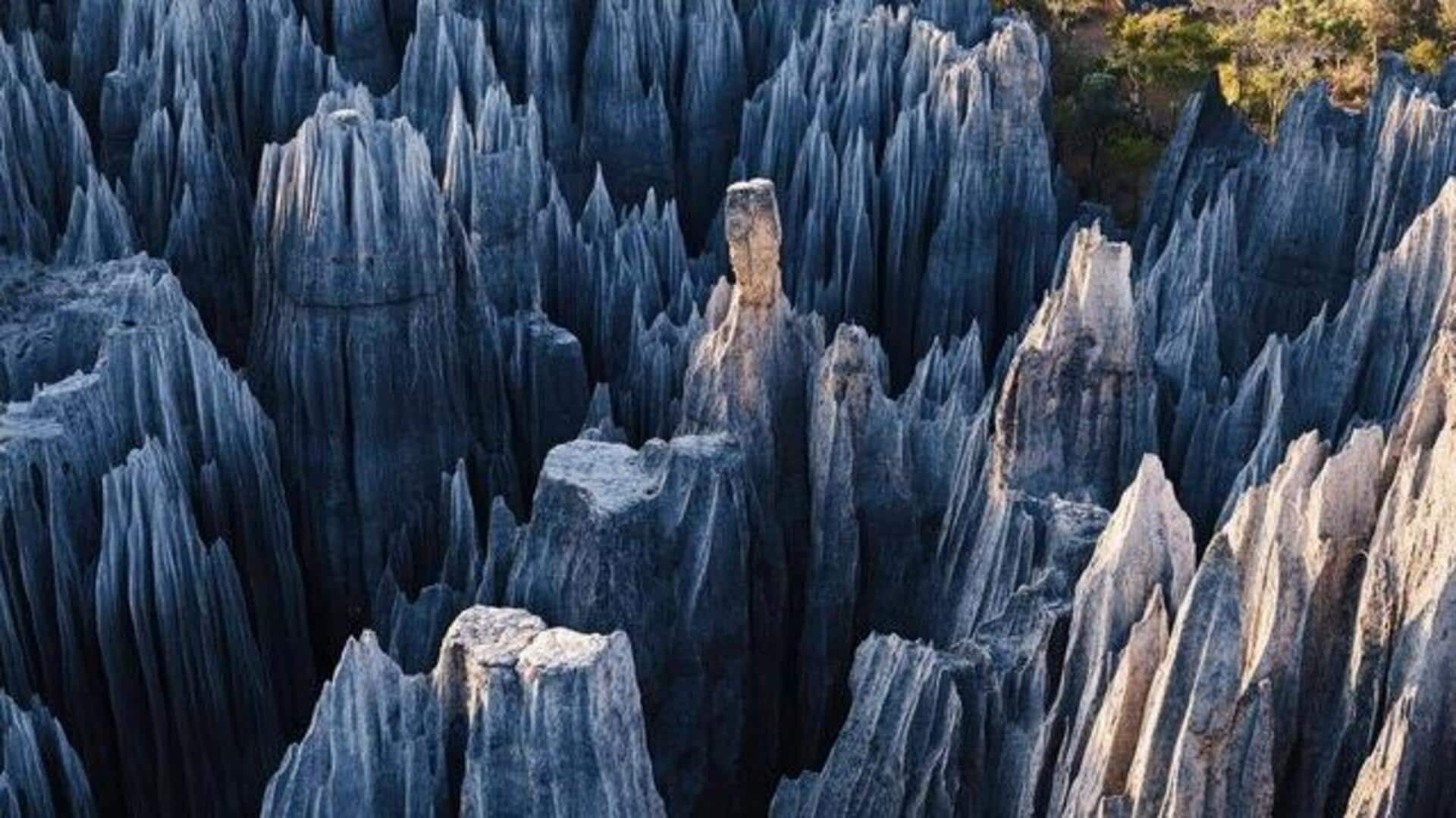
Ankarana Tsingy: The fascinating caves of Madagascar
What's the story
Madagascar's Ankarana Tsingy is a caving experience like no other. The limestone formations, known as tsingy, create a maze of caves and sharp pinnacles. This remote area is not just an adventure for spelunkers, but also a chance to see unique wildlife and stunning landscapes. Exploring these caves gives you a glimpse into the Earth's geological history and an opportunity to witness nature's raw beauty.
#1
Unique geological formations
The Ankarana Tsingy features some of the most unique geological formations in the world. The limestone karsts have been sculpted by erosion over millions of years, resulting in a landscape of sharp pinnacles and deep gorges.
These formations make for a challenging environment for spelunkers, who must navigate narrow passages and steep climbs.
The area is also home to several sinkholes and underground rivers, adding to its intrigue.
#2
Diverse wildlife encounters
Exploring Ankarana Tsingy also gives you an opportunity to encounter Madagascar's unique wildlife.
The reserve is home to several species found nowhere else on the planet. From lemurs to bats, the caves host a variety of animals adapted to the environment.
Birdwatchers will also find plenty of opportunities, with numerous bird species inhabiting the area.
Tip 1
Tips for spelunking safely
For those planning to explore Ankarana Tsingy, safety should be the top priority.
Proper gear, like helmets, headlamps, and sturdy footwear, is essential for navigating through the rugged terrain.
It's also advisable to travel with a guide who knows the area well and can help avoid potential hazards.
Staying hydrated and taking breaks when needed will ensure a safe spelunking experience.
Tip 2
Best time to visit Ankarana Tsingy
The best time to visit Ankarana Tsingy is during Madagascar's dry season, from April to November.
The weather is cooler and less humid, making it easier to explore the caves and surrounding areas.
During this time, the paths are more accessible, and wildlife activity is high, giving you the best chances of spotting animals in their natural habitat.