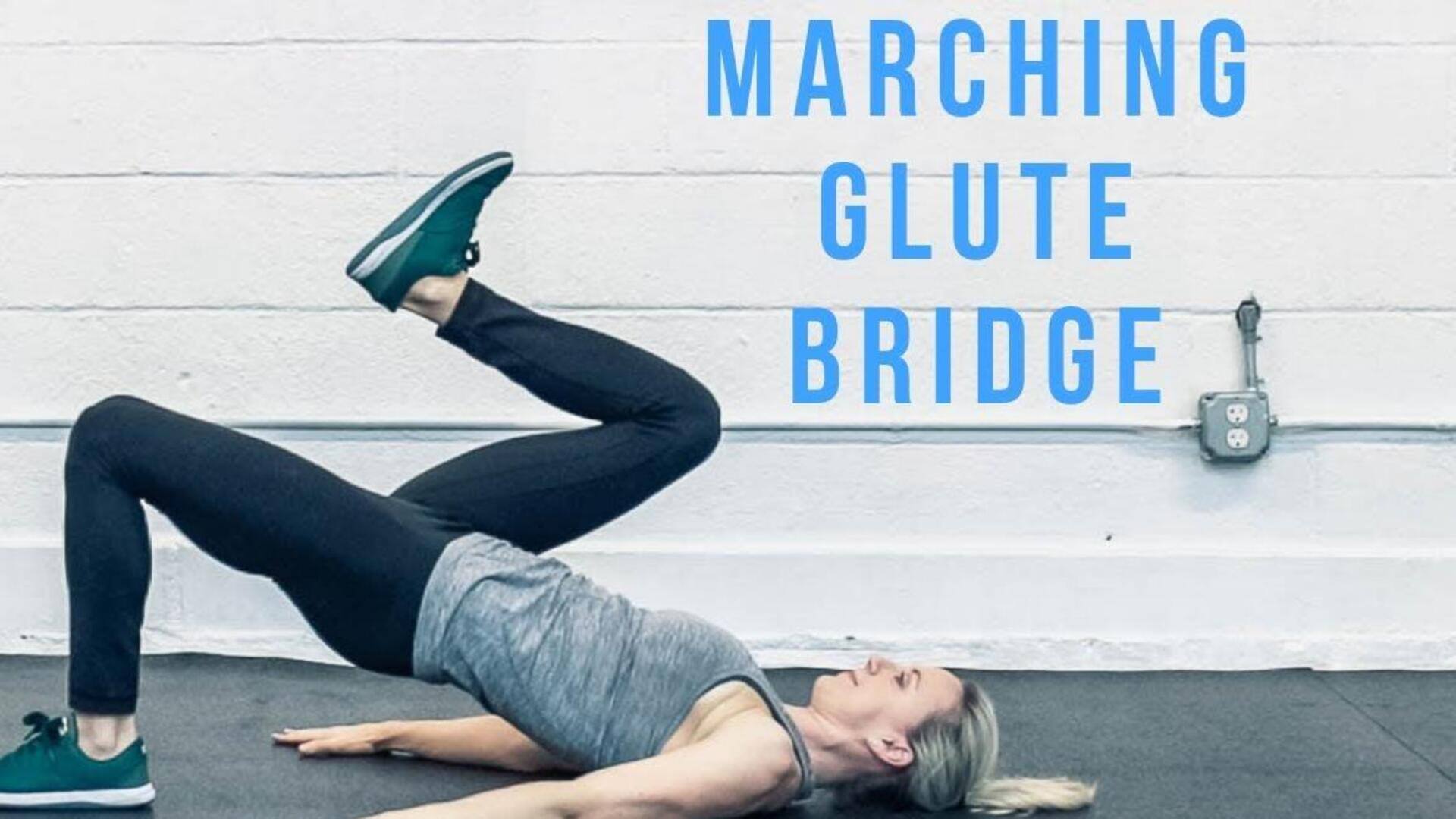
Marching bridges: A gentle exercise for lower back
What's the story
Marching bridges are a simple yet effective exercise for lower back health. They combine the benefits of bridging and marching to improve core stability and strengthen the lower back. This exercise can be performed by anyone, regardless of fitness level, making it an accessible option for those looking to enhance their back health. Regular practice can lead to improved posture, reduced back pain, and increased overall strength.
#1
Benefits of marching bridges
Marching bridges target multiple muscle groups at once, including the glutes, hamstrings, and core muscles.
By engaging these muscles simultaneously, you can improve your overall stability and balance.
This exercise also promotes better circulation in the lower body, which is essential for maintaining healthy muscles and joints.
Incorporating marching bridges into your routine can lead to a more toned physique and enhanced functional movement.
#2
How to perform marching bridges
To perform marching bridges, start by lying on your back with knees bent and feet flat on the floor.
Lift your hips towards the ceiling while keeping your shoulders grounded.
Once in this bridge position, alternate lifting each knee towards your chest as if you are marching in place.
Maintain a steady rhythm without compromising form or allowing your hips to sag.
Tip 1
Tips for effective execution
Ensure that you engage your core throughout the exercise to maintain stability and prevent strain on the lower back.
It's important to keep your movements controlled rather than rushed to avoid injury.
Start with a few repetitions per set and gradually increase as you build strength over time.
Tip 2
Common mistakes to avoid
One common mistake is allowing hips to sag during the movement, which reduces effectiveness and puts unnecessary strain on the spine.
Another mistake is using momentum instead of muscle control when lifting knees; focus on slow, deliberate movements for maximum benefit.