How to master raffia art
What's the story
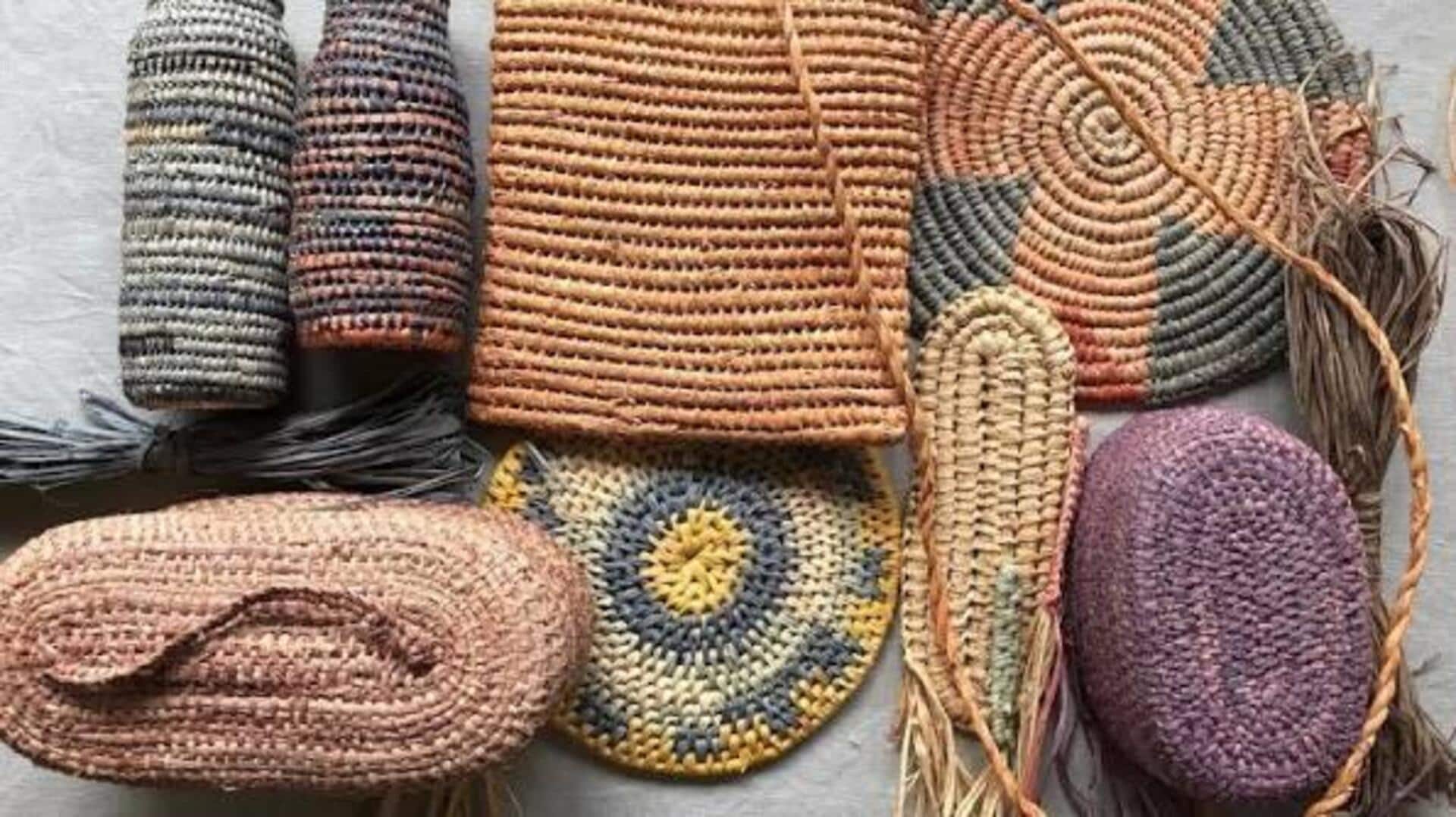
African raffia art is a beautiful craft that employs the unique properties of raffia palm leaves. The leaves are woven into stunning patterns and textures, making it an essential part of cultural expression across the continent. The techniques have been passed down generations, with each region adding its own flair to the craft. Here are five African techniques that showcase the versatility and creativity of raffia art.
Technique 1
Weaving patterns with raffia
Weaving with raffia is a basic technique used to create intricate patterns.
Artisans skillfully intertwine strands to create geometric designs, which are often symbolic or tell a story.
This technique requires patience and precision, as even the slightest mistake can affect the overall look.
The patterns created can be seen on mats, baskets, and decorative items.
Technique 2
Dyeing for vibrant colors
Dyeing is an important step in making raffia art vibrant and appealing.
Artisans use natural dyes from plants and minerals to color the raffia leaves before weaving them.
The colors not only beautify the final product but also have cultural meanings. For instance, certain colors may represent fertility or prosperity.
Technique 3
Twisting for texture
Twisting raffia strands is a technique that adds texture and depth to the artwork.
By twisting the strands together tightly or loosely, artisans create different surface effects that catch light in unique ways.
This technique is often used in creating three-dimensional pieces, like sculptures or decorative bowls.
Technique 4
Knotting techniques for durability
Knotting is an essential technique that ensures durability in raffia art pieces.
It involves tying knots at strategic points to secure parts of the design together firmly.
This not only strengthens the structure but also adds an aesthetic element, with decorative knots enhancing visual appeal.
Technique 5
Braiding for intricate designs
Braiding combines multiple strands of raffia into complex designs that showcase skillful craftsmanship.
This technique allows artisans to create detailed motifs that are both functional and artistic.
Braided raffias are commonly used in clothing accessories, like headbands or belts, where flexibility meets intricate design work.