
This Mexican wedding ritual will blow your mind
What's the story
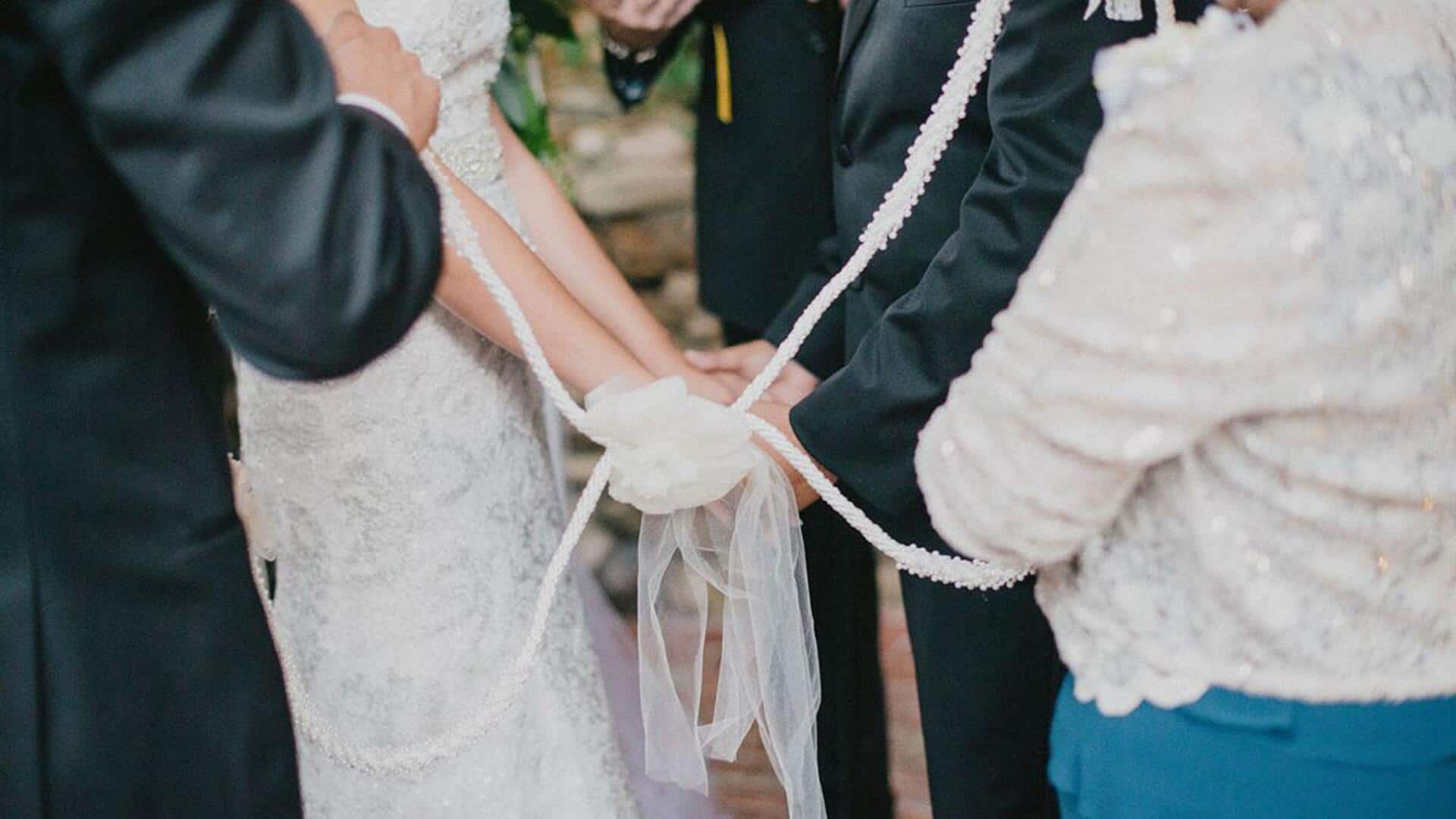
Mexican weddings are a beautiful blend of cultural traditions, and one of the most important rituals is the lasso ceremony. This tradition involves placing a lasso, usually a rosary or a decorative cord, around the couple's shoulders after they have exchanged vows. The lasso symbolizes unity and binding the couple together for life. It is a touching moment that highlights the importance of commitment in marriage.
#1
Historical roots of the lasso ceremony
The lasso ceremony has its roots in ancient Mexican culture, where it was believed that the couple should be physically and spiritually bound together. Over time, this practice evolved into a wedding ritual that is still popular today. The lasso is usually made of flowers or beads and is placed in the shape of a figure eight, representing eternity.
#2
Symbolism behind the lasso
The lasso symbolizes unity, love, and protection. By placing it around their shoulders, the couple demonstrates their willingness to support each other through life's challenges. The figure eight shape also represents infinity, emphasizing that their bond should last forever. This ritual serves as a reminder that marriage requires effort from both partners to maintain harmony.
#3
Modern adaptations of the lasso tradition
While the traditional lasso ceremony remains popular, modern couples often add their own twist to this age-old practice. Some use personalized items like custom-made cords or incorporate elements reflecting their unique style. Despite these variations, the core message remains unchanged: celebrating unity and commitment between partners.
Tip 1
Tips for incorporating the lasso in your wedding
If you're planning to include the lasso ceremony in your wedding, consider selecting materials that hold special meaning for you and your partner. Whether it's using family heirlooms or items representing shared interests, personal touches can make this moment even more memorable. Also, discuss with your officiant how best to integrate this tradition into your ceremony without overshadowing other important rituals you may have planned.