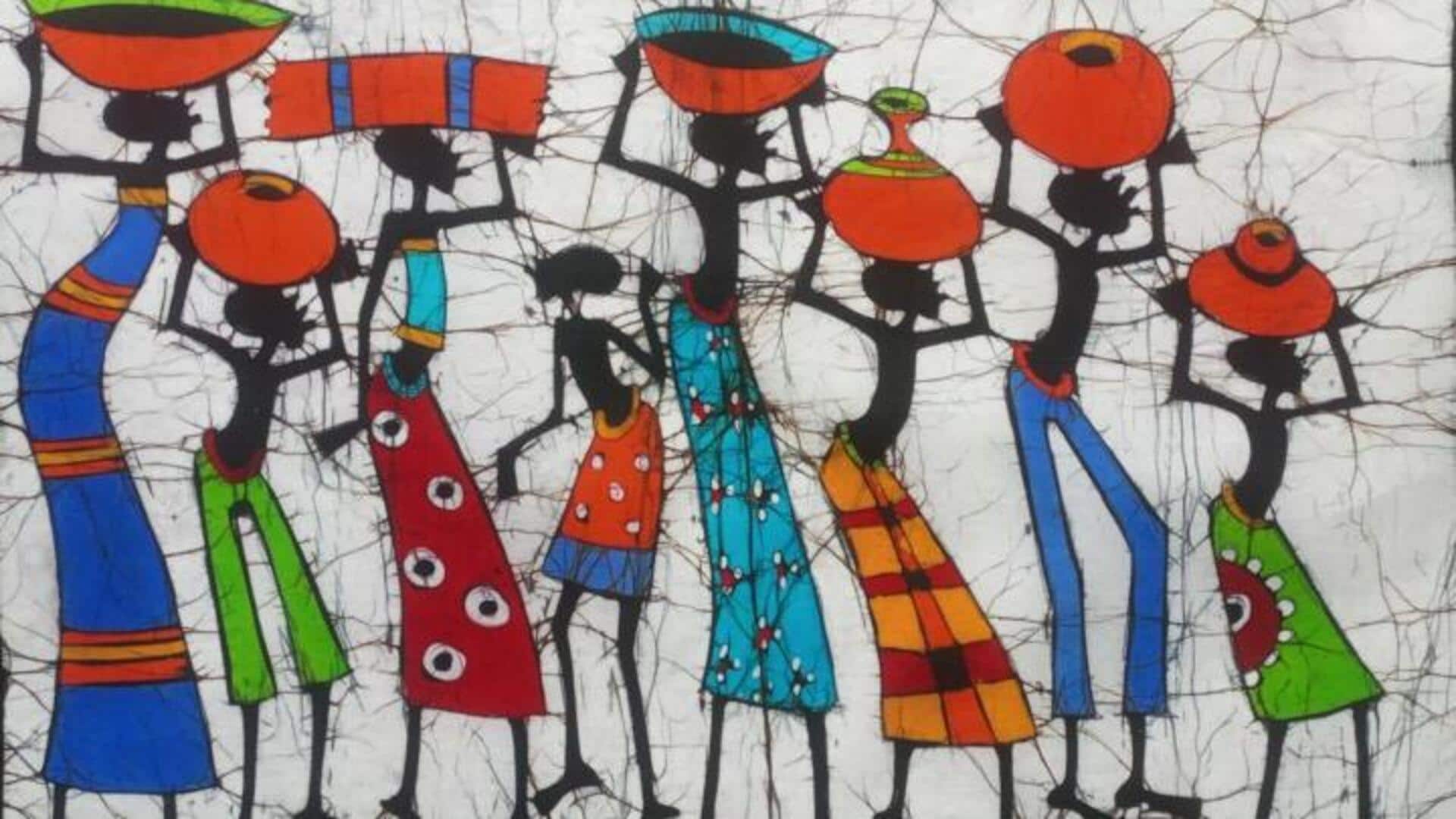
All about Mozambican batik
What's the story
Mozambican batik is a traditional art form that has been passed down through generations. The technique involves dyeing cloth using a wax-resist method, resulting in vibrant patterns and colors. This art form is not just a means of expression, but also a reflection of the rich cultural heritage of Mozambique. Artists often draw inspiration from nature, folklore, and daily life, creating unique pieces that tell stories and preserve cultural identity.
Technique
The wax-resist technique
The wax-resist technique is at the heart of batik making.
Artists start by applying hot wax on the fabric in desired patterns.
Once the wax cools, they dye the fabric with vibrant colors.
The wax resists dye, leaving behind the original color of the fabric beneath it.
This process can be repeated multiple times with different colors to create intricate designs.
Significance
Cultural significance
Batik has deep cultural significance in Mozambique, as it is used in ceremonies and celebrations.
The patterns often carry symbolic meanings or tell stories of historical events or myths.
Wearing batik clothing can be a way for people to connect with their heritage and express their identity within their communities.
Adaptations
Modern adaptations
In recent years, Mozambican batik has evolved to include modern influences while retaining traditional techniques.
Some artists now experiment with contemporary designs or incorporate new materials into their work.
These adaptations allow the art form to remain relevant in today's globalized world, while still honoring its roots.
Support
Supporting local artisans
Supporting local batik artisans is crucial for preserving this cultural heritage.
Buying directly from artists, or participating in workshops, helps sustain these traditions for future generations.
Many communities rely on batik production as a source of income, so supporting these artisans contributes positively to local economies.