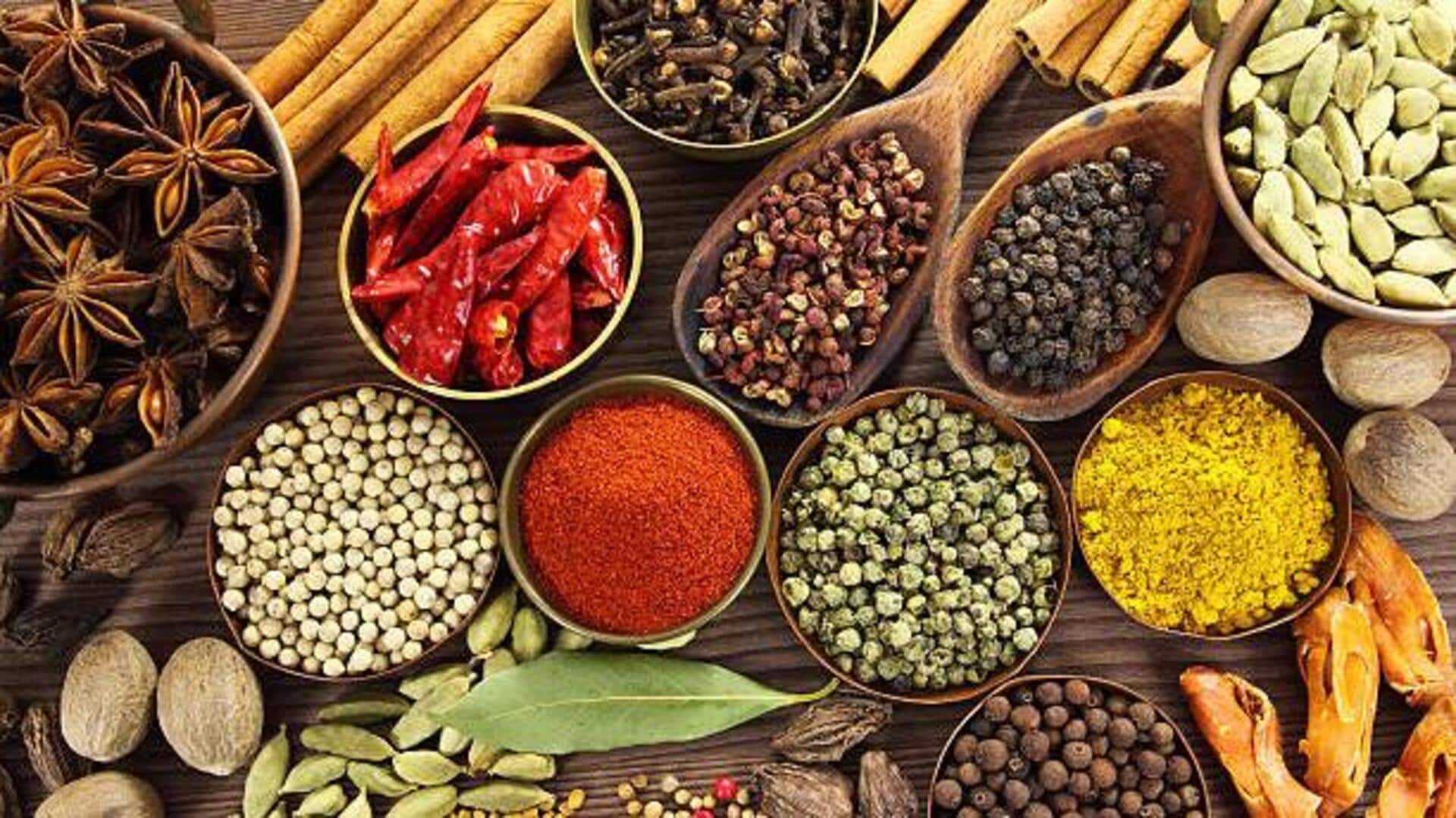
Spices in daily cooking: What you should know
What's the story
Spices are an integral part of our daily cooking, but they are also surrounded by many myths. Most of these myths are based on misconceptions about the health benefits and effects of spices. In this article, we debunk some common myths about spices and help you understand what role they actually play in our diet. This way, you can make informed decisions about what to add to your meals.
#1
Myth: All spices are safe in large amounts
Most people think that spices are safe to consume in any amount, but that is not true.
Some spices can be harmful in large amounts. For instance, nutmeg can cause hallucinations if consumed excessively due to its myristicin content.
Similarly, saffron can be toxic in high doses.
It is important to use spices as intended and not overindulge just because they are natural.
#2
Myth: Spices always boost metabolism significantly
Turmeric and cayenne pepper are often touted as metabolism boosters that can help you lose weight quickly.
However, the effect of these spices on metabolism is often overstated.
While some studies indicate a slight increase in metabolic rate, the effect is negligible and not enough to cause significant weight loss on its own.
A balanced diet and regular exercise are still the best ways to maintain a healthy metabolism.
#3
Myth: All natural spices have no side effects
The common misconception is that natural means safe, especially when it comes to spices.
However, some natural compounds found in spices can cause allergic reactions or interact with medications.
For example, garlic can thin blood and may interfere with anticoagulant medications.
It's important to consider personal health conditions and consult healthcare professionals when adding new spice-heavy foods to your diet.
#4
Myth: Organic spices are always more nutritious
Many people believe organic spices are more nutritious than their non-organic counterparts, but that is not always the case.
The nutritional content of a spice depends more on how it is grown and processed than whether it is labeled organic or not.
While organic farming practices may reduce pesticide use, they do not necessarily make the spice more nutritious than conventionally grown ones.
#5
Myth: Spices can replace medication entirely
There's a common belief that spices can replace medications for treating various ailments, but that's a misconception.
While some spices have medicinal properties and can complement treatment plans, they should not be seen as substitutes for prescribed medications.
For example, ginger may help with nausea, but it shouldn't replace anti-nausea drugs without consulting a healthcare provider first.