5 myths about washing vegetables you should stop believing
What's the story
Washing vegetables is an essential part of cooking, but there are many myths surrounding the best way to do it. These myths can lead to improper cleaning and potential health risks. In this article, we debunk some common myths about washing vegetables, providing factual insights into how to properly clean your produce. By understanding these myths, you can ensure your vegetables are safe and clean for consumption.
#1
Myth: Soap is necessary for washing vegetables
Many believe that using soap while washing vegetables is a must for getting rid of germs. However, this is not true.
The FDA recommends against using soap on food items as it can leave harmful residues.
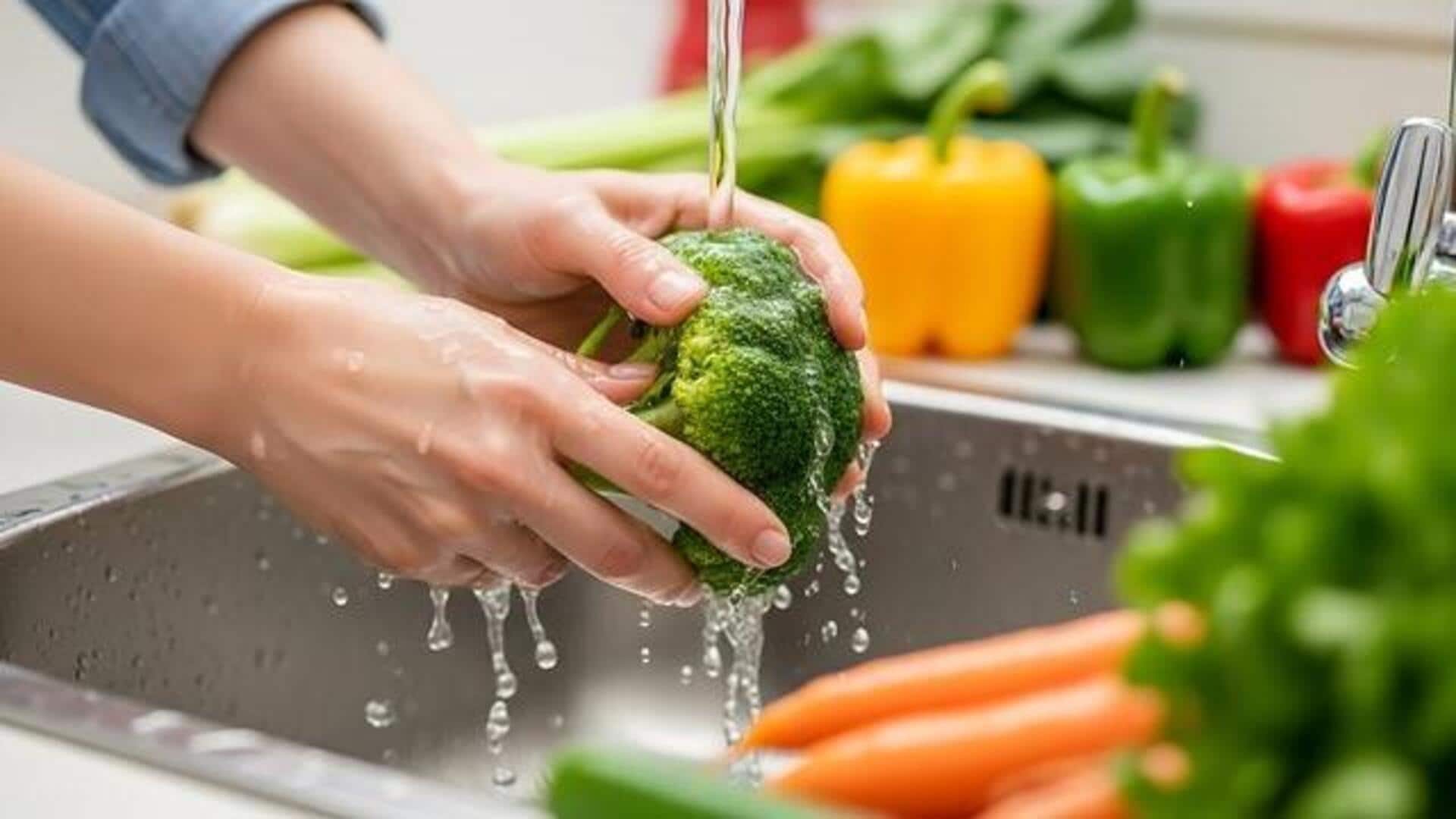
Instead, rinsing vegetables under running water is sufficient to remove dirt and bacteria. For extra cleanliness, a vegetable brush can be used on firm produce.
#2
Myth: Vinegar guarantees complete disinfection
Vinegar is often touted as a natural disinfectant that can kill all bacteria on vegetables.
While vinegar may reduce some surface bacteria, it does not guarantee complete disinfection like commercial sanitizers designed for produce.
It is best to use vinegar as an additional step rather than relying solely on it for safety.
#3
Myth: Washing with bleach ensures safety
Some people think washing vegetables with bleach makes them completely safe from pathogens.
However, bleach is not food-safe and can be toxic if ingested in even small amounts.
The FDA strongly advises against using bleach or any other non-food-safe chemicals on produce meant for consumption.
#4
Myth: All vegetables need special washing techniques
Not all vegetables require special washing techniques; most need simple rinsing under running water.
Leafy greens may require extra attention due to their crevices where dirt can hide, but they don't need any special solutions or techniques beyond thorough rinsing.
#5
Myth: Organic vegetables don't need washing
There's a common misconception that organic vegetables don't need to be washed because they're grown without synthetic pesticides or chemicals.
However, organic produce can still have dirt, bacteria, or residues from natural fertilizers used during cultivation.
Hence, it's important to wash organic vegetables just like conventional ones before eating them raw or cooking them lightly.