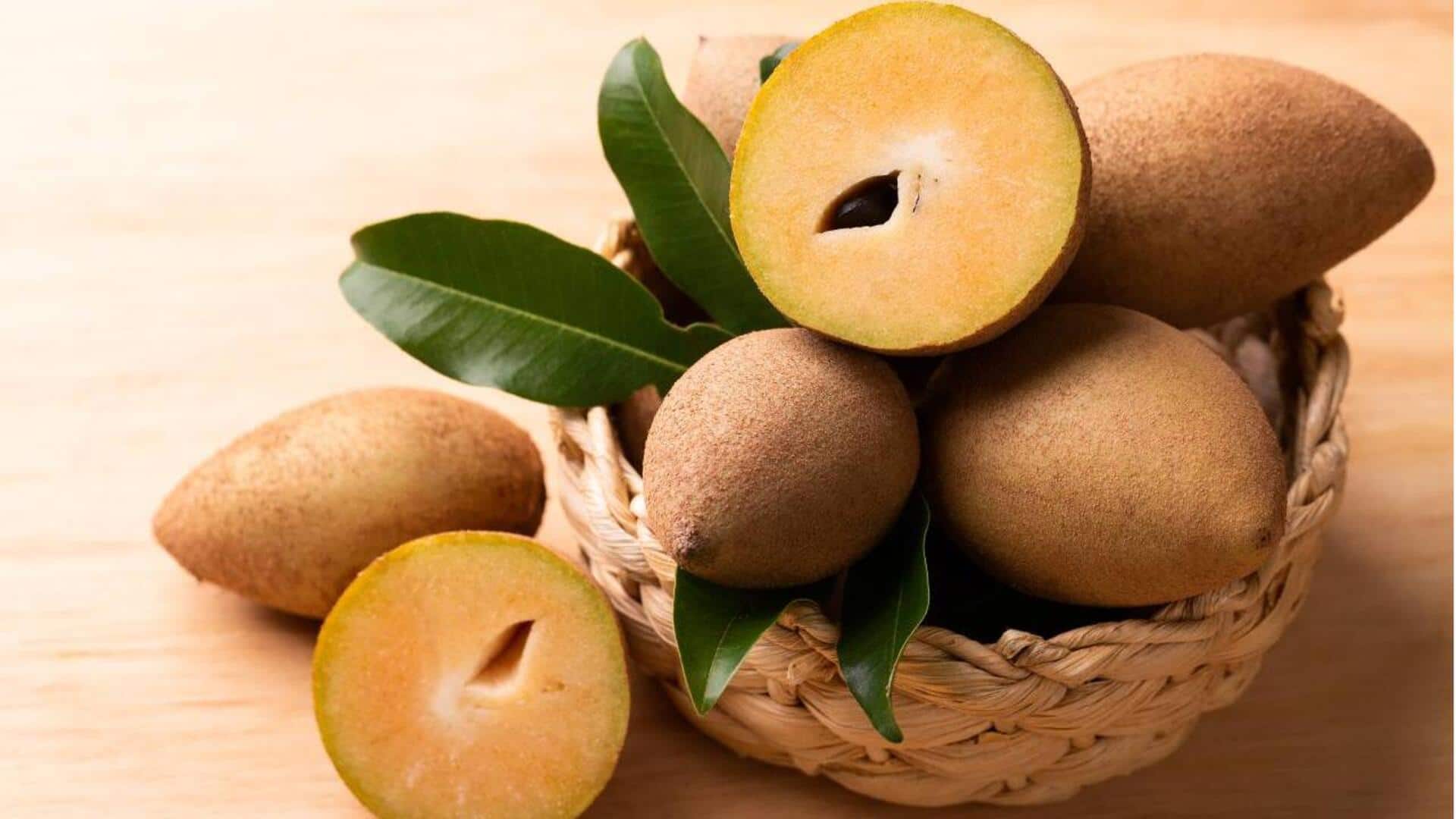
Pear or Sapota: Which is better for you?
What's the story
Pear and sapota (chikoo) are two popular fruits that have their own unique nutritional profiles. While both are delicious, they also offer different health benefits. Knowing the nutritional differences between the two can help you make informed dietary choices. Here's a look at the key nutrients present in pear and sapota, and how they contribute to your health.
#1
Vitamin content comparison
Pears are a good source of vitamin C, which is essential for boosting immunity and skin health. A medium pear gives you about 10% of the daily recommended intake of vitamin C.
Sapota, on the other hand, is richer in vitamin A, which promotes good vision and skin health. A serving of sapota can give you up to 15% of the daily recommended intake of vitamin A.
#2
Fiber richness in fruits
Both pears and sapota are high in dietary fiber, but pears have a slight edge when it comes to fiber content.
A medium pear has about six grams of fiber, which helps with digestion and keeps cholesterol levels in check.
Sapota has about five grams per serving but is still a great source for keeping your digestive system healthy.
#3
Sugar levels in each fruit
When it comes to natural sugars, sapota has a higher sugar content than pears.
Sapota has about 14 grams of sugar per serving, while a medium pear has around 10 grams.
This makes sapota sweeter than pears, which may be something to consider for those keeping an eye on their sugar intake.
#4
Mineral content analysis
Pears are a good source of potassium, which is important for heart health and muscle function. A medium pear gives you about 3% of the daily potassium requirement.
Sapota also provides potassium but is richer in iron than pears, making it a good option for those looking to boost their iron intake for better blood health.