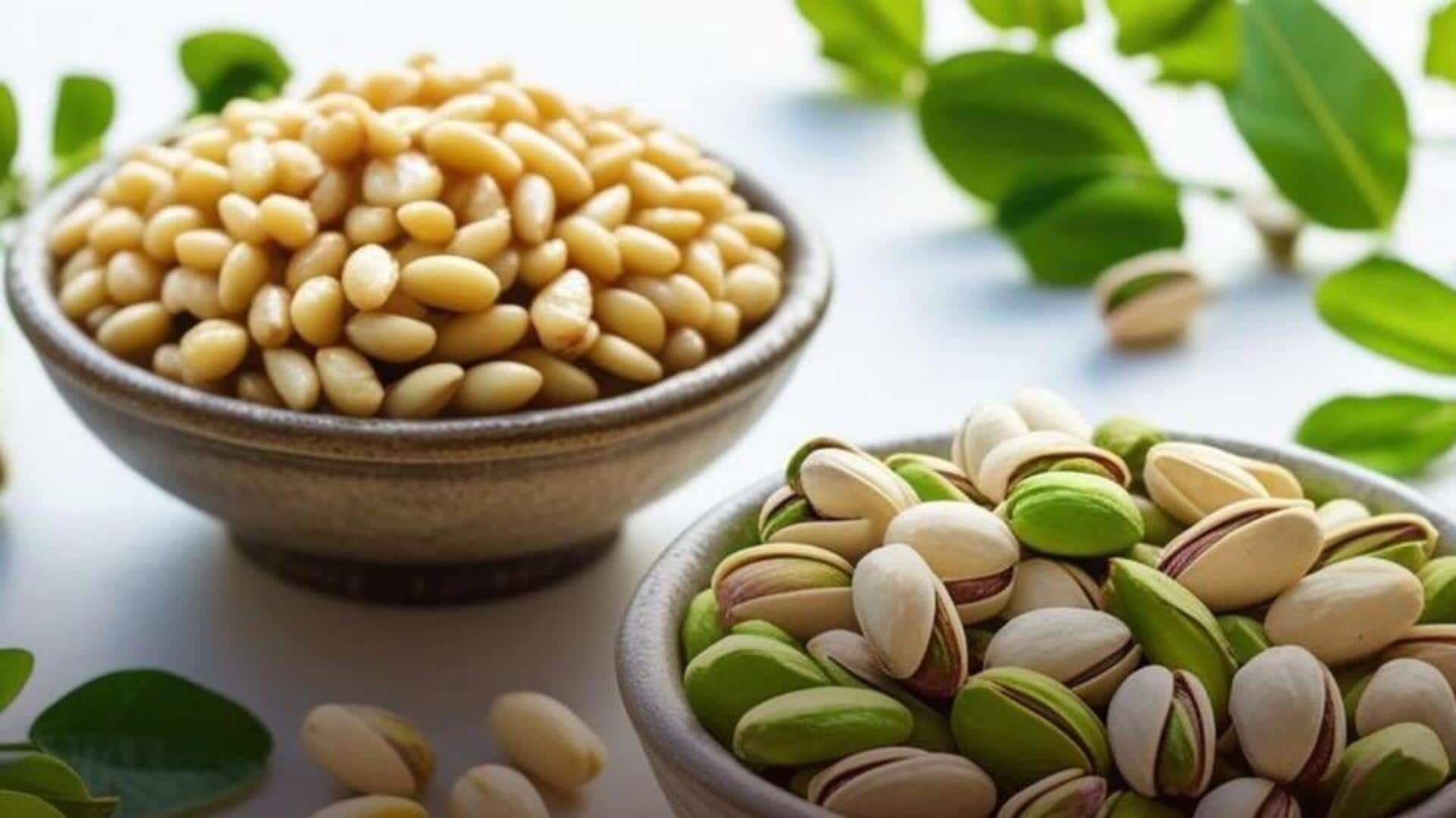
Pine nuts v/s pistachios: Which has more protein?
What's the story
Pine nuts and pistachios are two of the most popular nuts, loved for their unique flavors and nutritional benefits. Both are packed with healthy fats, proteins, and essential vitamins, but they differ in their nutritional profiles. Knowing the difference can help you make informed dietary choices. Here's a look at the nutritional differences between pine nuts and pistachios, and how they can benefit your diet.
#1
Fat content analysis
Pine nuts have a higher fat content than pistachios, with about 68% of their weight being fat. However, most of these are healthy monounsaturated fats that promote heart health. Pistachios have about 45% fat content, also mostly healthy fats but in a lower proportion than pine nuts. Both nuts provide omega-3 and omega-6 fatty acids, but pine nuts have more of these essential fats.
#2
Protein power comparison
When it comes to protein content, pistachios take the lead with around 21% protein by weight, as opposed to the 14% protein content in pine nuts. This makes pistachios a better option for those looking to up their protein intake through plant-based sources. The higher protein content in pistachios also makes them a great option for muscle repair and growth.
#3
Vitamin richness revealed
Pine nuts are rich in vitamin K and vitamin B1 (thiamine), which are important for blood clotting and energy metabolism, respectively. Pistachios are rich in vitamin B6, which is important for brain health and immune function. Both nuts give you different vitamins that can contribute to your overall health when eaten as part of a balanced diet.
#4
Mineral content differences
Both pine nuts and pistachios are rich sources of minerals such as magnesium, phosphorus, zinc, and iron. However, pistachios have a slight edge over pine nuts in terms of potassium content, which is important for maintaining fluid balance and proper muscle function in the body. Pine nuts provide more copper than pistachios, which is important for red blood cell production.