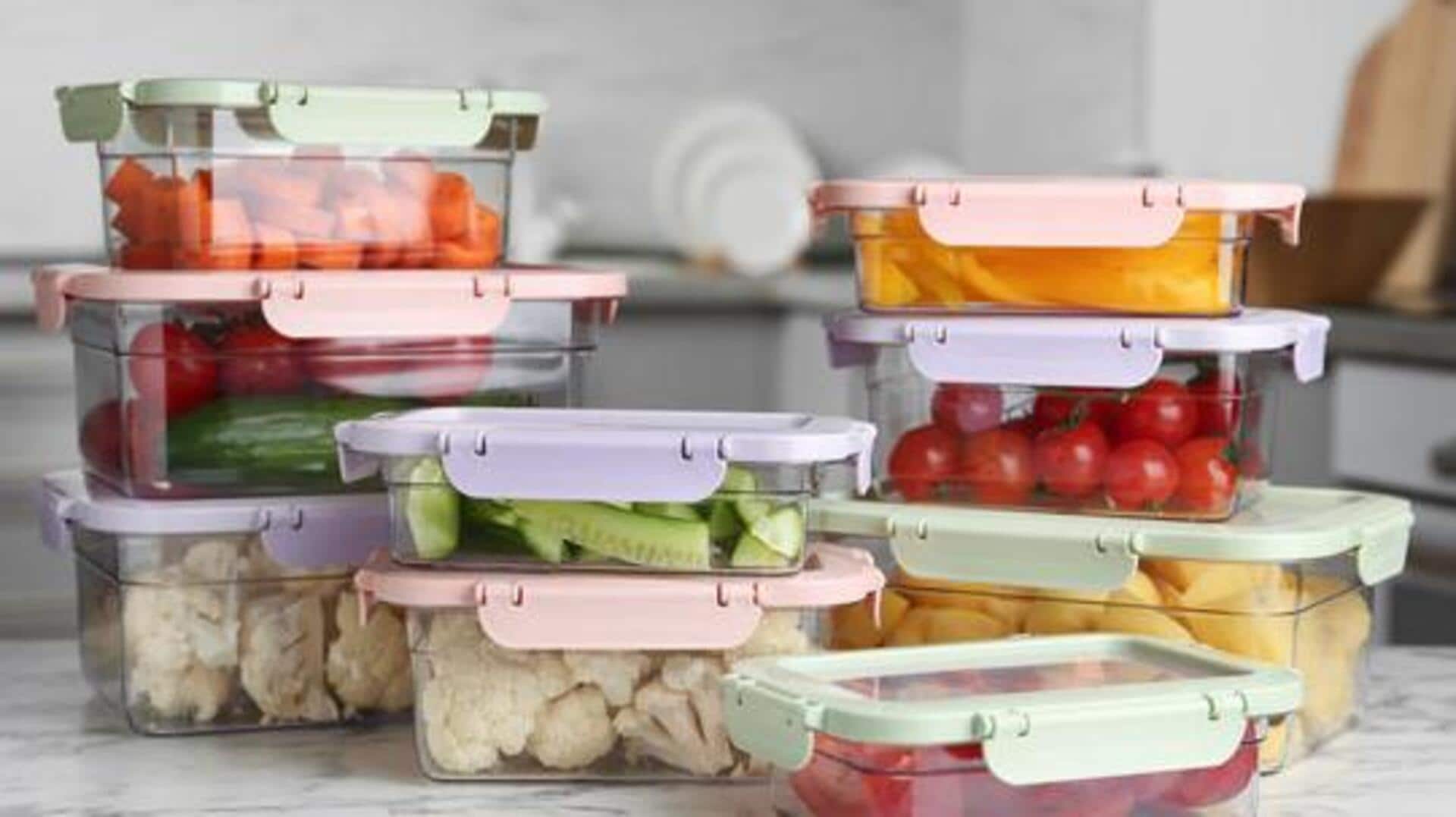
Are plastic food containers safe?
What's the story
Plastic food storage containers are a common sight in most kitchens, but they are often surrounded by myths about their safety and health implications. Many believe that using plastic containers can be harmful or lead to health risks. However, it's important to separate fact from myth and understand the real implications of using plastic for food storage. Here's a look at some common misconceptions and the truth behind them.
#1
Myth: All plastics leach harmful chemicals
One of the most common myths is that all plastics leach harmful chemicals into food.
While some plastics can leach chemicals when heated or used improperly, many are designed specifically for food storage and meet safety standards.
BPA-free containers, for example, are widely available and provide a safer option for storing food without the risk of harmful chemical leaching.
#2
Myth: Plastic containers are not recyclable
Another misconception is that plastic containers cannot be recycled. In reality, many types of plastic are recyclable, provided they are disposed of correctly.
Most recycling programs accept certain types of plastics commonly used in food storage containers.
By checking local recycling guidelines, consumers can ensure they recycle these materials properly instead of sending them to landfills.
#3
Myth: Glass is always safer than plastic
While glass is often perceived as a safer alternative to plastic, it is not without its drawbacks.
Glass containers are heavier and more prone to breakage than their plastic counterparts.
This makes them less practical for some situations or users who require lightweight options or have children around the house.
Both glass and plastic have their pros and cons when it comes to safety and convenience.
#4
Myth: Microwave use damages all plastics
Many believe microwaving any kind of plastic container will damage it or leach chemicals into food.
However, there are microwave-safe plastics specifically designed to withstand heat without warping or leaching harmful substances.
It is important to look for labels indicating microwave safety before using any container in the microwave.
Tip 1
Tip: Proper care extends lifespan of containers
Proper care also extends the lifespan of both plastic and glass food storage containers.
Washing them by hand or using gentle cycles in dishwashers prevents wear over time.
Avoiding extreme temperature changes, such as moving from freezer directly into hot water, prevents cracking in glassware.
This practice applies universally across all types of materials used today in modern kitchens worldwide.