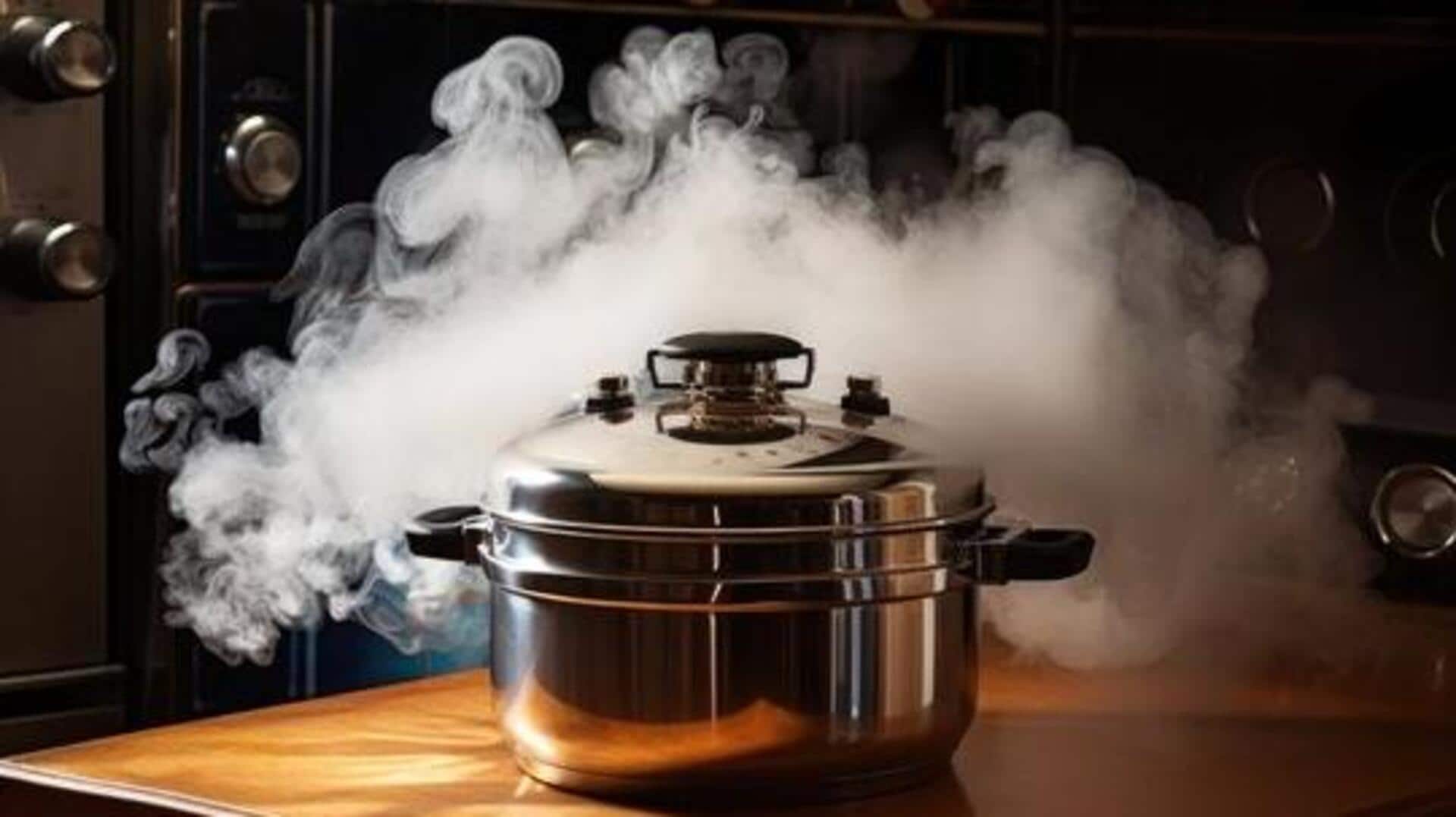
5 pressure cooker myths you should stop believing
What's the story
Pressure cookers have been a staple in most kitchens, promising quick and efficient cooking. However, a number of myths about their health implications have been circulating. Today, we debunk five of those myths, giving you a clearer picture of the health effects of pressure cooking. By clearing these misconceptions, we hope to help you make informed choices about using pressure cookers in your daily cooking.
#1
Myth: Pressure cooking destroys nutrients
One common misconception is that pressure cooking destroys nutrients more than other cooking methods.
In reality, pressure cooking can actually preserve nutrients better than boiling or steaming.
The quick cooking time and sealed environment reduce nutrient loss by as much as 50% compared to other methods.
This makes it an excellent option for retaining vitamins and minerals in food.
#2
Myth: Pressure cookers release harmful chemicals
Another myth is that pressure cookers release harmful chemicals into food during cooking.
Modern pressure cookers are designed with safety in mind and are made from materials that don't leach harmful substances into food.
As long as you use the cooker as per the manufacturer's instructions, there are no health risks from chemical release.
#3
Myth: Pressure cooking increases calorie content
Some believe that pressure cooking increases calorie content due to the high temperatures involved.
However, this isn't true as pressure cooking doesn't change the caloric value of ingredients significantly.
The method mainly affects water content in foods rather than altering their nutritional composition or calorie count.
#4
Myth: All foods are suitable for pressure cooking
Many believe that all foods can be pressure-cooked without any issues.
However, while many foods can be cooked under pressure, some require special consideration or shouldn't be cooked at all in a pressure cooker.
For example, thick sauces or purees may clog vents and cause problems if not properly managed during cooking.
#5
Myth: Pressure cooking is unsafe for everyone
Many think pressure cooking is unsafe for certain groups, like children or the elderly.
But when used correctly, following safety guidelines provided by manufacturers, it is safe for all age groups.
It is important to supervise young children while they are helping with meal prep using these appliances, to ensure safety in the kitchen.